Improve mathematical skills Math Worksheets for Ages 6-9
3 filtered results
-
From - To
Enhance your child's mathematical skills with our tailored math worksheets designed specifically for ages 6-9! Our engaging, printable resources focus on essential concepts such as addition, subtraction, multiplication, and division, ensuring a solid foundation in math. Each worksheet is crafted to foster critical thinking and problem-solving abilities while making learning enjoyable. Our colorful designs and interactive exercises break down complex math skills into manageable tasks, perfect for young learners. Whether you’re a teacher seeking classroom resources or a parent supporting home learning, these worksheets are your go-to solution for promoting math fluency and confidence in early learners. Empower your child’s math journey today!
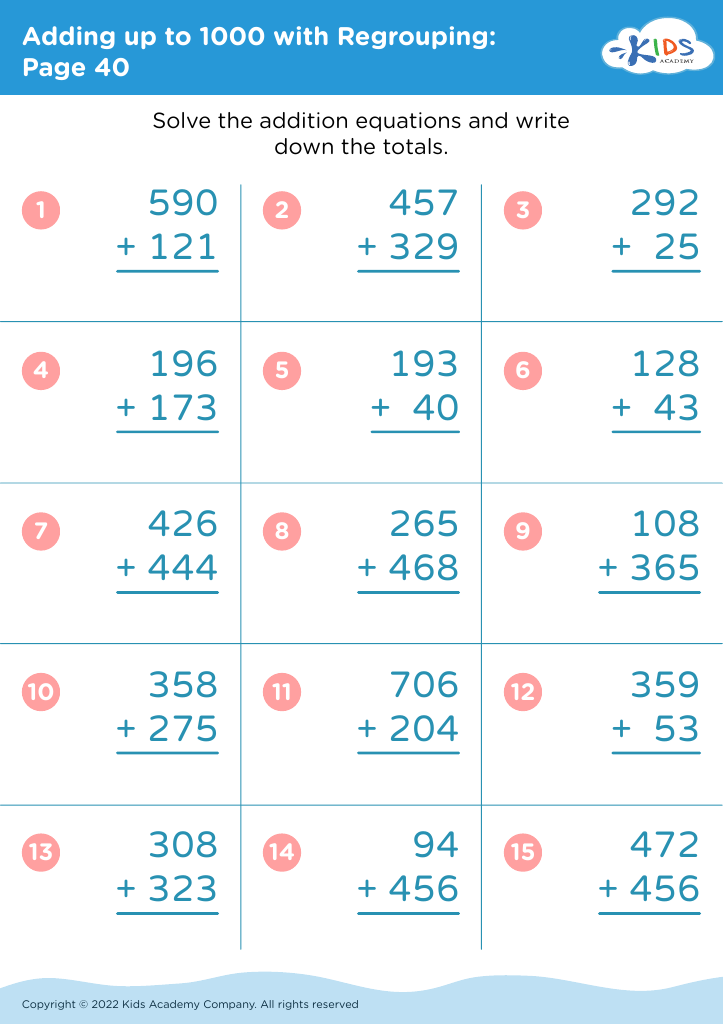
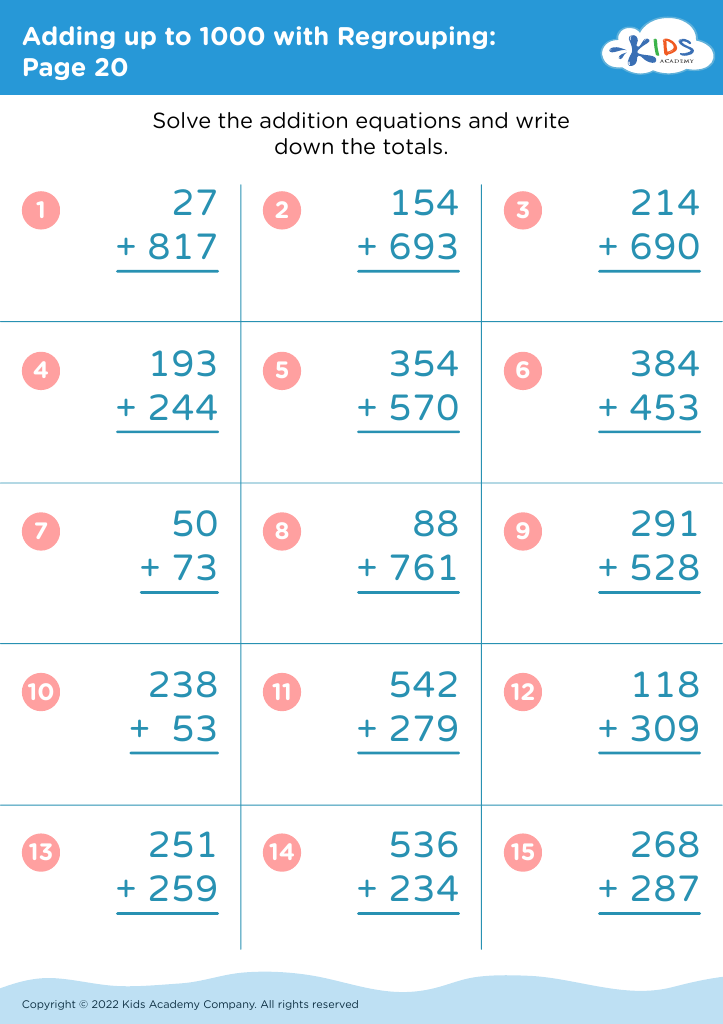
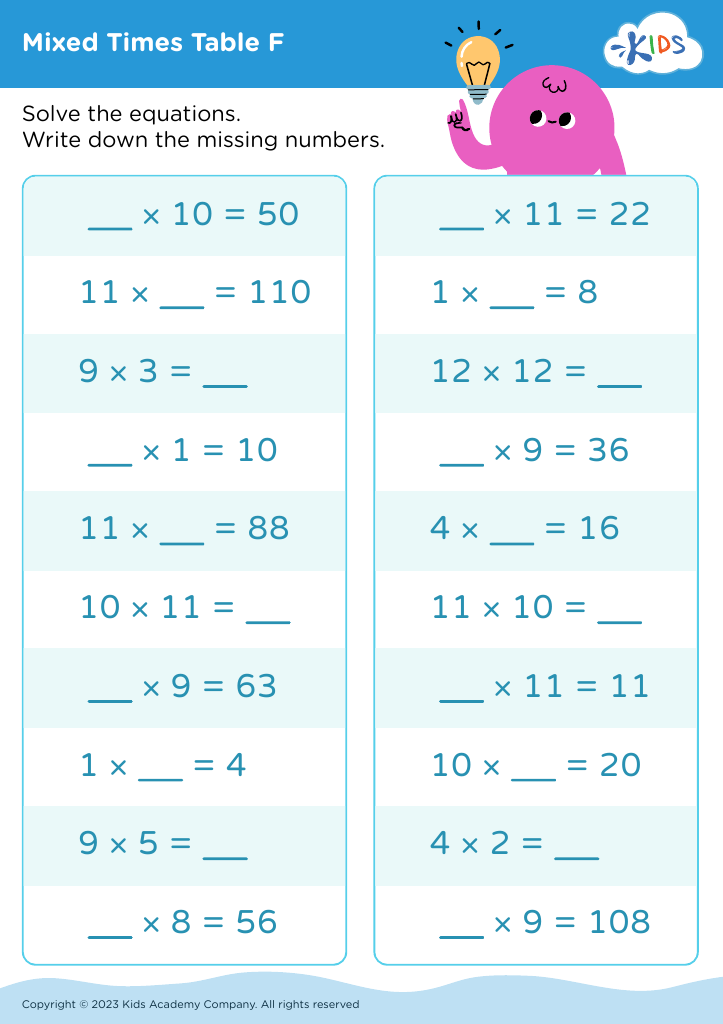






Improving mathematical skills for children aged 6 to 9 is crucial for several reasons that parents and teachers should prioritize. First, this age group is a critical period for cognitive development, where foundational skills in mathematics are established. Mastering basic concepts such as addition, subtraction, and understanding number sense sets the stage for more complex mathematical thinking in later years.
Moreover, strong mathematical skills promote problem-solving abilities and logical reasoning, helping children approach challenges in various aspects of life. Math is not just about numbers; it fosters critical thinking and analytical skills essential for everyday decision-making and planning.
Additionally, proficiency in math contributes to self-confidence in children. As they gain mastery and achieve success in mathematical tasks, they are more likely to engage actively in their learning journey and face new challenges with resilience.
Collaboration between parents and teachers can further enhance mathematical learning by promoting consistent practice and positive reinforcement. Emphasizing math in fun and interactive ways, such as games or real-world applications, can make learning engaging and enjoyable.
In summary, a strong mathematical foundation supports academic achievement, nurtures essential life skills, and helps develop a confident learner, making it imperative for parents and teachers to invest in this aspect of education.








