Mathematical Comprehension Math Worksheets for Ages 6-9
3 filtered results
-
From - To
Unlock your child's mathematical potential with our engaging Mathematical Comprehension math worksheets tailored for ages 6-9. Designed to enhance understanding of core math concepts, these worksheets encourage critical thinking and problem-solving skills through fun and interactive activities. Children will explore various topics, including addition, subtraction, geometry, and data interpretation, all while building confidence in their math abilities. Ideal for both classroom and home learning, our worksheets provide helpful visual aids and guided exercises. Whether your child is struggling or excelling, these comprehensive resources make learning math enjoyable and effective—setting the foundation for a lifelong love of mathematics!
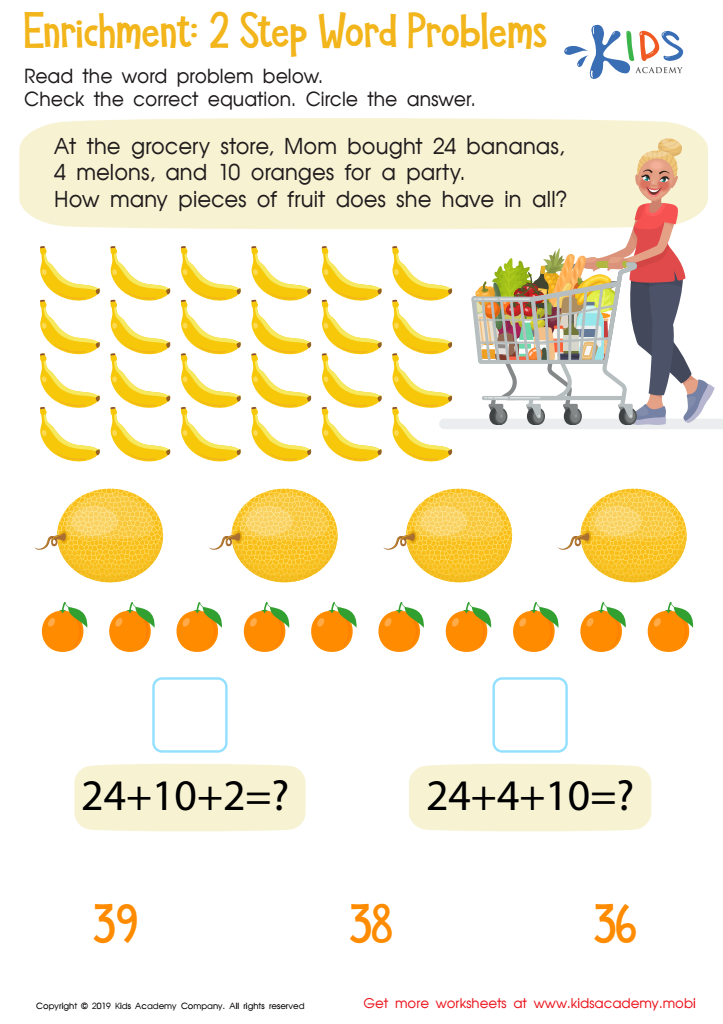
Enrichment -2 Step Word Problems Worksheet
 Assign to My Students
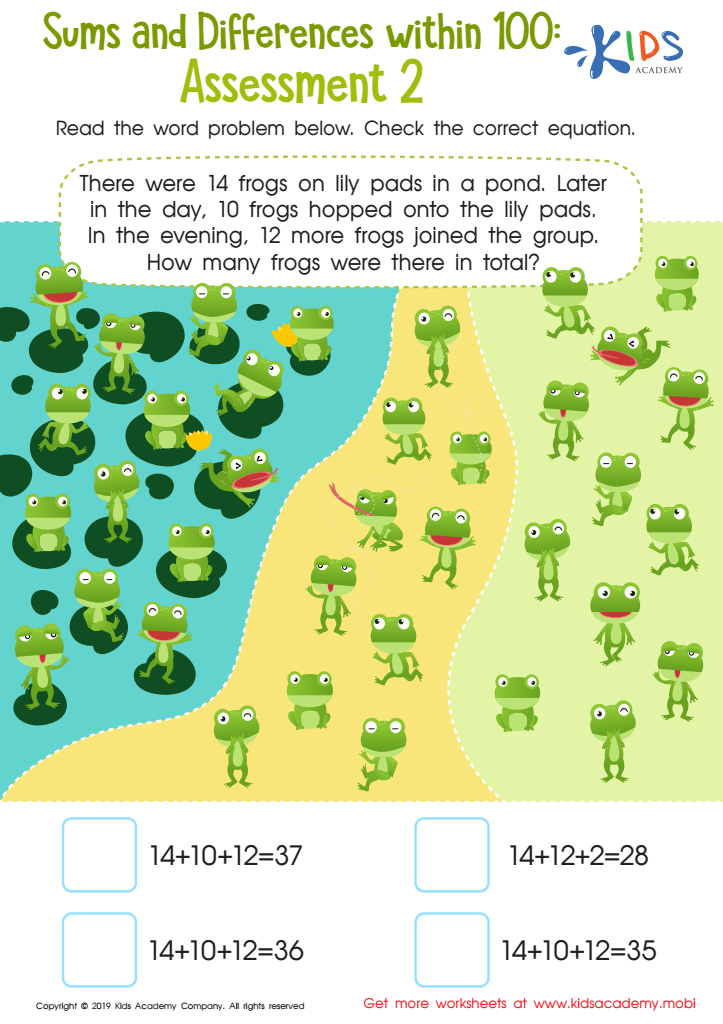
Sums and Differences Within 1 - Assessment 2 Worksheet
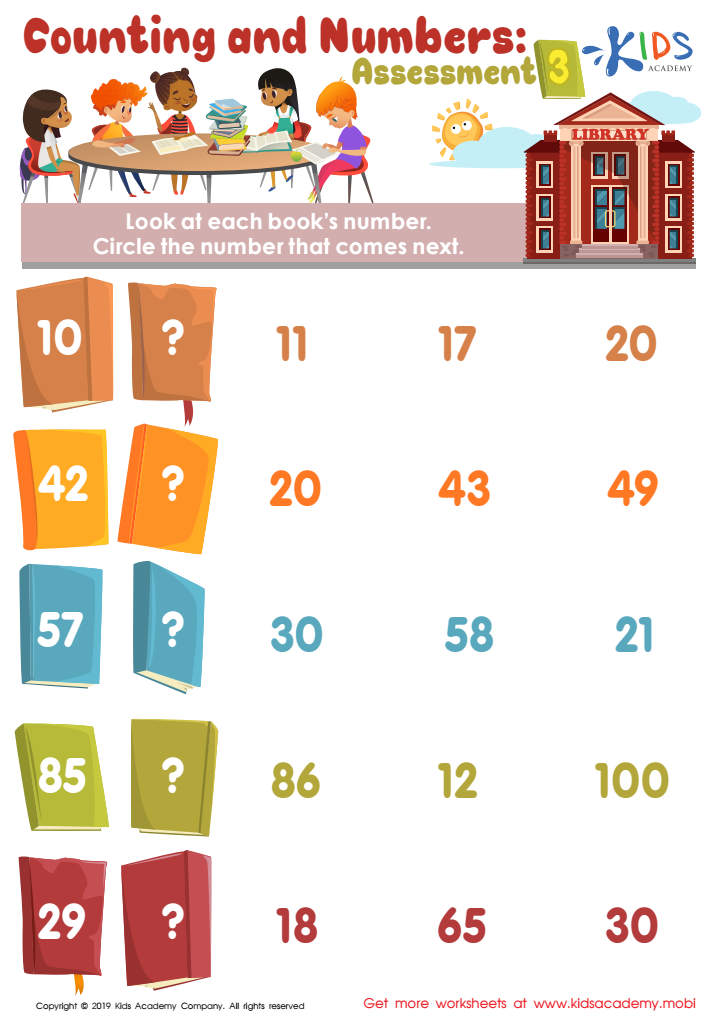
Counting and Numbers: Assessment Worksheet








Mathematical comprehension during the critical ages of 6-9 is foundational for a child's academic and cognitive development. At this stage, children transition from understanding basic concepts to applying mathematical reasoning in various contexts. For parents and teachers, fostering mathematical comprehension is vital for several reasons.
Firstly, these years are when children form their attitudes towards math. A solid foundation builds confidence, promoting a positive relationship with the subject that can persist throughout their education. Additionally, strong mathematical skills enhance problem-solving abilities, critical thinking, and logical reasoning, crucial skills not just in math but in daily life and future learning.
Moreover, comprehending math fosters independence; children learn to navigate and manipulate numbers, equipping them to tackle real-world challenges. As they progress, these skills become essential for advanced topics and in occupations that require analytical skills.
Lastly, enhancing mathematical comprehension in early education allows for differentiation among learners, ensuring that each child's educational needs are met efficiently. Engaging with math at this crucial age cultivates a rich learning environment where curiosity thrives, ultimately setting the groundwork for lifelong learning. Parents and teachers play integral roles in making mathematical experiences fun and relatable, which is essential for each child's success.








