Mental math skills Math Worksheets for Ages 6-9 - Page 2
26 filtered results
-
From - To
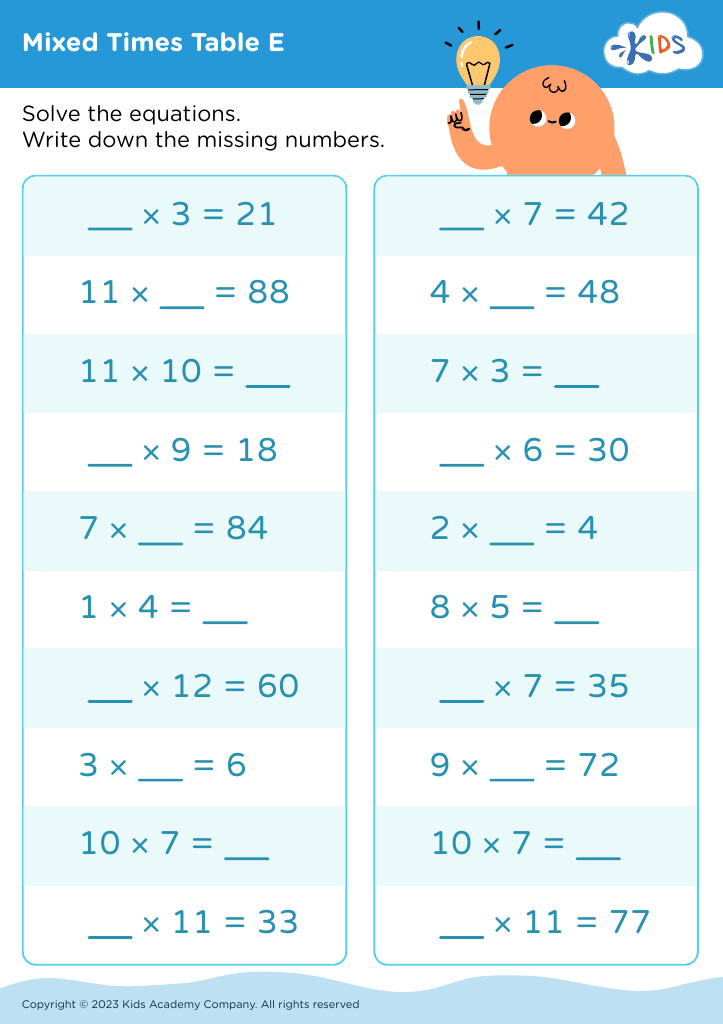
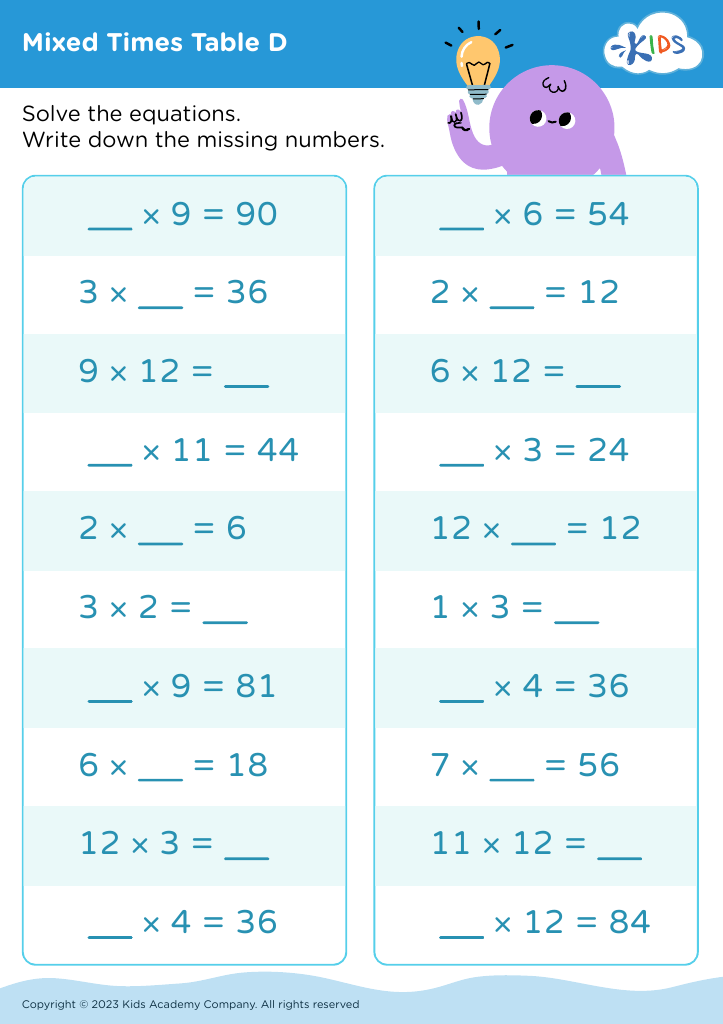







Mental math skills are crucial for children ages 6-9 because they provide a fundamental building block for more complex mathematical understanding. At this young age, developing the ability to perform calculations in their heads helps them gain number sense, which is the intuitive understanding of numbers, their magnitude, relationships, and how they are affected by operations. This early mastery allows children to approach math problems with confidence and flexibility.
For parents and teachers, nurturing these skills can lead to substantial long-term benefits. Children who struggle less with basic calculations can allocate cognitive resources to more complex problem-solving tasks, paving the way for future academic achievement. Additionally, strong mental math skills contribute to everyday practical situations, enhancing a child's ability to manage time, measure ingredients for recipes, and handle money.
Mental math also promotes critical thinking, memory, and concentration. Kids learn to recognize patterns, make estimations, and think logically about numerical relationships. Engaging in mental math teaches children the value of perseverance through practice and problem-solving, promoting a growth mindset.
Ultimately, when parents and teachers emphasize mental math skills, they equip children with essential tools for both their academic journey and daily life, preparing them for a future where analytical and quantitative skills are increasingly important.








