Number pattern recognition Math Worksheets for Ages 6-9
3 filtered results
-
From - To
Explore our engaging Number Pattern Recognition Math Worksheets designed specifically for children ages 6-9. These worksheets provide an excellent opportunity for young learners to develop essential math skills by identifying and extending patterns using numbers, shapes, and objects. Enhanced with vibrant illustrations, our resources not only make learning fun but also foster critical thinking and problem-solving abilities. Perfect for classroom use or at-home practice, these worksheets cater to various learning styles and ensure your child builds a solid foundation in math. Encourage your child's love for learning while they gain confidence in their number skills with our carefully crafted exercises!
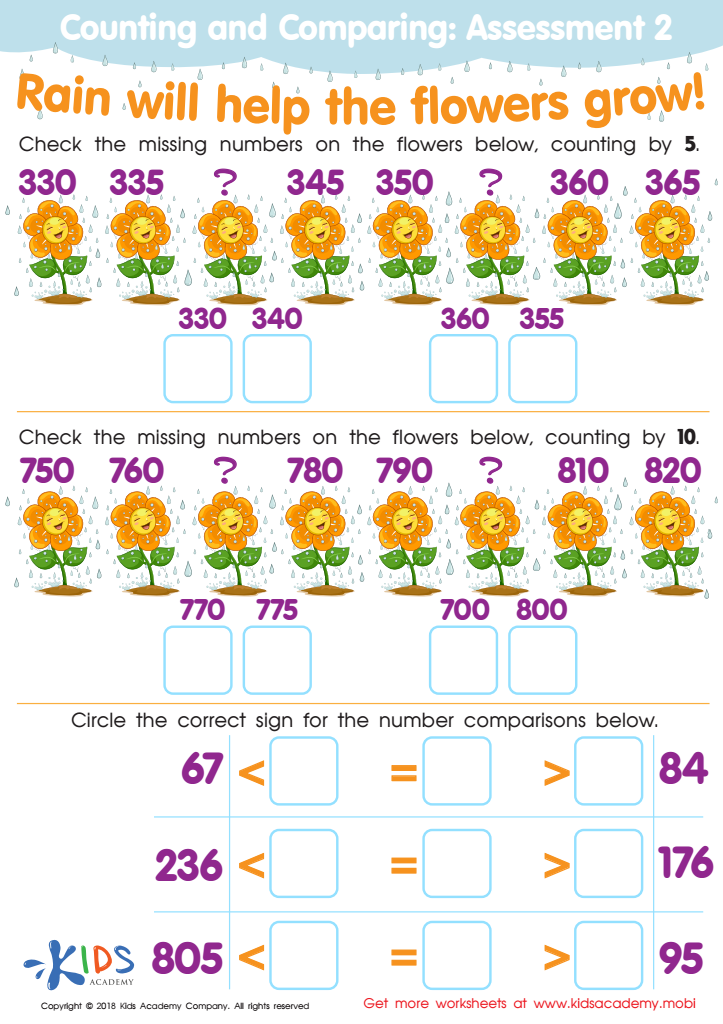
Counting and Comparing: Assessment 2 Worksheet
 Assign to My Students
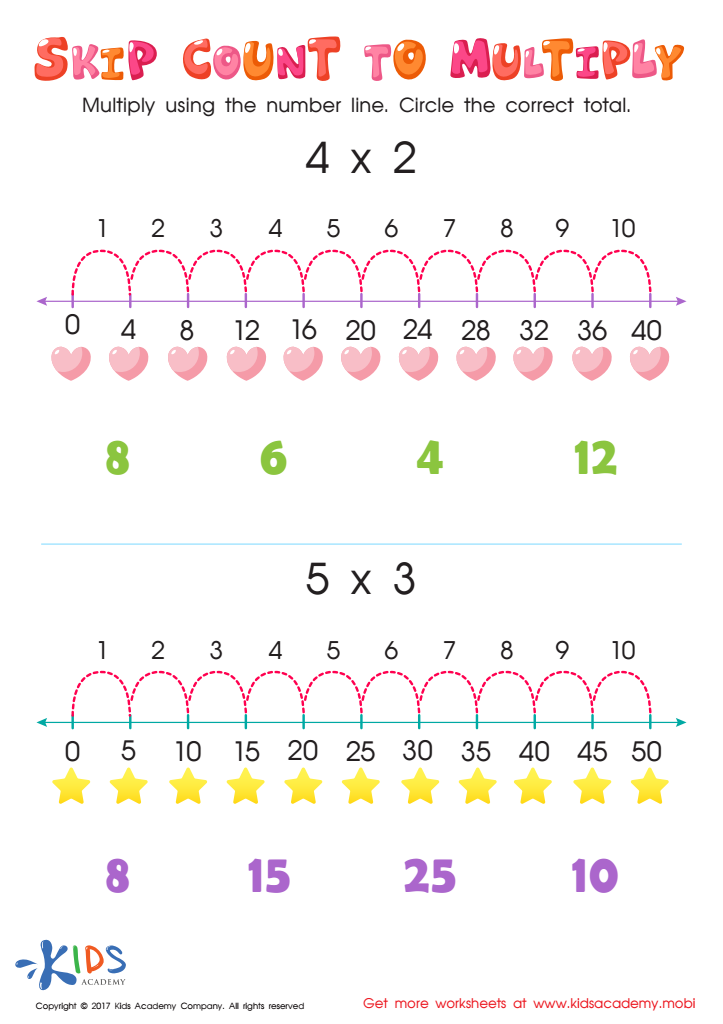
Skip Count Multiplication Worksheet
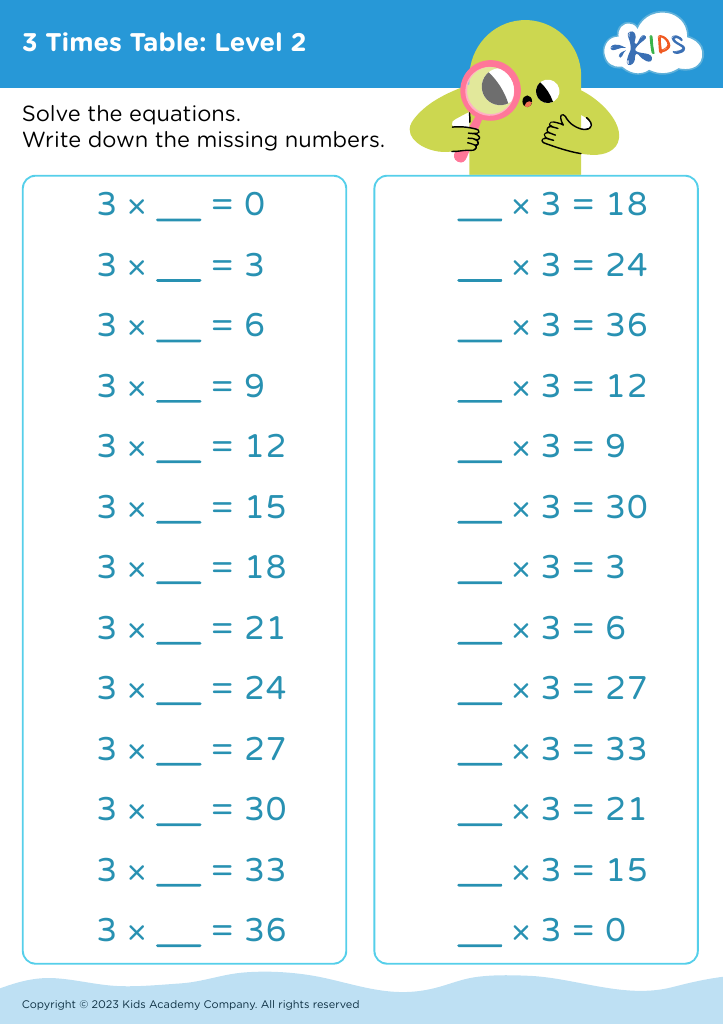







Number pattern recognition is a fundamental skill for children aged 6-9 that lays the groundwork for more complex mathematics. Parents and teachers should care about this concept because it enhances critical thinking and problem-solving abilities. Recognizing patterns helps children identify relationships between numbers, aiding in addition, subtraction, multiplication, and division.
Engaging with patterns cultivates a love for math and boosts children's confidence as they discover mathematical regularities and principles. It promotes logical reasoning, as children begin to predict outcomes and extend sequences. For instance, understanding simple patterns like odd/even numbers or skip counting can help students grasp more advanced concepts later in their education, such as algebra.
Early exposure to pattern recognition also aligns with developmental milestones, as children build connections and understand their world logically. Moreover, it can minimize math anxiety by presenting concepts in a fun, approachable manner. Encouraging activities like games and manipulatives makes learning about patterns enjoyable, enhancing retention and enthusiasm for math.
Ultimately, fostering number pattern recognition equips children with foundational skills that are crucial not only in mathematics but in everyday problem-solving contexts, setting them on a path for future academic success.








