Pattern identification Math Worksheets for Ages 6-9
6 filtered results
-
From - To
Unlock the world of patterns with our engaging Pattern Identification Math Worksheets designed for children ages 6-9! These worksheets provide a fun and interactive way for young learners to develop critical thinking and observational skills as they explore various patterns. Each printable worksheet features colorful visuals and age-appropriate exercises that encourage kids to recognize, extend, and create patterns using shapes, numbers, and colors. Perfect for classroom use or at-home learning, our resources help foster a strong mathematical foundation and boost confidence in early math concepts. Get ready to embark on an exciting journey into the vibrant world of patterns!
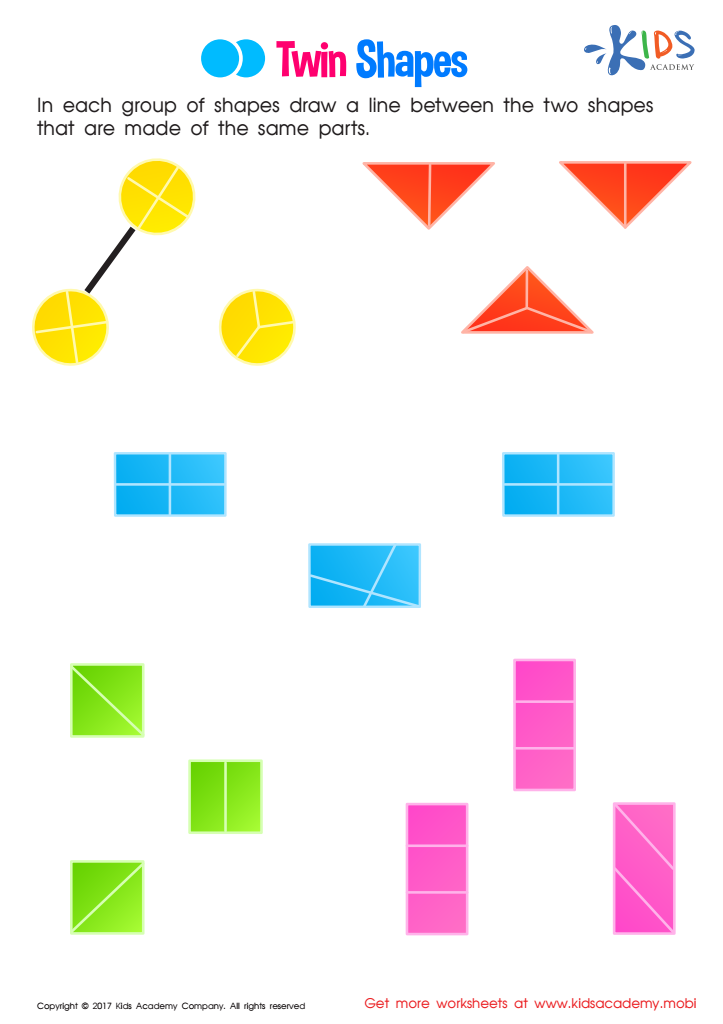
Twin Shapes Worksheet
 Assign to My Students
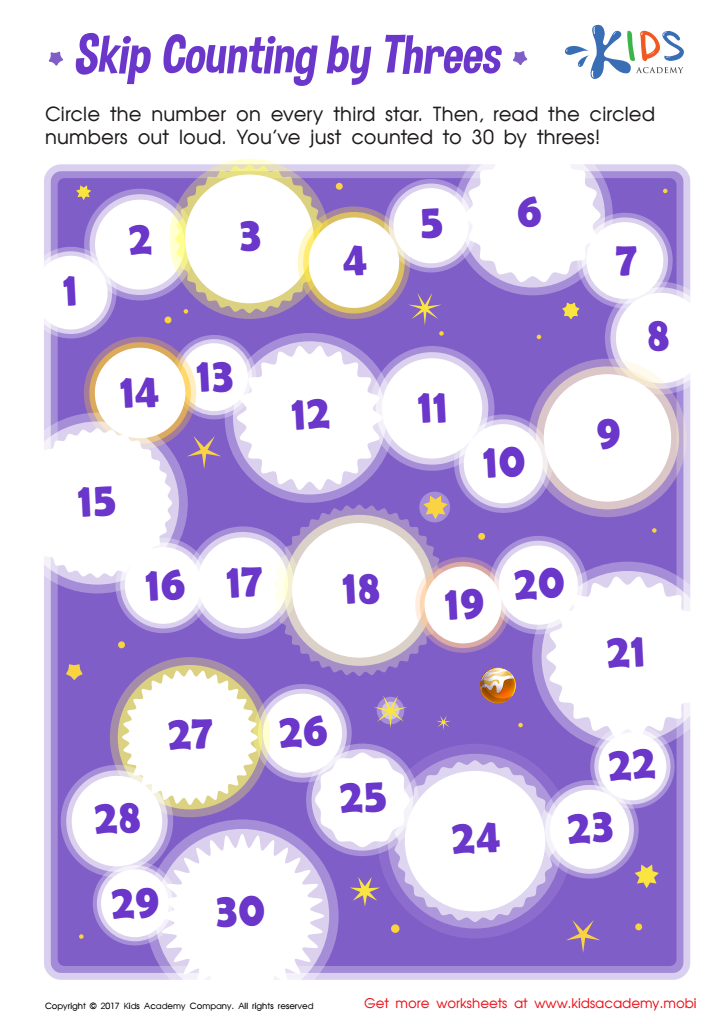
Skip Counting By Three Printable
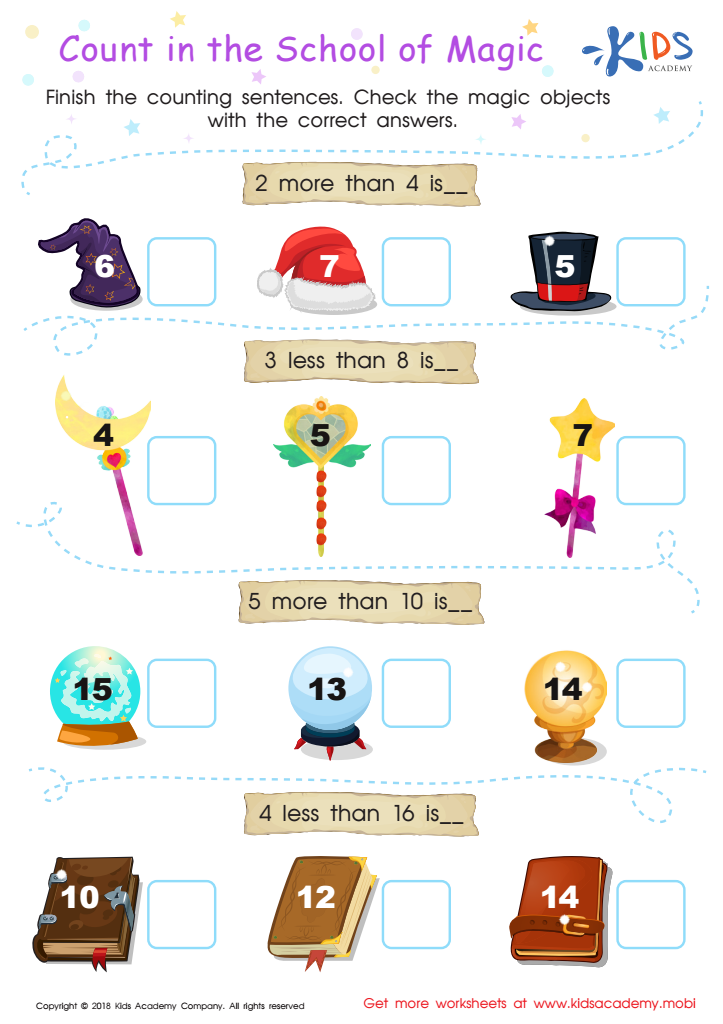
Count in the School of Magic Worksheet
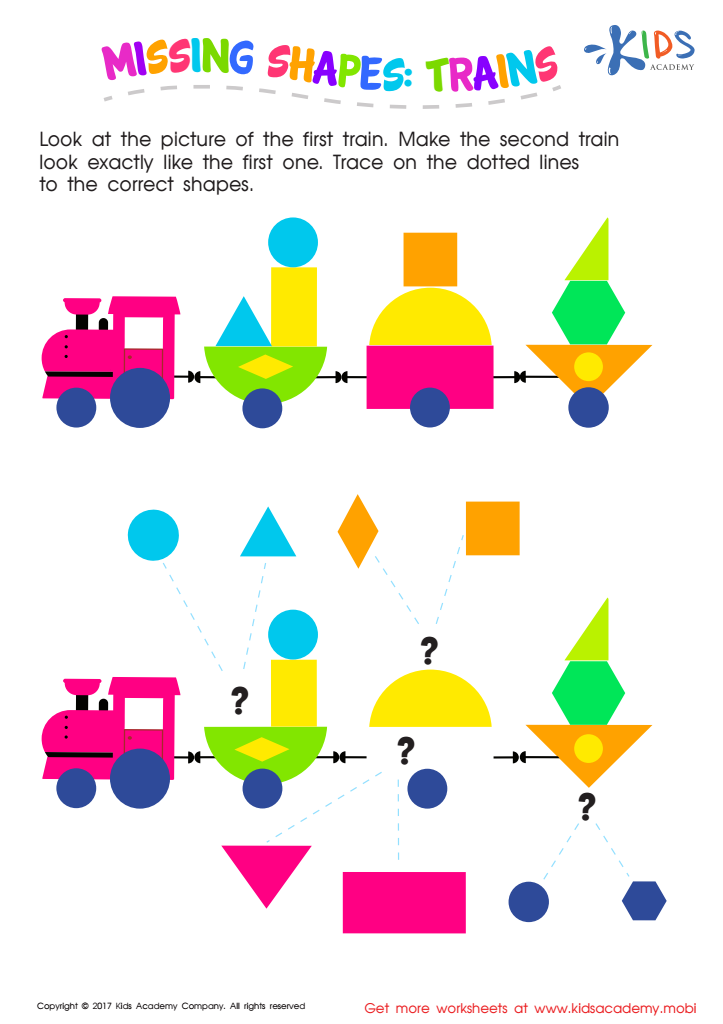
Missing Shapes: Trains Worksheet








Pattern identification is a foundational skill for children aged 6-9, significantly impacting their mathematical development and overall cognitive growth. At this age, children are naturally curious, and recognizing patterns helps them make sense of the world around them. Understanding patterns fosters critical thinking and problem-solving skills, as children learn to identify relationships and predict outcomes.
Parents and teachers should care about teaching pattern identification because it serves as a gateway to more complex mathematical concepts such as addition, subtraction, multiplication, and even algebra. By recognizing patterns, children can improve their ability to sequence numbers, understand symmetry, and grasp the concept of variables.
Moreover, pattern recognition enhances reasoning abilities and boosts confidence in math. As children become proficient in identifying patterns, they develop perseverance and a growth mindset, crucial lifelong skills.
Encouraging exploration of patterns in various contexts—whether through art, nature, or daily life—makes mathematics engaging and relevant. Additionally, early experiences with pattern identification can lead to increased interest and success in STEM subjects, helping to bridge gaps later in education. Ultimately, investing time and effort into fostering pattern recognition lays a strong foundation for children’s future academic and life endeavors.








