Recognizing number patterns Math Worksheets for Ages 6-9
5 filtered results
-
From - To
Discover our exciting collection of number pattern math worksheets tailored for ages 6-9. Designed to enhance critical thinking and math skills, the engaging exercises help young learners identify and extend a variety of numerical sequences. Each worksheet is crafted to make learning fun, promoting confidence and proficiency in recognizing patterns, counting, and predicting numbers. Perfect for classroom use or home practice, these resources support foundational math development, laying the groundwork for future success. Spice up math time with our creative, expertly designed worksheets and watch your child excel! Explore today and turn number patterns into a captivating adventure.
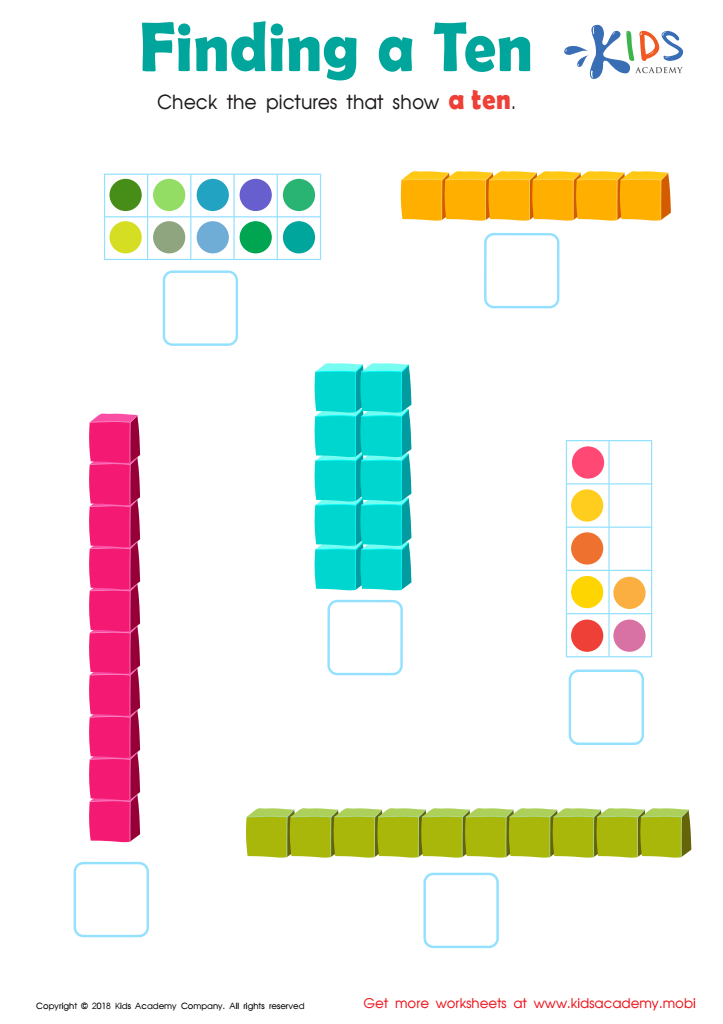
Finding a Ten Worksheet
 Assign to My Students
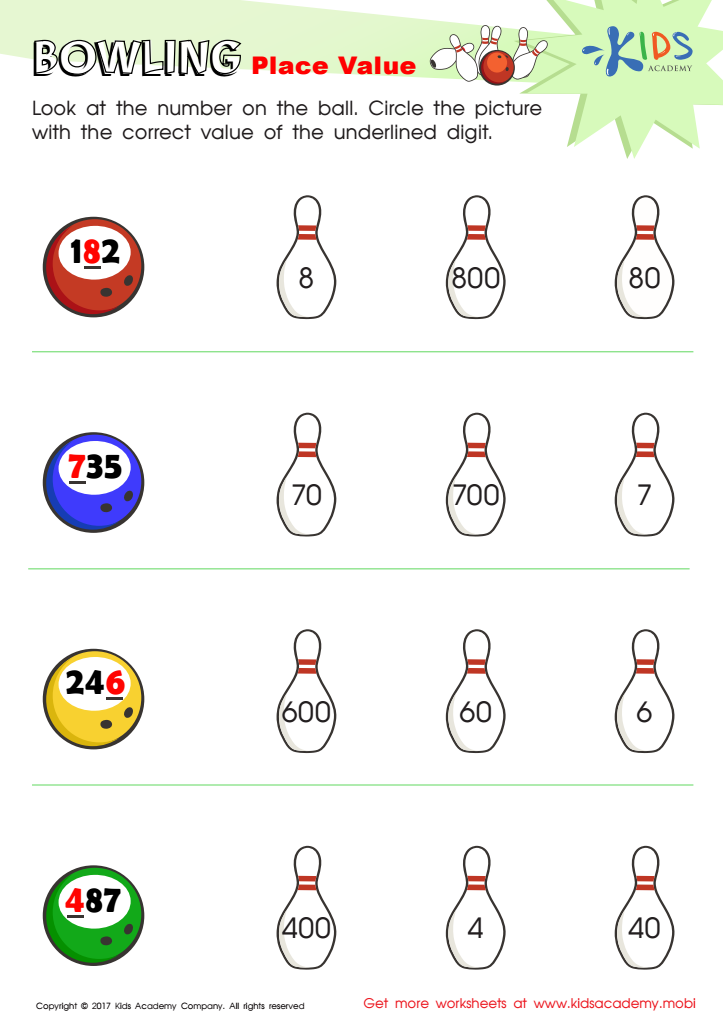
Place Value Worksheet
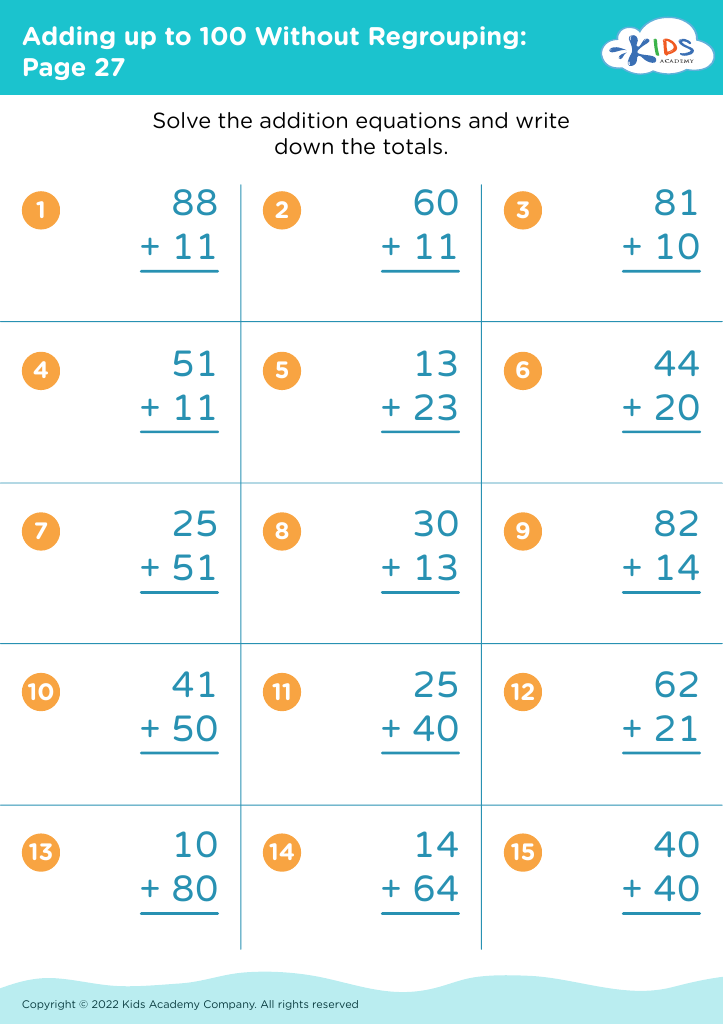
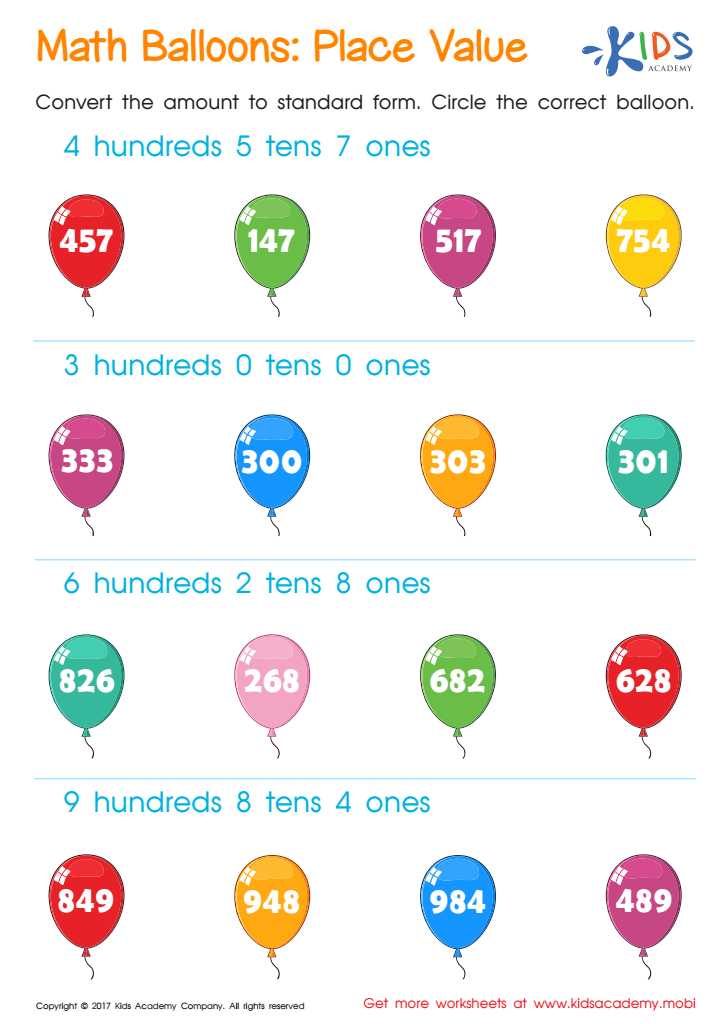
Place Value Printable Worksheet
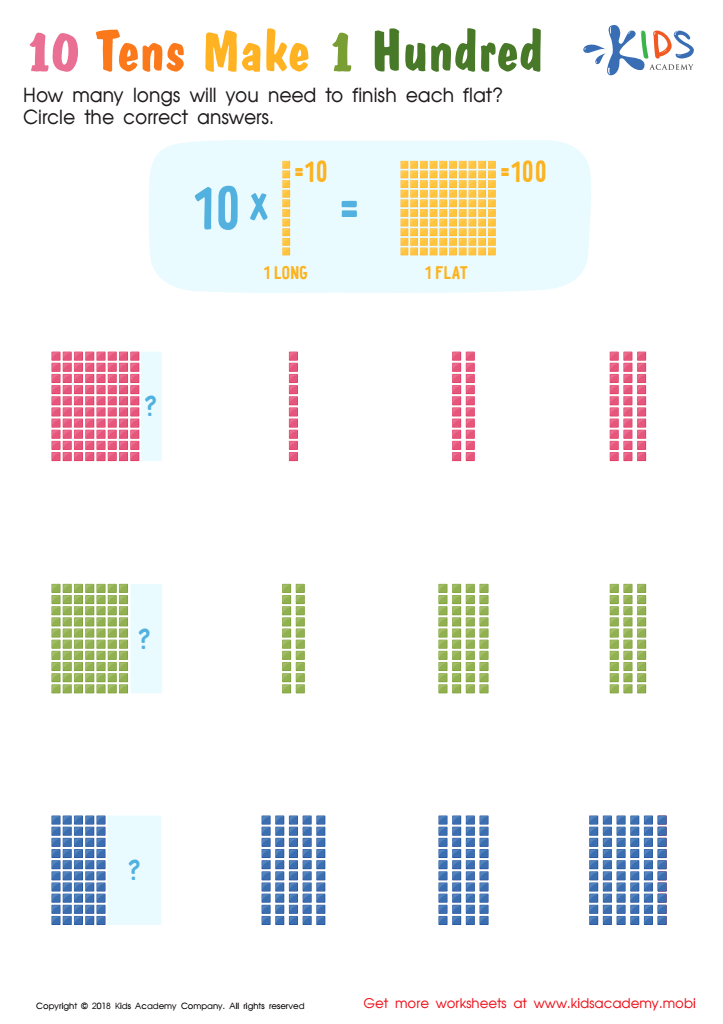
10 Tens Make 1 Hundred Worksheet







Recognizing number patterns is a foundational mathematical skill essential for children ages 6-9, forming a vital cornerstone for future mathematical learning. At this developmental stage, number patterns enable young learners to understand the structure and behavior of numbers, fostering a sense of order and predictability in mathematics.
Firstly, number patterns enhance problem-solving abilities by enabling children to make logical predictions and connections. By identifying patterns, students can infer missing elements and recognize relationships between numbers, which is helpful for advanced topics like algebra.
Secondly, these patterns support cognitive development, particularly in areas related to sequencing, memory, and analytical thinking. Engaging with number patterns encourages children to use visual and analytical skills simultaneously, enriching their neural pathways and promoting mental math abilities.
Moreover, recognizing such patterns makes learning more engaging and interactive. Discovering patterns taps into children's natural curiosity and encourages a joy for learning, making abstract math concepts more tangible and enjoyable.
Lastly, foundational number patterns are directly aligned with core educational standards and curricula, serving as prerequisites for more complex arithmetic and geometric concepts. Mastery in recognizing these patterns ensures smoother transitions to topics like multiplication tables, fractions, and problem-solving in higher grades, laying a strong groundwork for academic success in mathematics.








