Subtraction skills Math Worksheets for Ages 6-9 - Page 2
27 filtered results
-
From - To
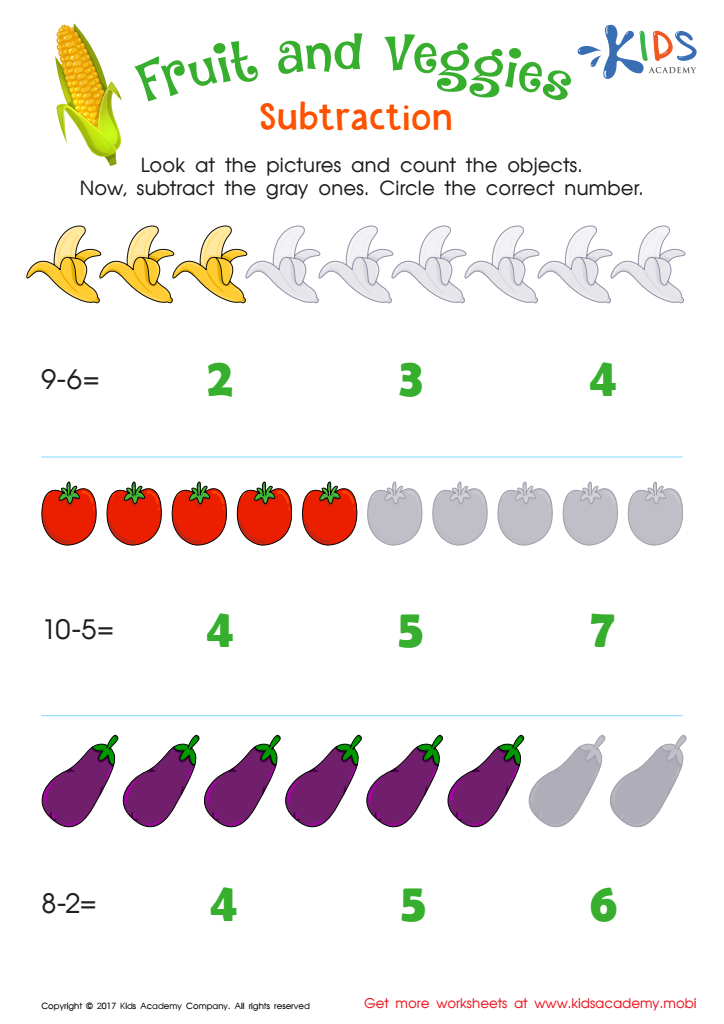
Fruit and Veggies Subtraction Worksheet
 Assign to My Students
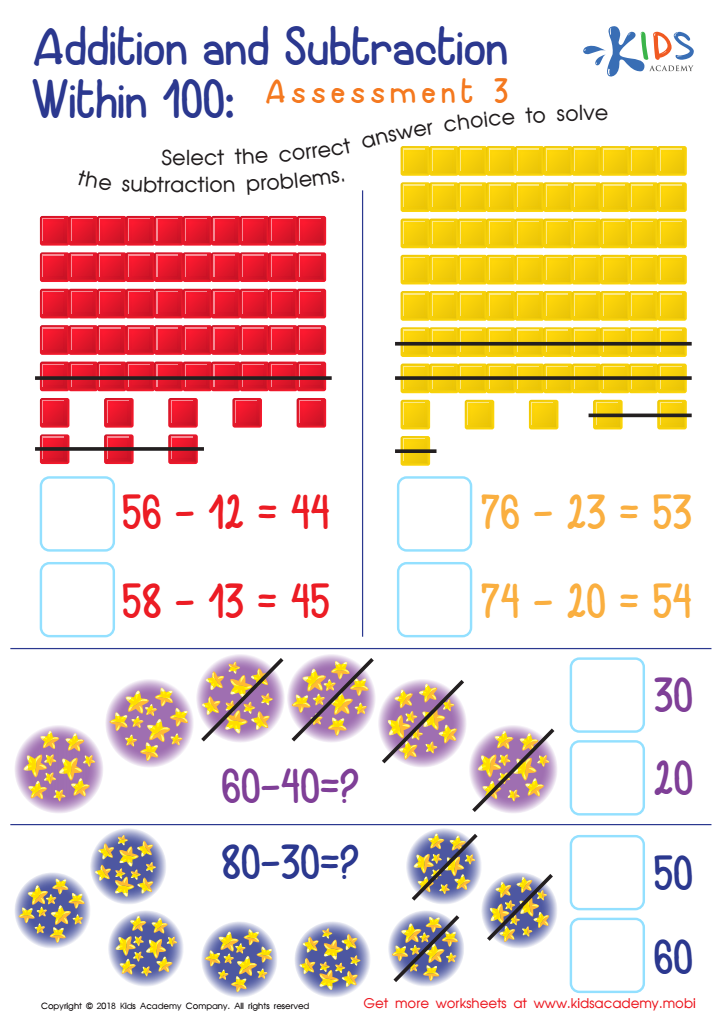
Addition and Subtraction Within 1: Assessment 3 Worksheet








Subtraction skills are essential for children aged 6-9 as they lay the foundation for future mathematical understanding and problem-solving abilities. During these formative years, students transition from simple counting to more complex operations, making it crucial that they grasp subtraction concepts fully.
Firstly, subtraction is fundamental to everyday life. Children encounter subtraction in real-world situations, such as sharing snacks, budgeting allowance, and managing time. Mastery of subtraction helps them develop critical thinking and analytical skills, allowing them to approach problems systematically.
Secondly, strong subtraction skills bolster overall academic confidence and performance. A solid understanding of this operation enables students to tackle more advanced math concepts, such as addition and subtraction of larger numbers, as well as early introductions to multiplication and division.
Furthermore, proficiency in subtraction can significantly enhance a child's self-esteem and engagement in math. When students experience success in subtraction, they are more likely to develop a positive attitude toward math as a whole, fostering a lifelong enthusiasm for learning.
Ultimately, supportive parents and teachers play a vital role in cultivating these skills, ensuring that children have a positive mathematical foundation from which they can build their knowledge and confidence in STEM subjects.








