Time-telling skills Math Worksheets for Ages 6-9
5 filtered results
-
From - To
Boost your child's time-telling skills with our engaging math worksheets, designed specifically for ages 6-9! These expertly crafted worksheets offer a variety of fun, interactive exercises that enhance your child's ability to read clocks, understand hour and minute hands, and grasp the concepts of AM and PM. Perfect for young learners, they will not only learn to tell time with ease but also develop vital mathematical skills. Tailored to cater to different learning levels, our worksheets ensure a solid foundation in time-telling that will benefit your child in everyday activities. Dive into our world of educational fun today!
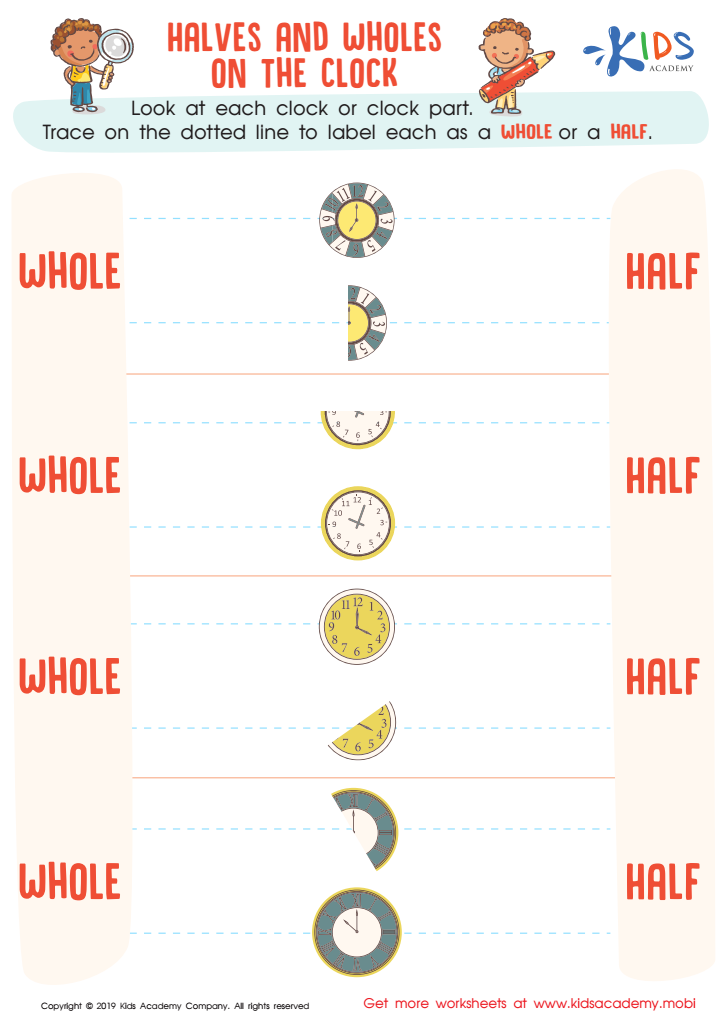
Halves and Wholes on the Clock Worksheet
 Assign to My Students
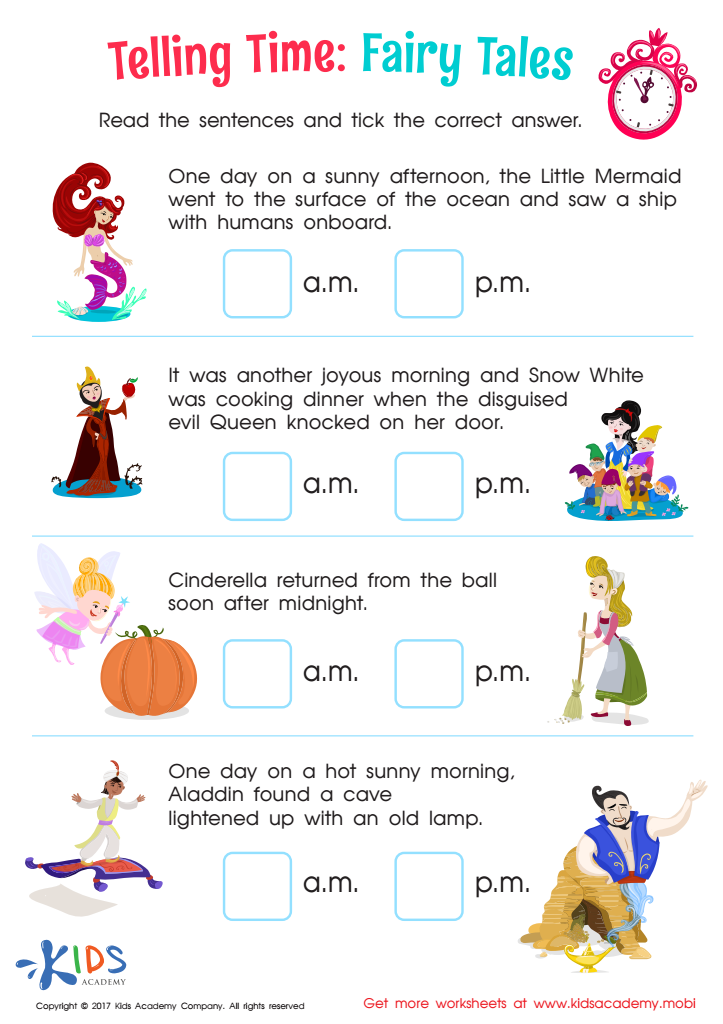
Telling Time: Fairy Tales Worksheet
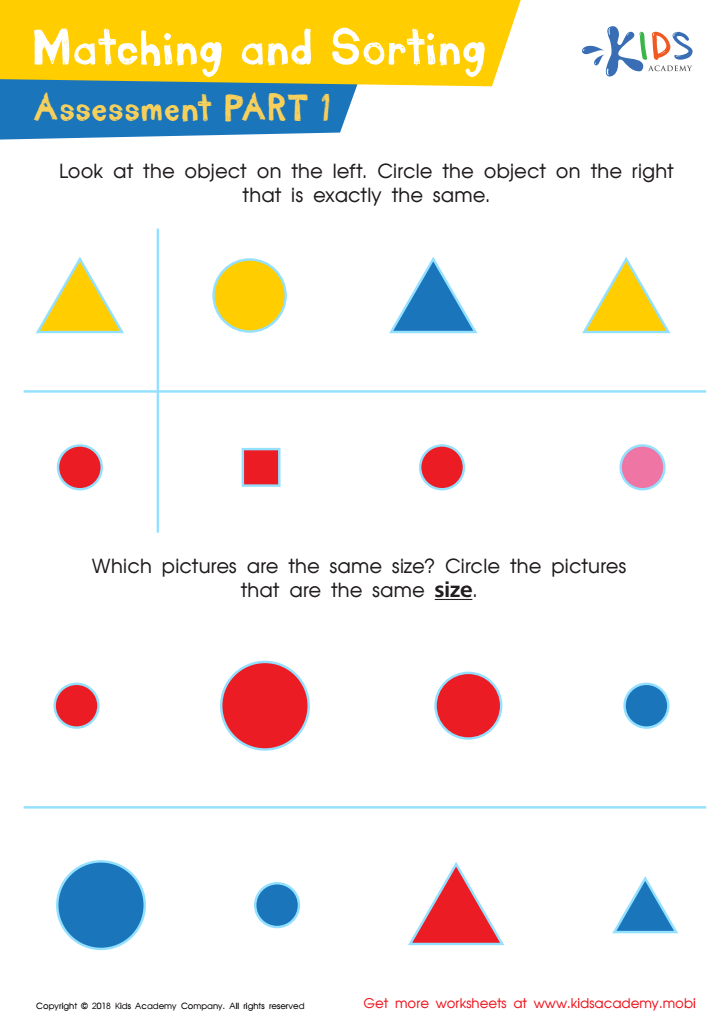
Matching and Sorting for Kindergarten: Assessment 1 Worksheet
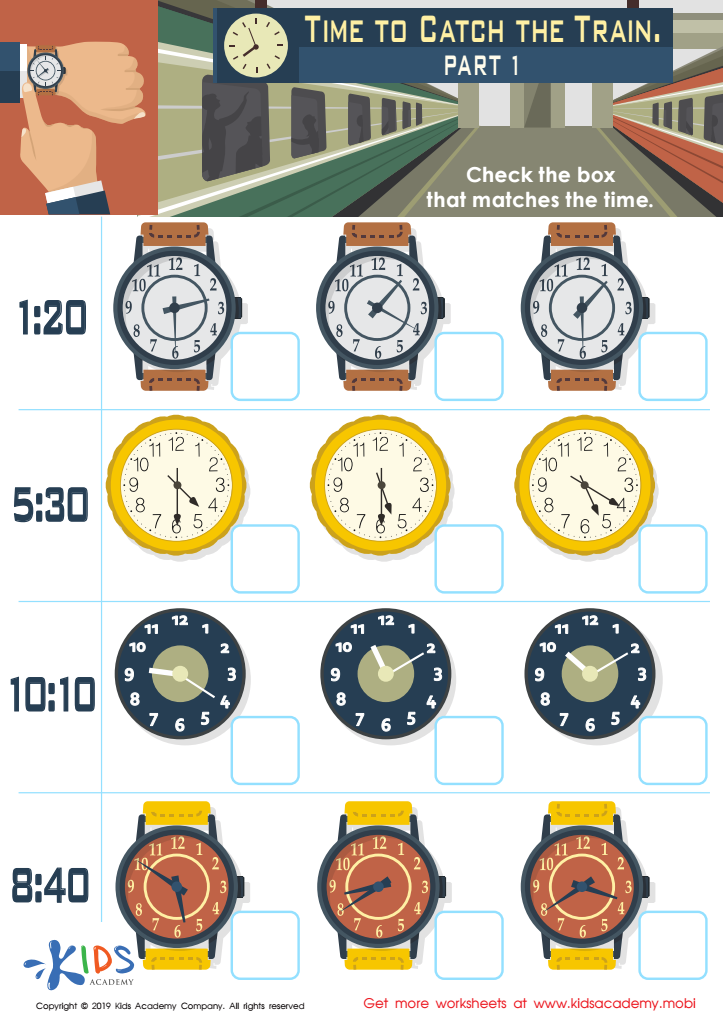
Time to Catch the Train Part 1 Worksheet





Time-telling skills are essential for children aged 6-9 as they form the foundation for managing daily activities and fostering independence. Understanding the concept of time is crucial for developing an organized routine and adhering to schedules, which helps children grasp the importance of punctuality and time management.
Learning to tell time also enhances mathematical skills by reinforcing arithmetic concepts such as counting by fives, understanding sequences, and making comparisons. These interactions help strengthen cognitive abilities and foundational math skills, which are critical for later academic success.
Furthermore, time-telling promotes critical thinking as children learn to associate specific times with daily routines and activities, aiding in memory retention and time-based problem-solving. This process supports overall development, helping children become more self-reliant and invested in their personal responsibilities.
For parents and teachers, emphasizing time-telling skills prepares children to actively participate in their schedules, boosts confidence, and improves their ability to be more autonomous. This proficiency can lead to enhanced academic performance, better organizational skills, and a sense of accomplishment. Given its broad-reaching impact, focusing on time-telling skills offers a holistic benefit to a child's development, both academically and in terms of life skills.








