
Understand number relationships Math Worksheets for Ages 6-9
3 filtered results
Difficulty Level
Grade
Age
-
From - To
Subject
Activity
Standards
Discover our engaging "Understand Number Relationships" math worksheets designed specifically for children ages 6-9. These worksheets aim to build a strong foundation in mathematics by helping young learners recognize patterns, connections, and the importance of numbers. By exploring concepts such as greater than, less than, and equal to, students will enhance their critical thinking and problem-solving skills. Our resources are crafted to make learning fun and interactive, with colorful visuals and age-appropriate activities that keep kids motivated. Perfect for home or classroom use, these worksheets will empower your child to confidently navigate the world of numbers and develop essential math skills.
Favorites
With answer key
Interactive
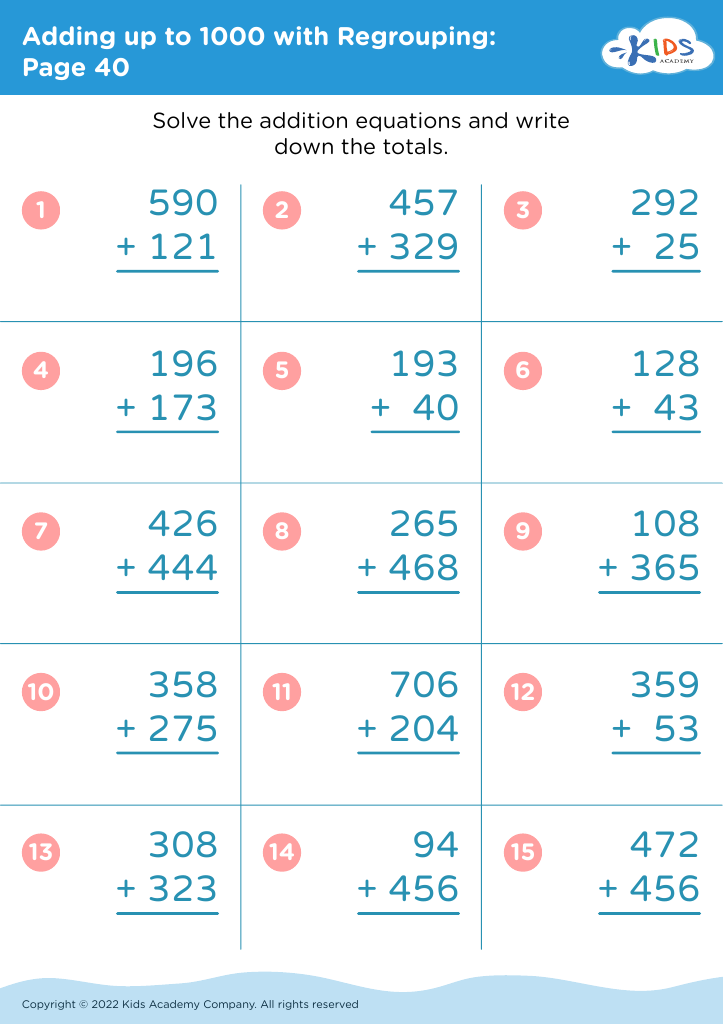
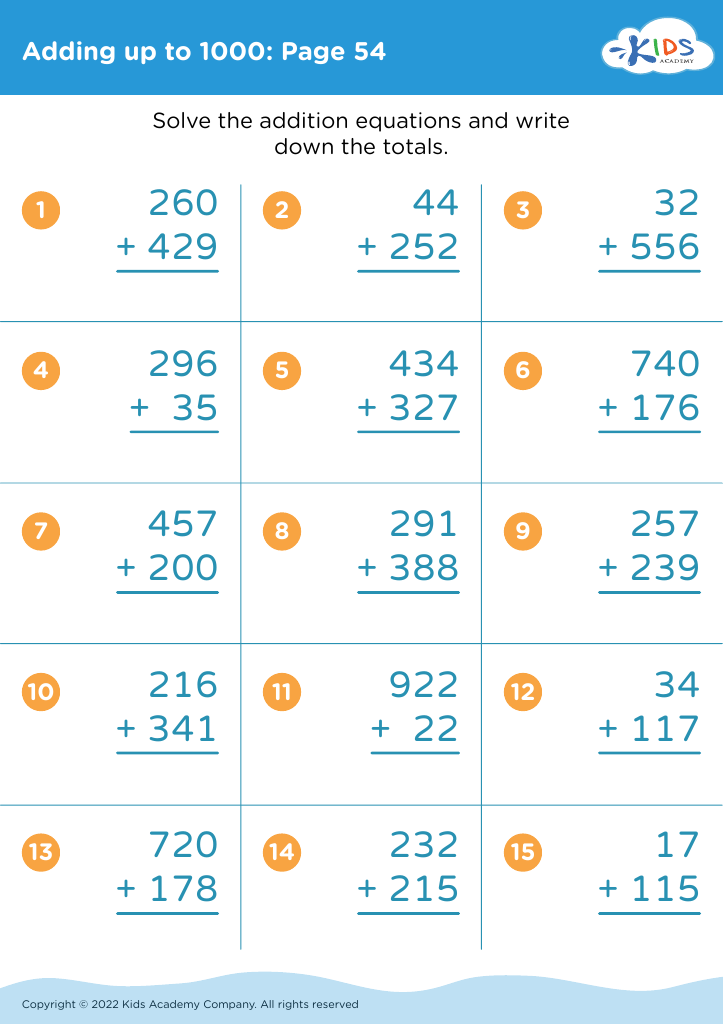
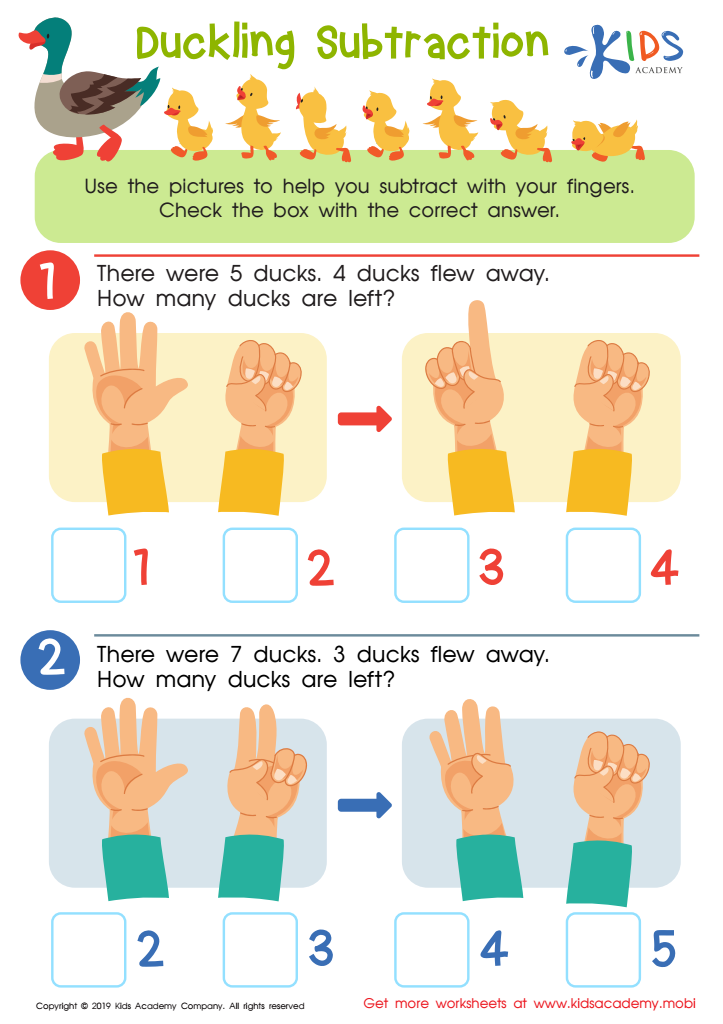
Duckling Subtraction Worksheet
Help your students learn equations and math with this fun worksheet. There are two questions to solve with the help of the pictures. Ask them to subtract with their fingers and check the box with the correct answer. This makes math easier and more enjoyable!
 Assign to My Students
Duckling Subtraction Worksheet
Worksheet
Join Kids Academy for Free
Who is primarily going to use this learning content?








Understanding number relationships is crucial for children aged 6-9, as it lays the foundation for their mathematical thinking and problem-solving skills. During these formative years, children begin to grasp concepts such as addition, subtraction, multiplication, and division, which are essential for their academic growth. By comprehending how numbers relate to each other, children can make predictions, estimate values, and recognize patterns, which enhances their overall cognitive abilities.
Parents and teachers play a vital role in supporting this learning process. Engaging with children through fun activities, games, and real-world applications helps make abstract concepts more tangible. When children understand number relationships, they develop confidence in their math skills, which combats math anxiety and fosters a positive attitude toward learning.
Moreover, strong number sense at an early age is linked to future academic success, particularly in subjects that require critical thinking and analytical skills. By encouraging curiosity, exploration, and discussion around numbers, parents and teachers not only aid children's mathematical proficiency but also nurture their intrinsic motivation to learn. Thus, fostering an understanding of number relationships is essential for building a strong mathematical foundation that will benefit children throughout their educational journey and beyond.








