Understand sequencing Math Worksheets for Ages 6-9
3 filtered results
-
From - To
Explore our engaging sequencing math worksheets designed for children ages 6-9! These resources help young learners develop essential sequencing skills through fun and interactive activities. Our worksheets encourage kids to identify patterns, arrange numbers, and complete sequences, fostering critical thinking and problem-solving abilities. Perfect for classrooms or home learning, these worksheets align with educational standards, making math enjoyable and accessible. Equip your child with the tools they need to understand order and organization in mathematics, laying a strong foundation for future learning. Dive into our collection today and watch as your child becomes confident in their sequencing abilities!
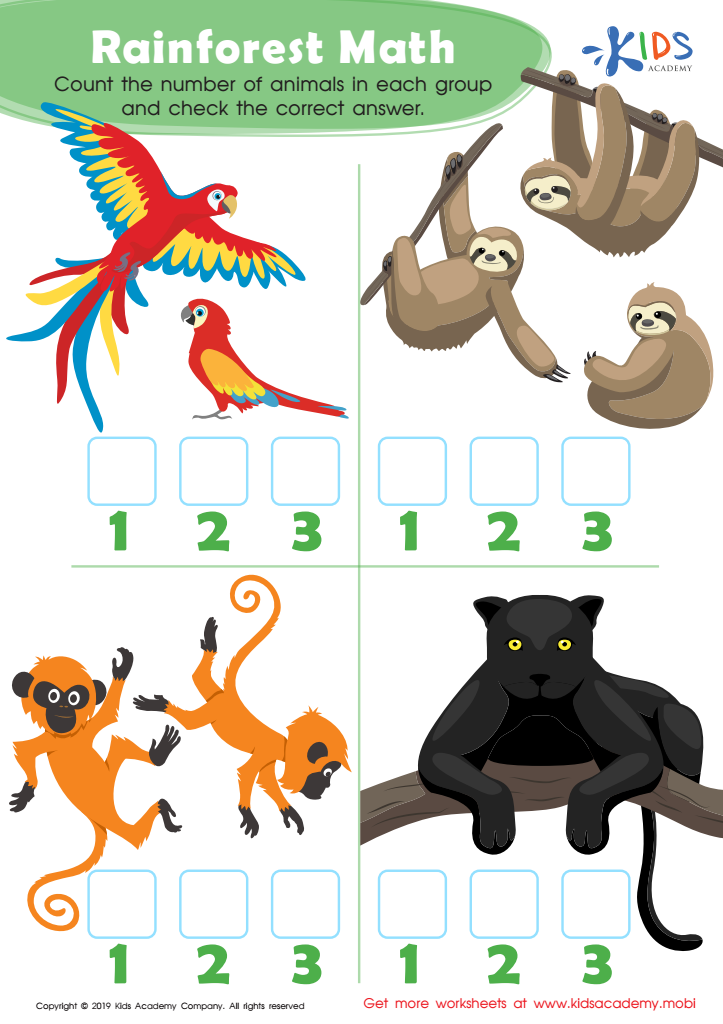
Rainforest Math Worksheet
 Assign to My Students
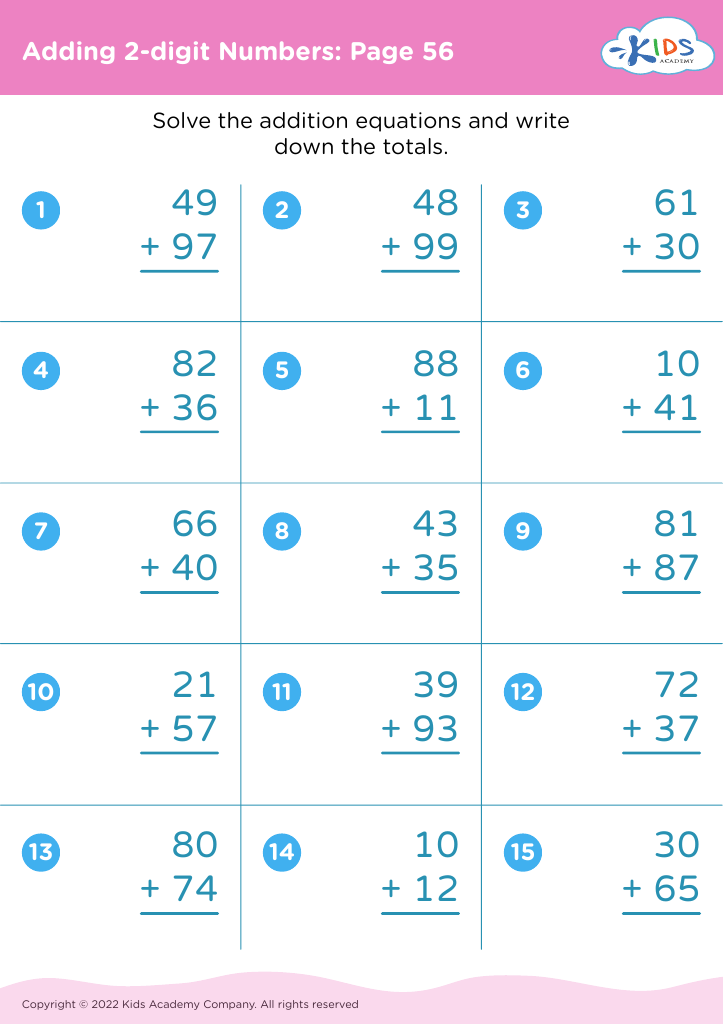
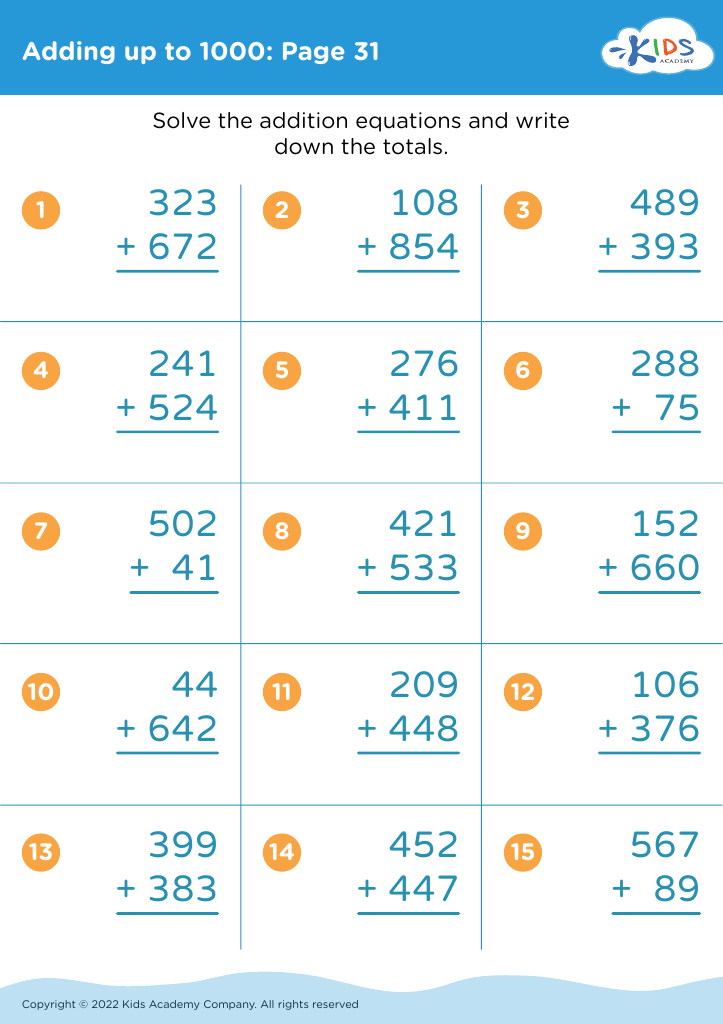






.jpg)
Understanding sequencing in mathematics is crucial for children aged 6-9, and both parents and teachers play a vital role in this developmental phase. Sequencing helps children grasp the order of operations and the relationship between numbers, which is foundational for more complex mathematical concepts later on. For instance, being able to identify patterns or arrangements prepares students for addition and subtraction, as well as problem-solving tasks requiring logical reasoning.
At this age, children learn not only basic arithmetic but also how to organize their thoughts and approaches to problems. Missing out on sequencing can lead to confusion and difficulty in more advanced topics such as multiplication or division. When parents and teachers prioritize this skill, they help foster critical thinking and boost a child's confidence in math.
Additionally, engaging parents in the learning process creates a supportive environment at home. Activities such as games, story problems, or real-life mathematical scenarios can reinforce sequencing in a fun and relatable way. By understanding the importance of sequencing, caregivers can ensure that children build a solid mathematical foundation, paving the way for success in future learning and enhancing their overall academic experiences.








