Understanding area Math Worksheets for Ages 6-9
3 filtered results
-
From - To
Welcome to our "Understanding Area" math worksheets for children ages 6-9! Our engaging, interactive resources help young learners grasp the concept of area through fun activities and practical examples. Designed to align with educational standards, these worksheets encourage kids to explore the measurement of space in various shapes using hands-on methods. They’ll practice counting squares, calculating area in both square units, and solving real-world problems while enhancing their critical thinking skills. Perfect for classroom use or at-home learning, our worksheets are an invaluable tool for building a strong foundation in math. Let's make learning about area an exciting adventure!
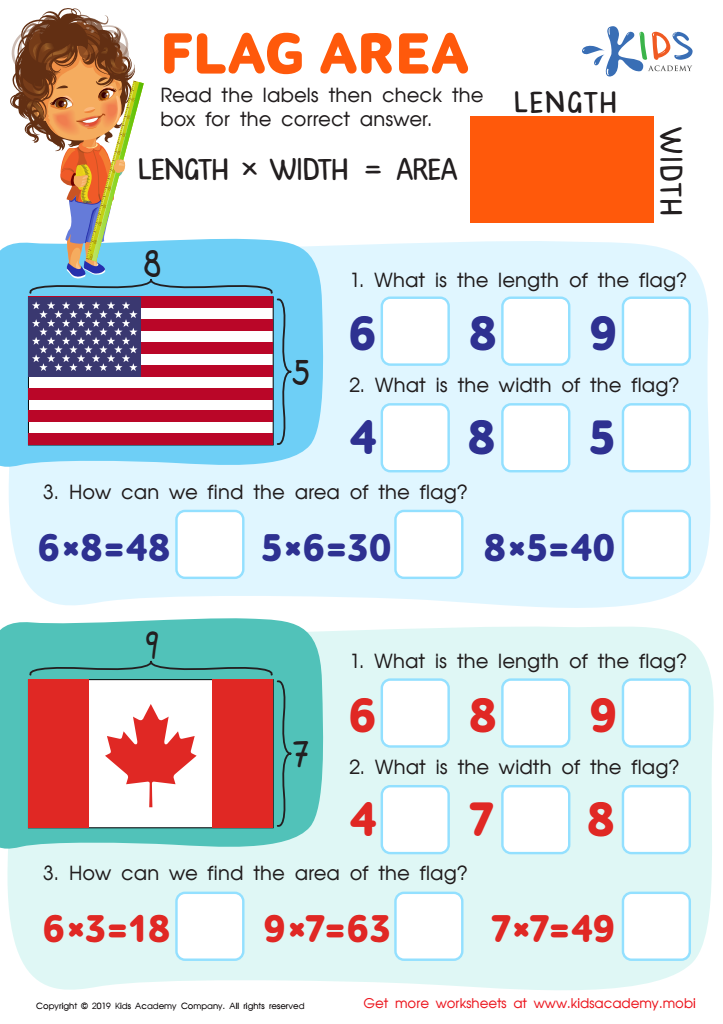
Flag Area Worksheet
 Assign to My Students
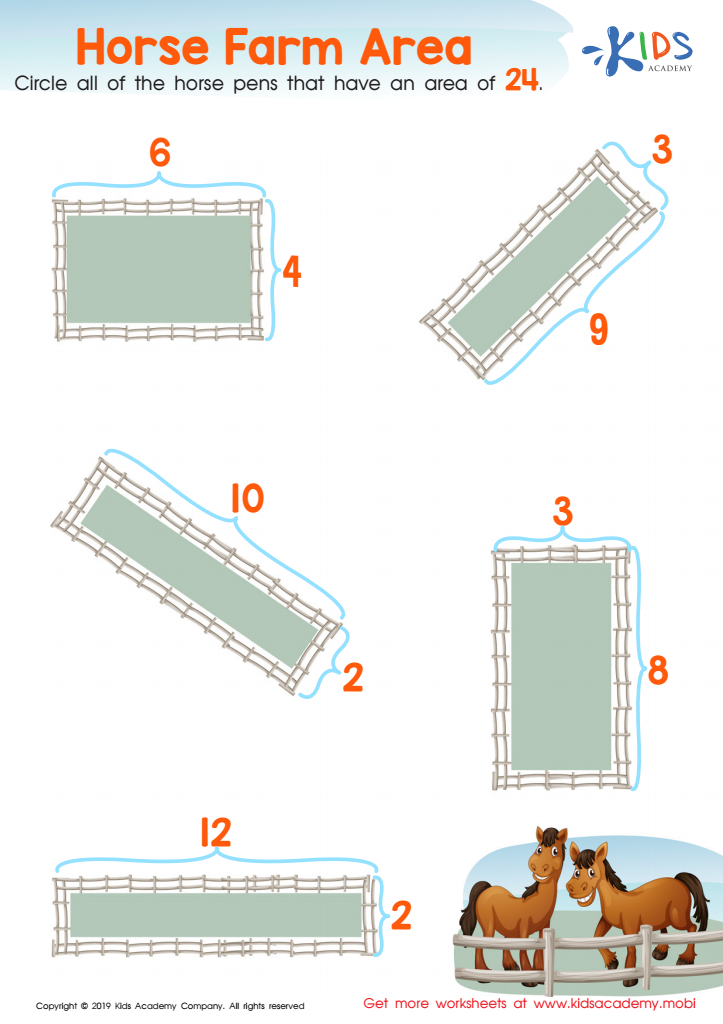
Horse Farm Area Worksheet
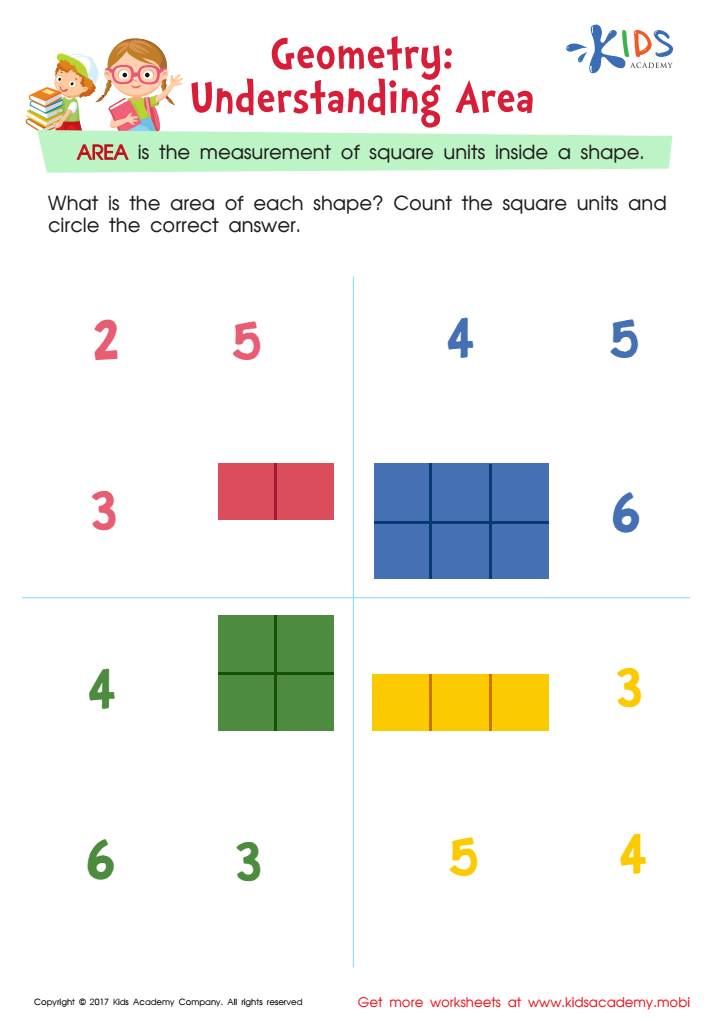
Understanding Area Worksheet







Understanding area math is crucial for children aged 6-9 as it lays the foundation for critical thinking and problem-solving skills. At this stage, students are beginning to grasp basic geometric concepts, and understanding area helps them connect math to the real world. By learning how to measure and calculate area, children develop spatial reasoning, which is essential for higher-level math and science subjects later on.
Additionally, significant mathematical concepts like multiplication and division often relate to area through concepts of repeating units and arrays. When children realize that area can be determined through different measurements (e.g., length and width), they enhance their multiplication skills in a meaningful context.
For parents and teachers, fostering an understanding of area can also encourage teamwork and communication, as children often work together to measure and calculate in hands-on activities. Engaging with this concept in a fun and interactive way helps students develop a positive attitude towards math. Ultimately, a strong foundation in understanding area will not only support their current learning but also prepare them for future mathematical challenges, ensuring they grow to be competent and confident individuals in their academic pursuits.








