Understanding comparisons Math Worksheets for Ages 6-9
4 filtered results
-
From - To
Explore our comprehensive "Understanding Comparisons Math Worksheets" tailored for children ages 6-9! These engaging worksheets help young learners grasp the concept of comparisons through fun and interactive activities. Designed to enhance critical thinking, students will work on identifying greater than, less than, and equal to while comparing numbers, objects, and simple data. Each worksheet progresses in complexity, ensuring that children build their skills confidently. Ideal for both classroom and home use, our resources support teachers and parents in reinforcing essential math concepts. Download now to make learning comparisons enjoyable and effective for your little mathematicians!
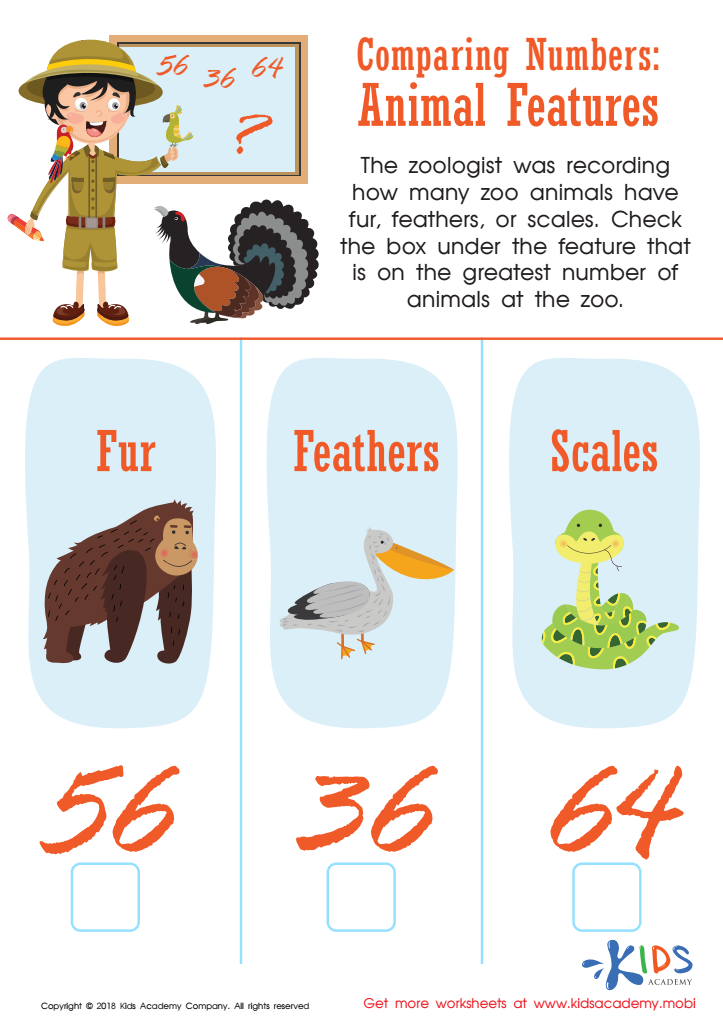
Animal Features Worksheet
 Assign to My Students
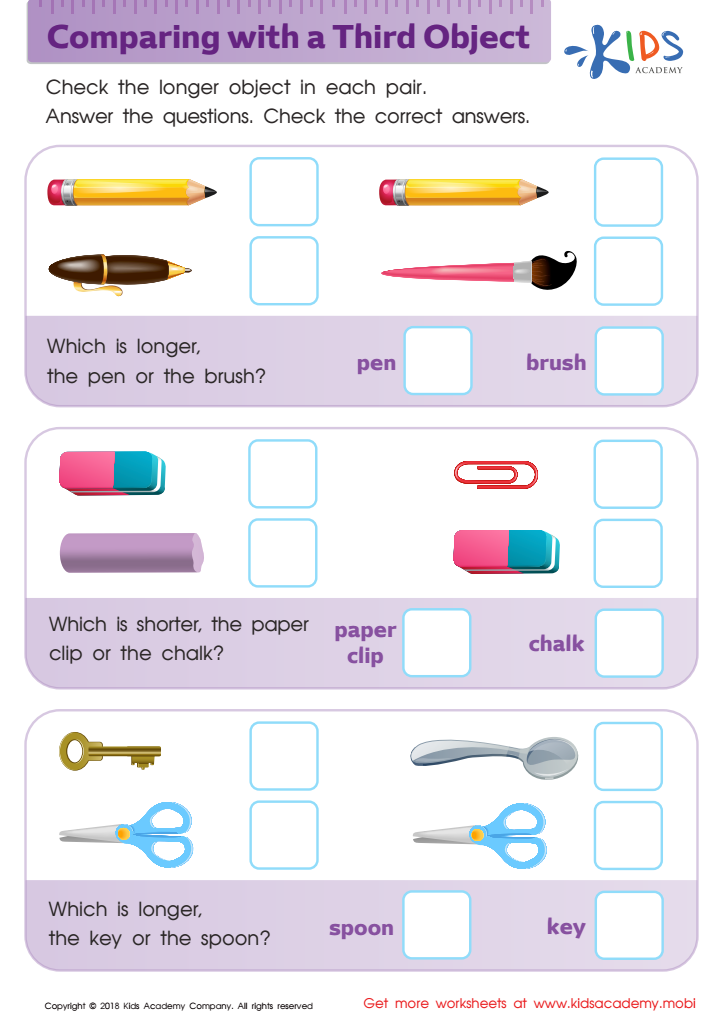
Comparing with a Third Object Worksheet
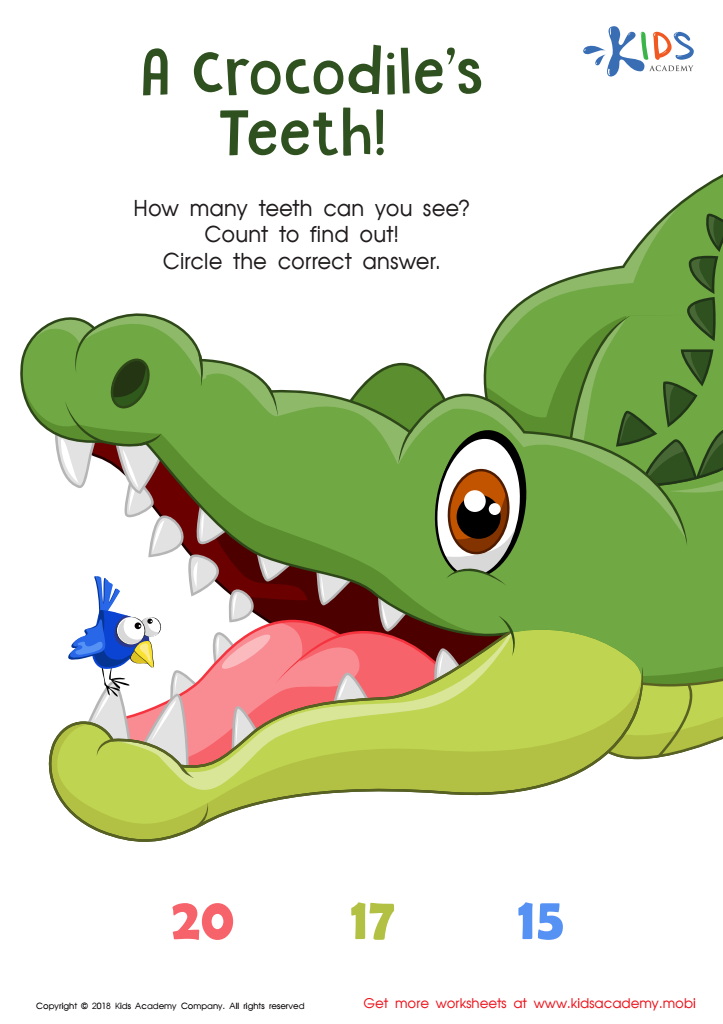
A Crocodile's Teeth Worksheet
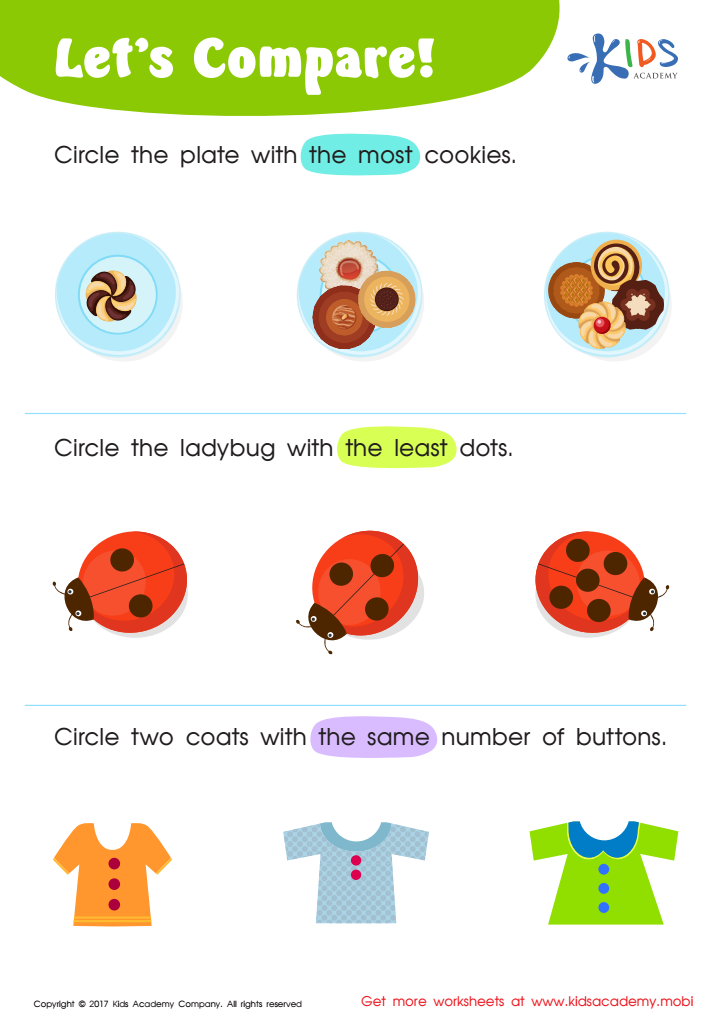
Matching: Classifying Toys by Size Worksheet







Understanding comparisons in math is crucial for children aged 6-9 as it lays the foundation for their mathematical reasoning and critical thinking skills. At this early stage, children are developing their ability to engage with numerical concepts, and learning to compare numbers, quantities, and measurements helps them make sense of the world around them.
When children grasp comparisons, they learn to identify bigger and smaller, more and less, and understand the concept of equality. These skills are not only essential for overcoming mathematical problems but also for daily activities, such as comparing prices during shopping, assessing quantities for recipes, or understanding age differences among peers.
Moreover, a solid understanding of comparisons fosters confidence and independence in young learners, as it equips them with tools to analyze situations and make informed decisions. It also enhances cognitive skills such as categorization, pattern recognition, and logical reasoning. Parents and teachers play a pivotal role in encouraging these skills, making learning more engaging through playful activities, real-life scenarios, and supportive discussions. By prioritizing understanding comparisons, adults can help children develop a strong mathematical foundation that will benefit their future learning and daily interactions.








