Understanding division Math Worksheets for Ages 6-9
8 filtered results
-
From - To
Discover a fun and engaging way to teach division with our "Understanding Division" math worksheets, specifically designed for children aged 6-9. These worksheets provide a variety of activities that cater to different learning styles, allowing kids to grasp division concepts through visual aids, interactive exercises, and step-by-step explanations. Perfect for both classroom instruction and at-home practice, our resources help build a strong mathematical foundation while boosting confidence in problem-solving. Whether your child is just beginning to learn division or needs extra practice, our comprehensive worksheets make mastering division an enjoyable and rewarding experience. Explore today and watch their skills grow!
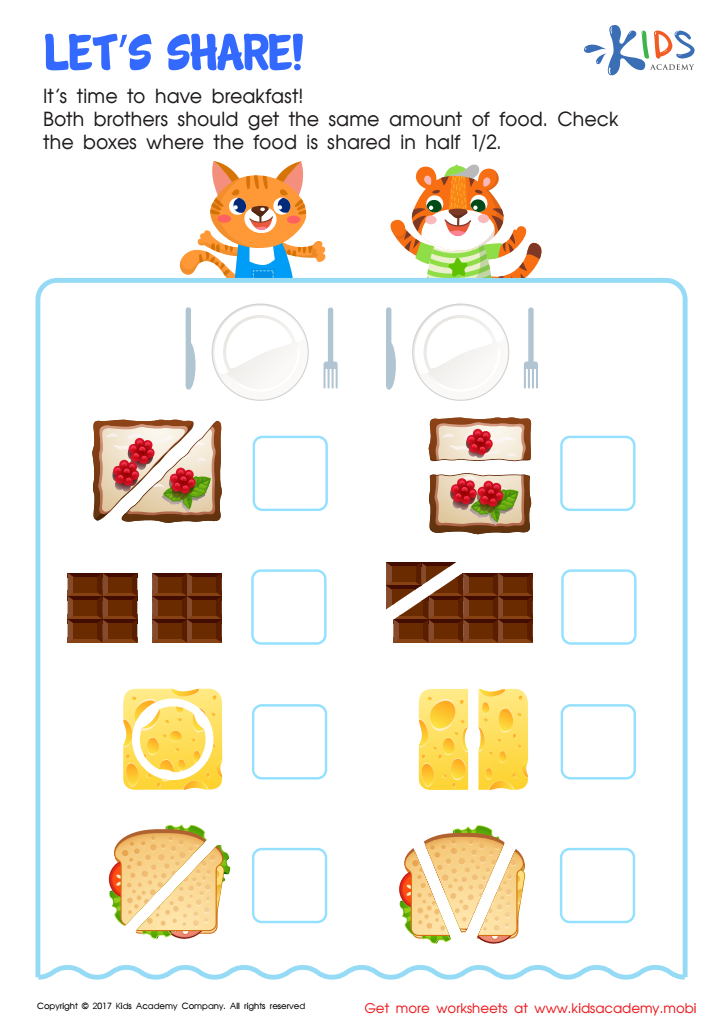
Let's Share Worksheet
 Assign to My Students
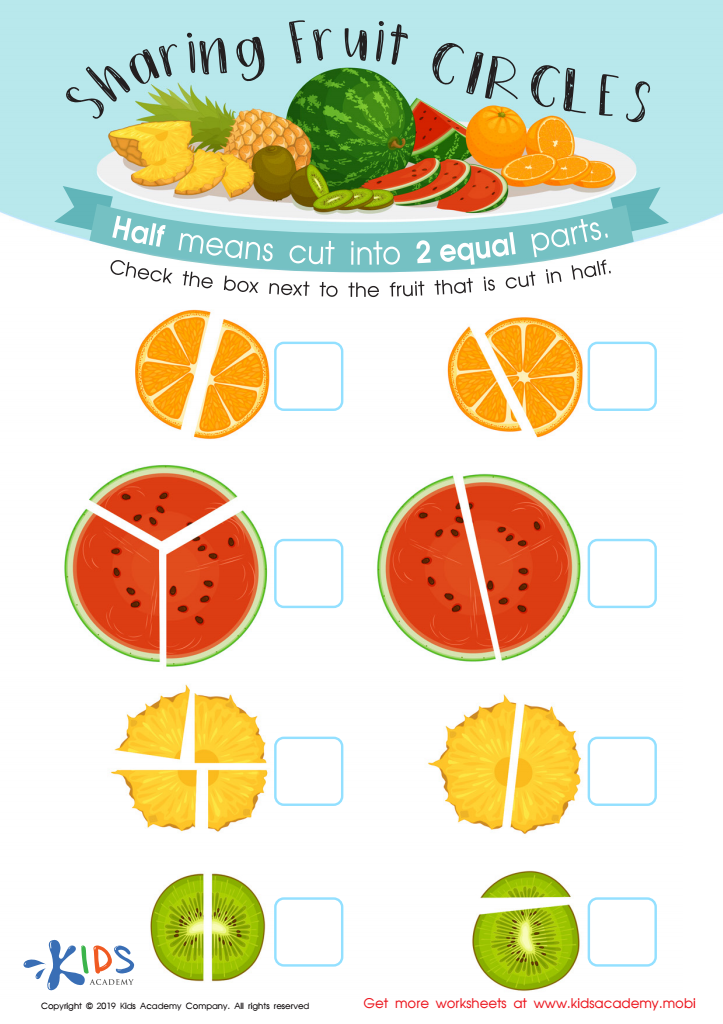
Sharing Fruit Circles Worksheet
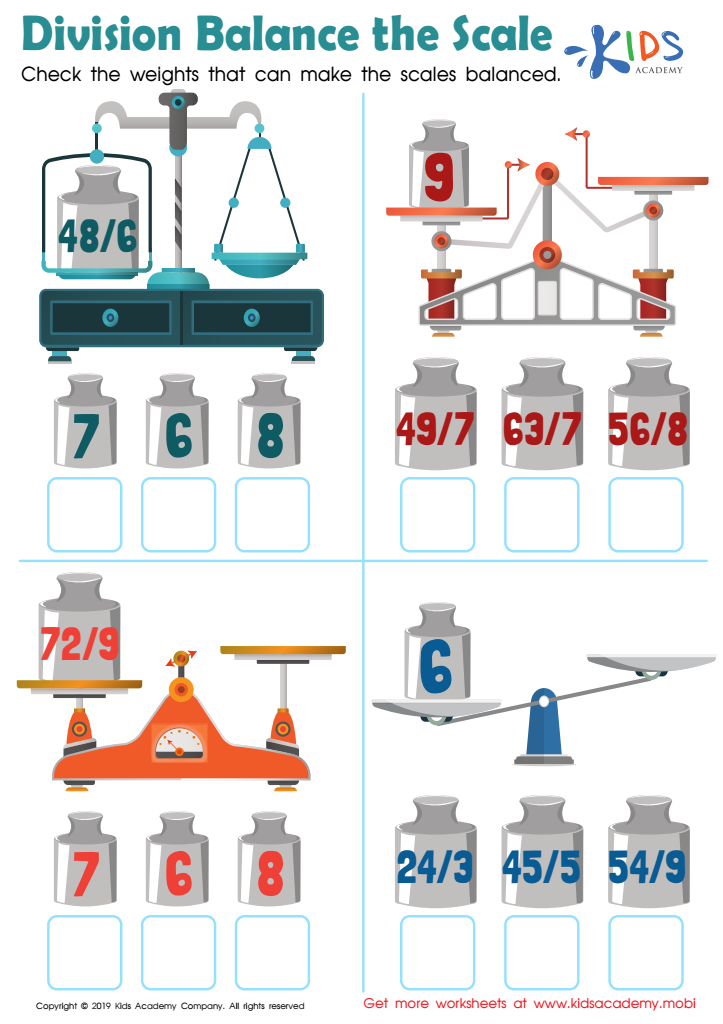
Division Balance the Scale Worksheet



.jpg)



Understanding division is essential for children aged 6-9 as it lays the groundwork for future mathematical skills. At this age, students are transitioning from concrete manipulations of numbers to more abstract concepts, making it a crucial time for fostering mathematical thinking. Mastery of division helps children develop problem-solving abilities and logical reasoning.
Teaching division not only improves computational skills but also enhances children's understanding of related concepts like multiplication and fractions. When children grasp division, they can visualize how numbers are grouped or shared, reinforcing their understanding of equal parts and relationships between quantities. This foundational knowledge supports later learning in math, such as algebra and data analysis.
Moreover, division is a practical skill that students encounter in real-life situations, from sharing snacks among friends to dividing household chores. Helping children understand and apply division reinforces their confidence in math, reducing anxiety and promoting a positive attitude towards the subject.
Parents and teachers play a vital role in this learning process, providing engaging and relevant experiences that encourage curiosity. By supporting children in understanding division, adults equip them with essential skills for academic success and everyday decision-making. Investing time in this area promotes a love for math that can last a lifetime.








