Understanding habitats Math Worksheets for Ages 6-9
3 filtered results
-
From - To
Discover a fun and engaging way to help your child learn about habitats with our Understanding Habitats Math Worksheets, designed specifically for ages 6-9! These worksheets combine essential math skills with the fascinating world of ecosystems, providing a unique context that enhances learning. Children will explore various habitats while practicing addition, subtraction, and other math concepts. Each worksheet is thoughtfully crafted to encourage critical thinking and foster an appreciation for nature. Suitable for classroom and home use, these resources ignite curiosity and make math enjoyable. Help your child connect with the environment while building foundational math skills today!
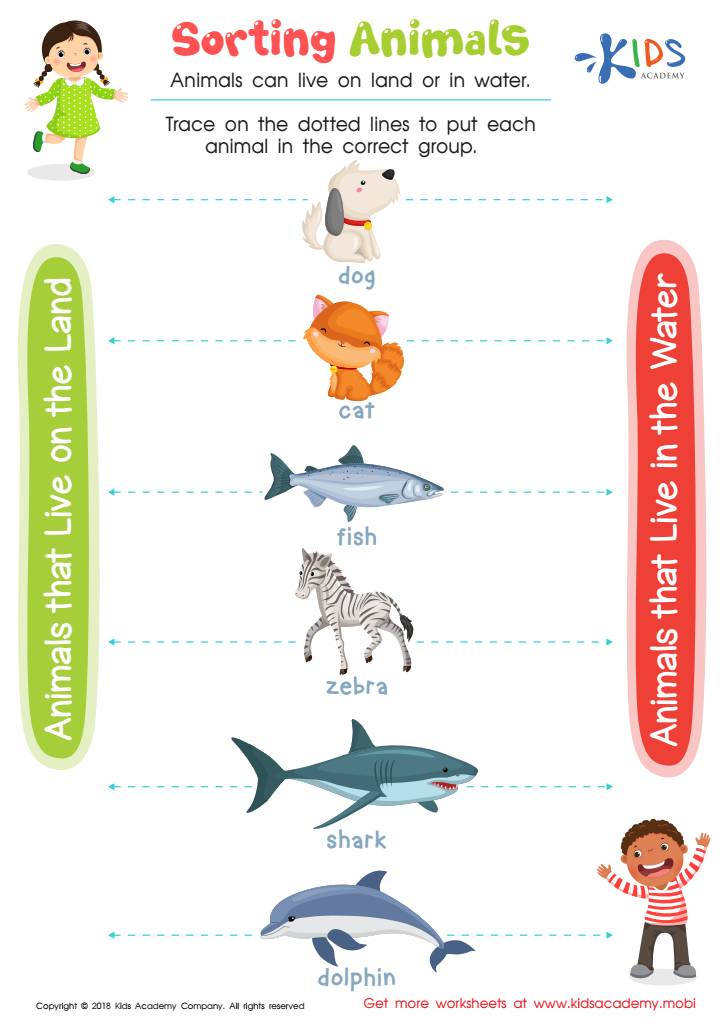
Sorting Animals Worksheet
 Assign to My Students
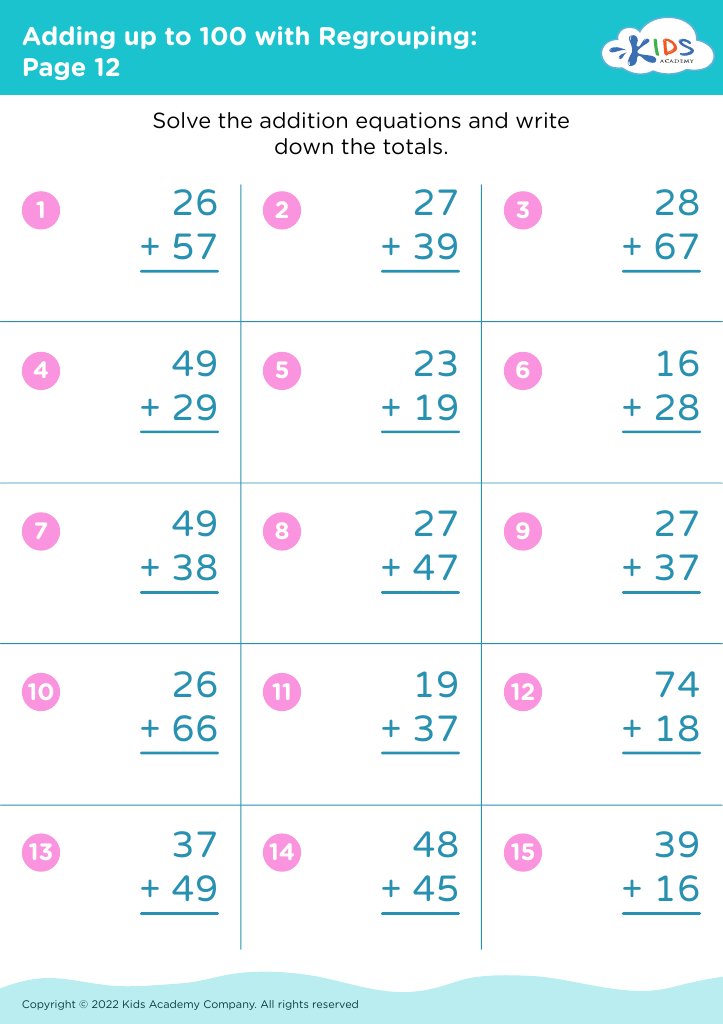
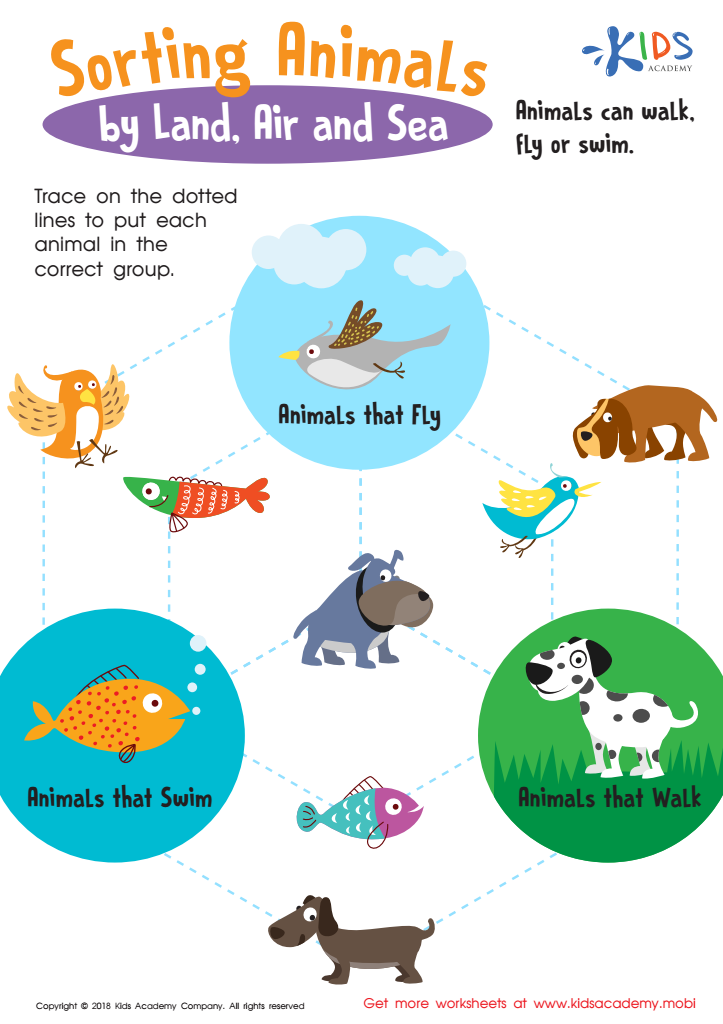
Sorting Animals by Land, Air and Sea Worksheet







Understanding habitats is a crucial educational focus for children aged 6-9, as it fosters both critical thinking and mathematical skills. When children learn about habitats—whether forests, oceans, or deserts—they engage in hands-on activities that require measurement, comparison, and data analysis, laying the groundwork for mathematical concepts such as addition, subtraction, and graphing.
Parents and teachers should care about this subject because it integrates science with math in a meaningful context, making learning more relatable and enjoyable for young learners. For instance, calculating the number of different species within a habitat or charting the temperature variations can help children apply math skills in real-world situations, making abstract concepts concrete.
Additionally, exploring habitats can enhance a child's appreciation for the environment and inspire a sense of responsibility towards nature. This subject encourages curiosity, prompts questions about ecosystem interdependencies, and instills values of conservation at an early age.
Overall, a program that merges understanding habitats with math enriches a child's educational experience, equips them with reasoning skills, and nurtures a lifelong love for learning—essential for their academic journey and personal development.








