Understanding number sequence Math Worksheets for Ages 6-9
7 filtered results
-
From - To
Unlock your child's potential with our "Understanding Number Sequence Math Worksheets" tailored for ages 6-9. Our expertly designed activities help young learners grasp and master number sequences through engaging, hands-on practice. From counting by ones to recognizing complex patterns, these worksheets build foundational skills essential for future math success. Each sheet combines clear instructions with captivating exercises to make learning fun and effective. Whether at home or in the classroom, watch your child grow confident in their number knowledge. Visit Kids Academy to explore our full range of worksheets and give your child the tools they need to excel in math!
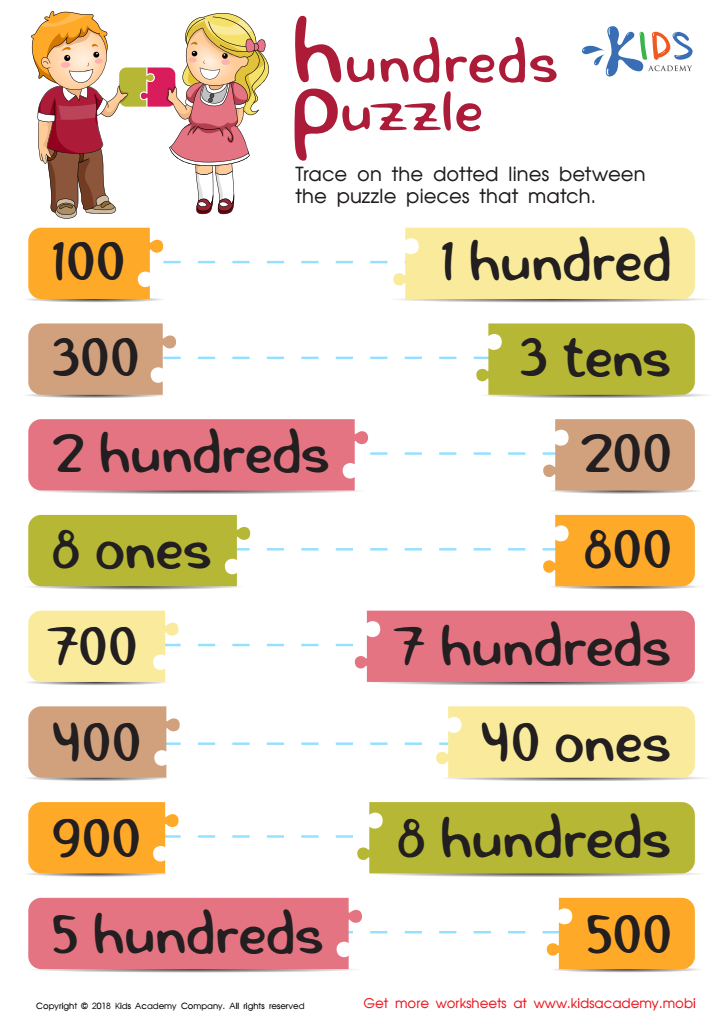
Hundreds Puzzle Worksheet
 Assign to My Students
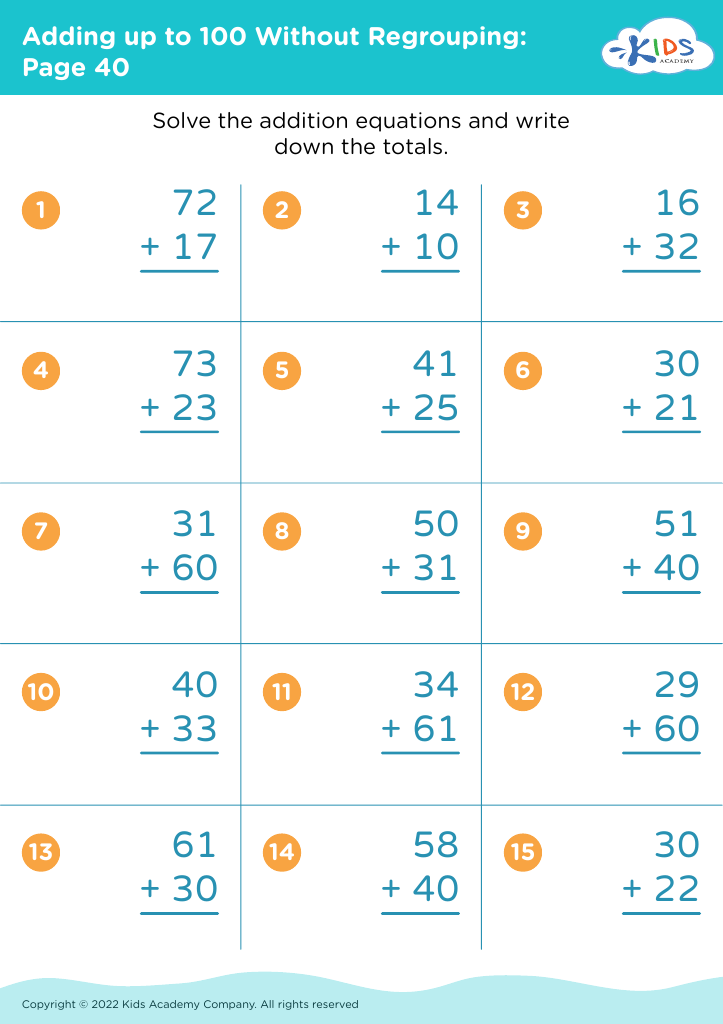
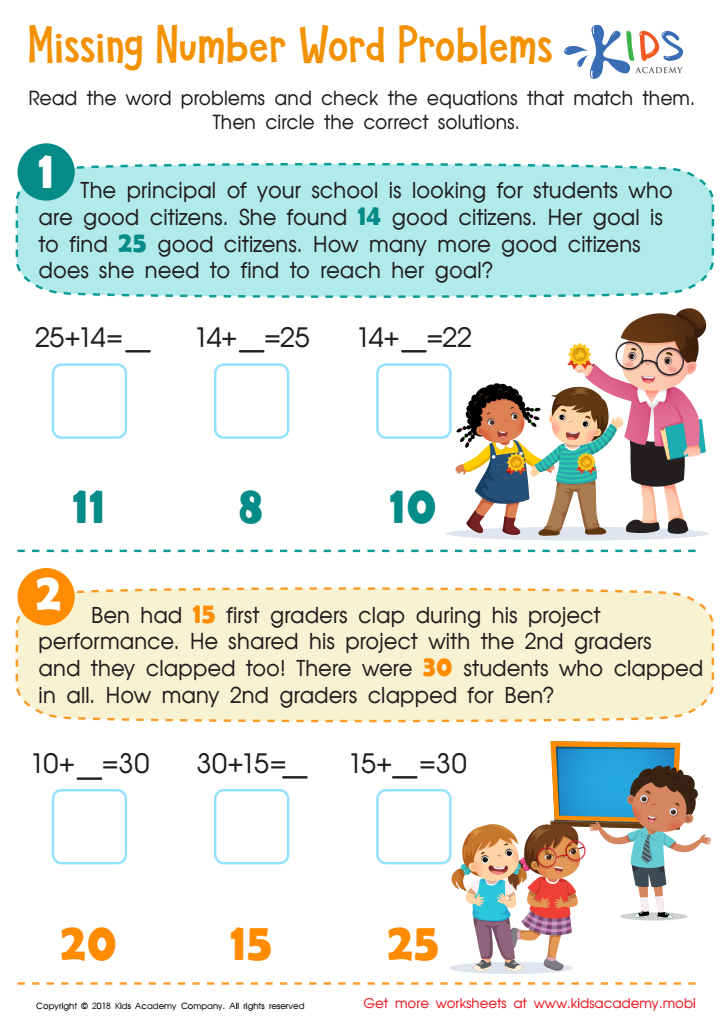
Missing Number Word Problems Worksheet
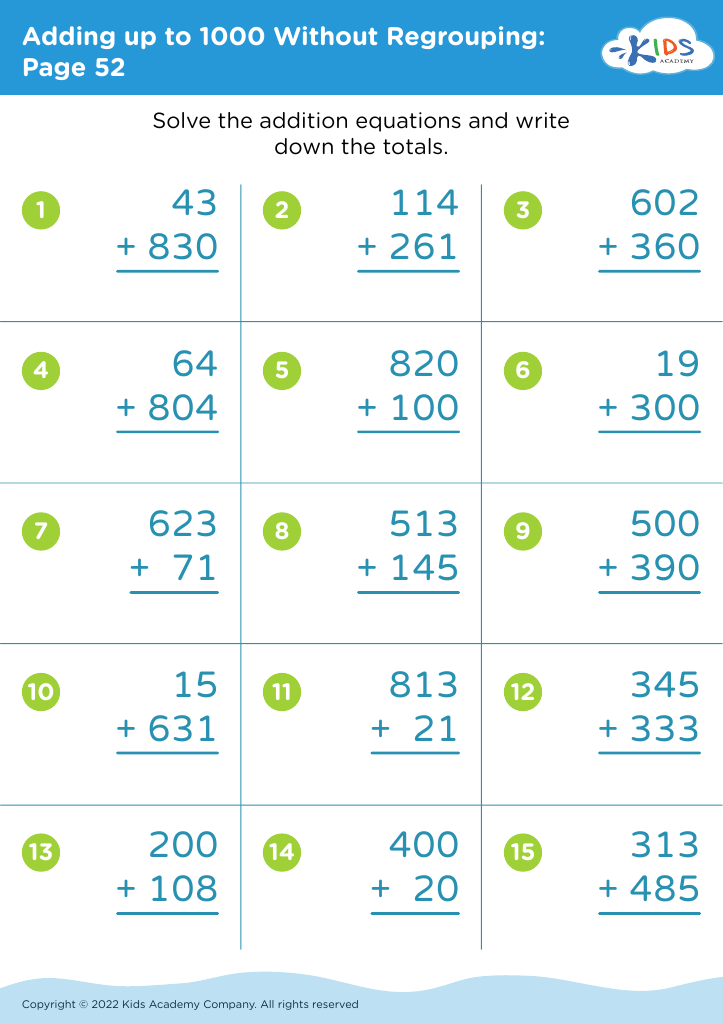
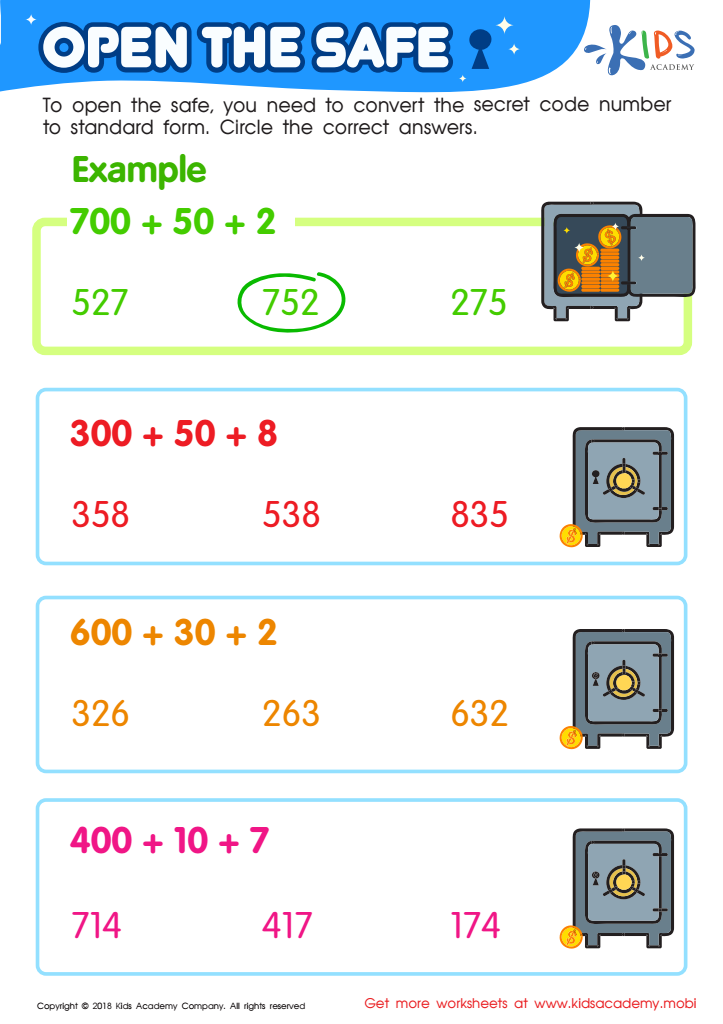
Open the Safe Worksheet
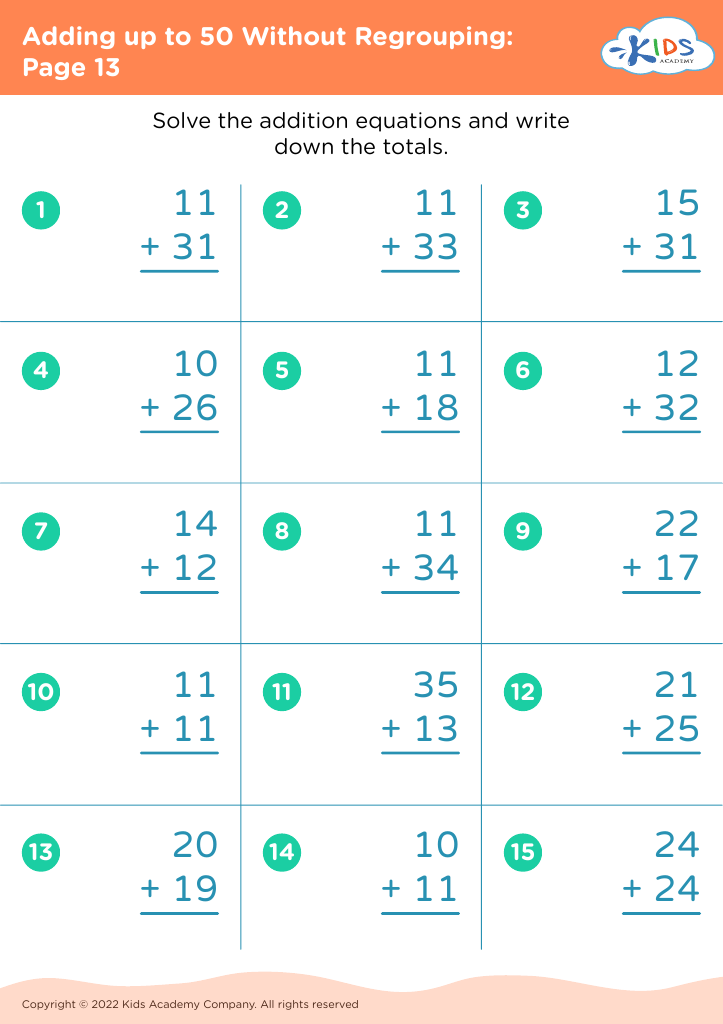
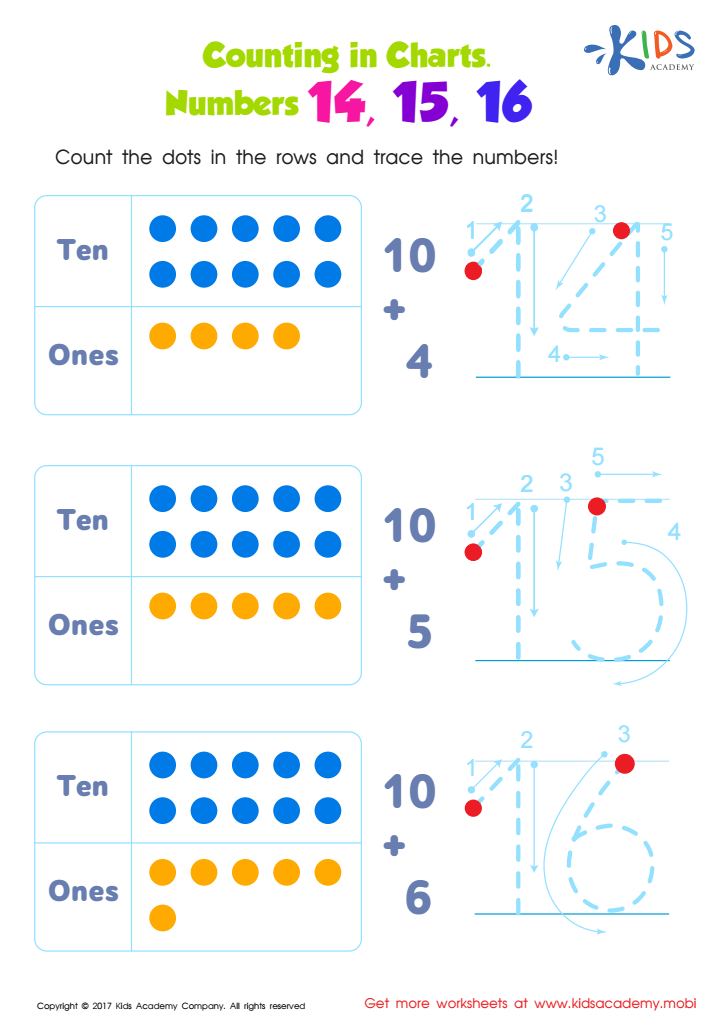
Number Tracing Worksheet



.jpg)



Understanding number sequences is foundational for children aged 6-9 as it builds the groundwork for more advanced mathematical concepts and everyday problem-solving skills. For parents and teachers, recognizing the importance of this fundamental skill is crucial.
Firstly, number sequences help children grasp basic arithmetic operations such as addition and subtraction. By mastering the order of numbers, children can easily understand concepts like counting on, counting back, and recognizing patterns, which are essential for efficient calculations.
Secondly, number sequences foster logical thinking and reasoning abilities. Patterns in sequences teach children to anticipate and predict subsequent numbers, nurturing their ability to think critically and solve complex problems.
Furthermore, an early grasp of number sequences enhances a child's confidence in mathematics. This confidence often translates into better academic performance, not just in current math lessons, but in future, more advanced topics, including multiplication, division, and even algebra.
Number sequences are also used in everyday situations, such as reading calendars, understanding time, handling money, and more. A strong understanding in this area prepares children for real-life applications, making daily activities less challenging.
In summary, developing a solid foundation in understanding number sequences in early childhood empowers children with essential mathematical skills, promotes higher-level thinking, and equips them for practical life experiences, all of which parents and teachers should ardently advocate for.








