Visual discrimination skills Math Worksheets for Ages 6-9
3 filtered results
-
From - To
Enhance your child's learning with our engaging Visual Discrimination Skills Math Worksheets for ages 6-9. Designed to boost attention to detail, these math activities help kids differentiate shapes, patterns, and numbers, sharpening their visual and cognitive skills. Through vibrant, fun exercises, children will improve their ability to notice subtle differences, aiding in overall academic performance. Ideal for young learners, these worksheets are great for both classroom and at-home practice. Spark your child's curiosity and develop essential math skills by exploring our diverse selection of visual discrimination worksheets tailored to make learning enjoyable and effective.
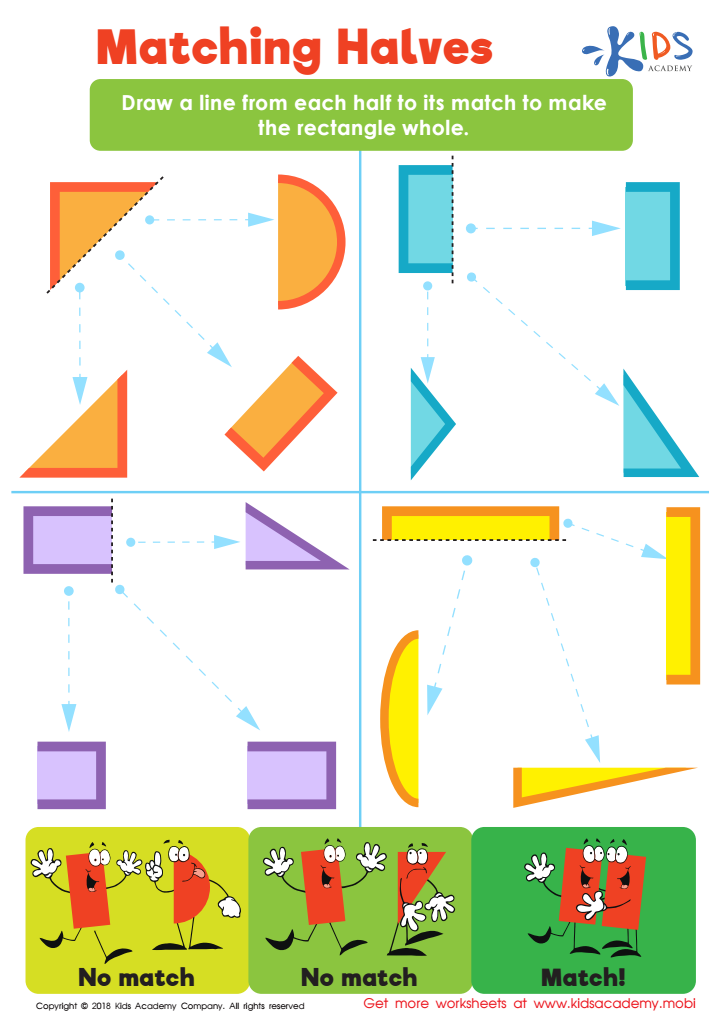
Matching Halves Worksheet
 Assign to My Students
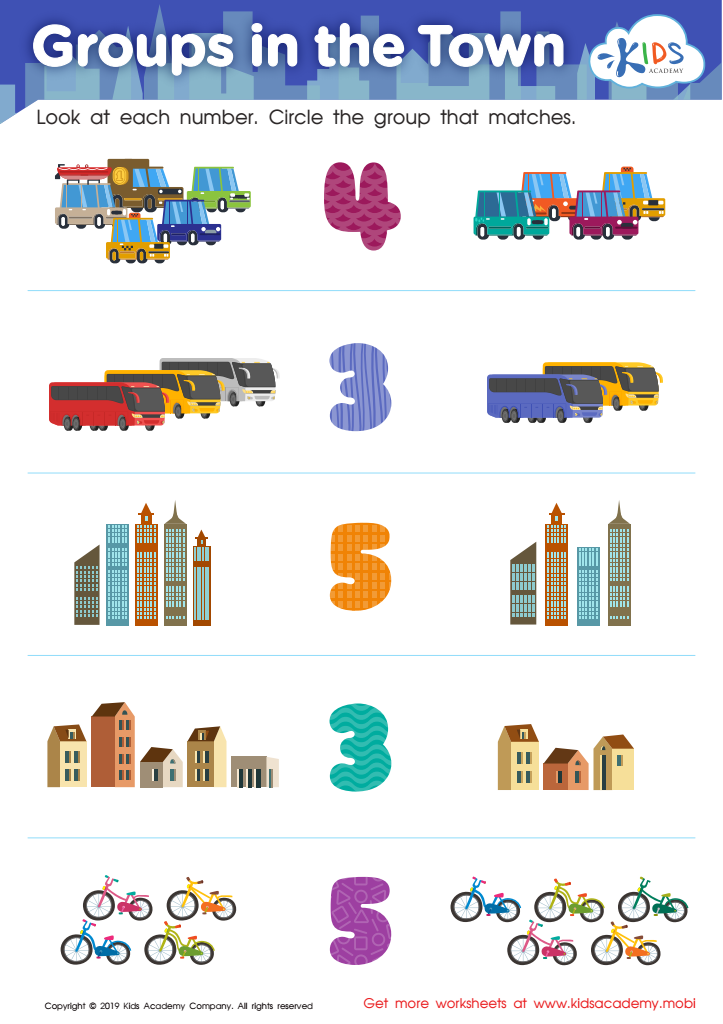
Groups in the Town Worksheet




%20(1).jpg)


Visual discrimination skills in math are crucial for children ages 6-9, as they lay the foundation for advanced learning and everyday functioning. At this early stage, children are rapidly developing their ability to notice subtle differences and similarities in shapes, sizes, patterns, numbers, and symbols.
Effective visual discrimination in math helps children comfortably identify and differentiate between numbers and mathematical symbols, all of which are fundamental for learning math concepts like addition, subtraction, multiplication, and division. Mastery in recognizing patterns and sequences is essential for logical thinking and problem-solving—skills that extend well beyond math to areas like science and reading comprehension.
Teachers and parents should pay close attention to these skills, as gaps could lead to challenges in more complex math learning. Early intervention and targeted activities can help strengthen a child's visuospatial skills. Providing activities that involve sorting objects, playing pattern-recognition games, or working with puzzles can be fun and highly beneficial. Moreover, fostering strong visual discrimination skills also aids in developing reading abilities, as children learn to distinguish between letters and words accurately.
Promoting solid visual discrimination skills ensures a smoother educational journey, better academic performance, and heightened confidence in children, preparing them not just for school, but for life.








