
Visual perception development Math Worksheets for Ages 6-9
4 filtered results
Difficulty Level
Grade
Age
-
From - To
Subject
Activity
Standards
Discover our engaging Visual Perception Development Math Worksheets for children aged 6-9, designed to enhance essential visual skills while making math fun! These carefully crafted worksheets focus on various aspects of visual perception, including shape recognition, spatial awareness, and pattern identification—key skills that support mathematical understanding. Ideal for home or classroom use, our worksheets feature vibrant illustrations and interactive exercises that keep young learners motivated. By practicing with our resources, children will build confidence in their math abilities and improve their overall learning experience. Start your child’s journey towards math mastery with our Visual Perception Development worksheets today!
Favorites
With answer key
Interactive
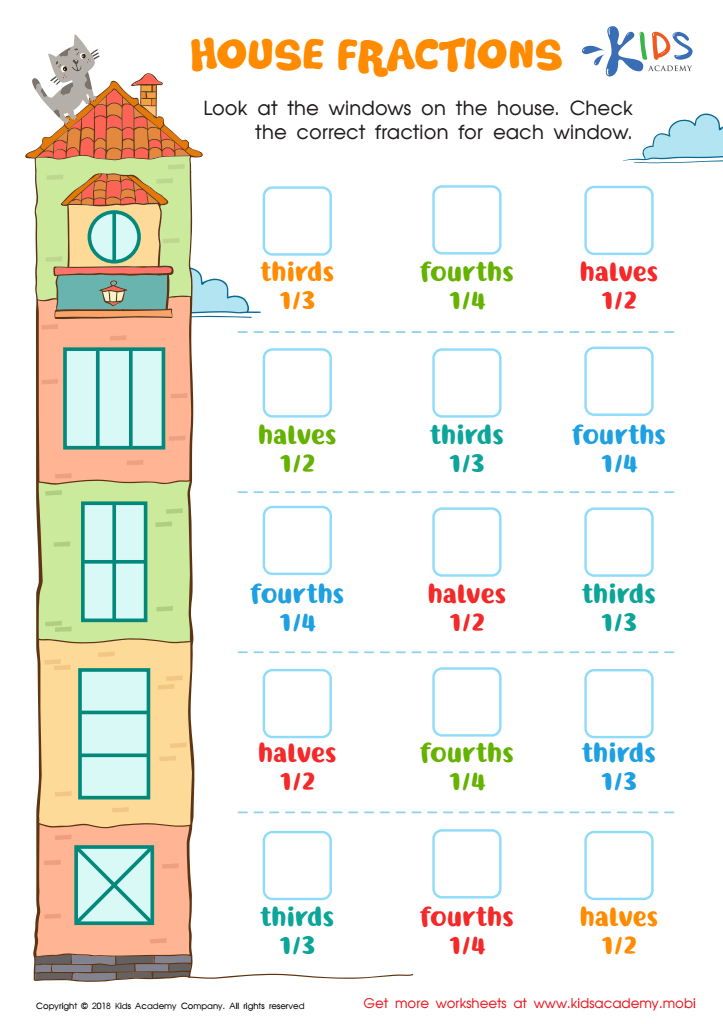
House Fractions Worksheet
Test your child's knowledge of fractions with this worksheet! Have them examine the windows of a house and select the correct fraction from the options given. This is a great way to see how much they understand about wholes, fractions, halves, one thirds, and one fourths.
 Assign to My Students
House Fractions Worksheet
Worksheet
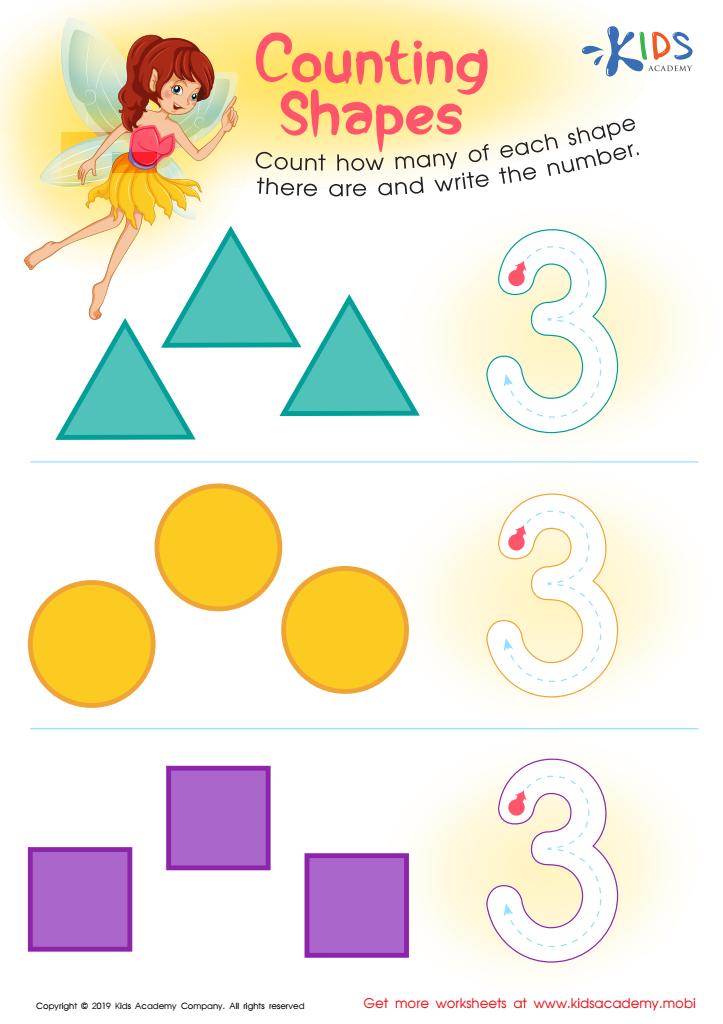
Counting Shapes Worksheet
Counting and number sense are essential skills. Picture representation helps kids understand and remember concepts. This free worksheet is perfect for introducing numbers and counting in groups of three. It also helps kids to practice writing numbers with traceable lines and guiding dots. It's an easy and fun way to give little mathematicians a successful start.
Counting Shapes Worksheet
Worksheet
Join Kids Academy for Free
Who is primarily going to use this learning content?



.jpg)




Visual perception development is crucial for children aged 6-9, particularly in math education. At this stage, children are transitioning from basic counting to more complex mathematical concepts, such as addition, subtraction, geometry, and spatial reasoning. Strong visual perception skills help them accurately identify shapes, understand spatial relationships, and follow multi-step instructions. These skills enable them to solve problems efficiently and develop a solid foundation for future mathematical learning.
Parents and teachers should care about this area of development because effective visual perception impacts not just math success, but overall academic performance. Children who struggle with visual perception may face difficulties in reading, writing, and other subjects. By fostering these skills through engaging activities, like puzzles and games, parents and teachers can enhance children's capacity to comprehend and retain mathematical concepts.
Moreover, visual perception is tied to critical thinking and problem-solving abilities, which are essential in today’s technologically driven world. Supporting visual perception development not only aids in immediate academic success but also prepares children for lifelong learning and adaptability. Investing time and resources in this area can significantly contribute to a child’s confidence, motivation, and ability to tackle various challenges as they advance in their education.








