Visualization skills Math Worksheets for Ages 6-9
3 filtered results
-
From - To
Enhance your child's math learning experience with our Visualization Skills Math Worksheets, specially designed for kids aged 6-9. These engaging worksheets help young learners develop critical visualization abilities essential for solving math problems. Through a variety of fun activities and exercises, children will practice identifying shapes, patterns, and spatial reasoning while reinforcing fundamental math concepts. Our user-friendly format makes it easy for parents and teachers to incorporate these worksheets into everyday learning. Unlock your child's full potential in math with interactive, visually stimulating content that promotes creativity and logical thinking. Start your journey toward math mastery today!
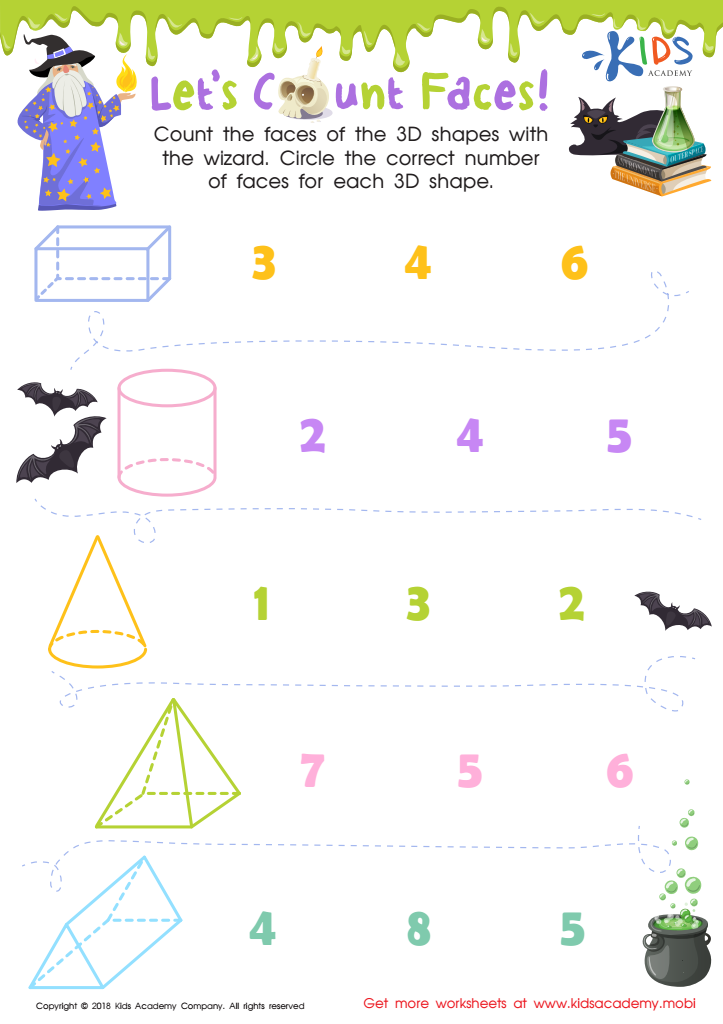
Let's Count Faces! Worksheet
 Assign to My Students
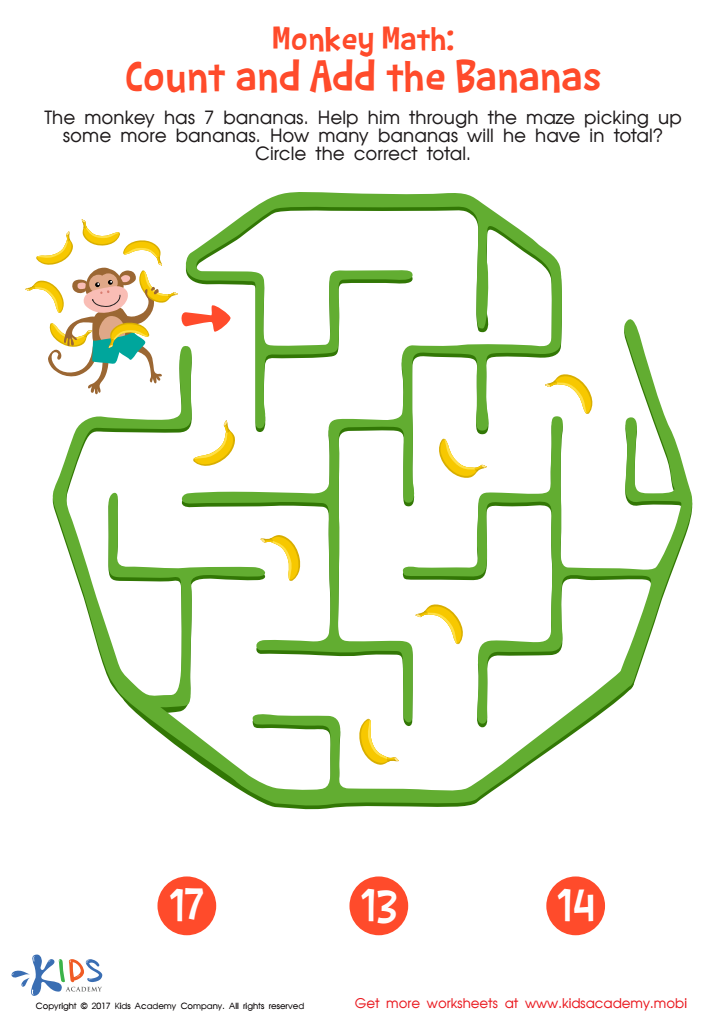
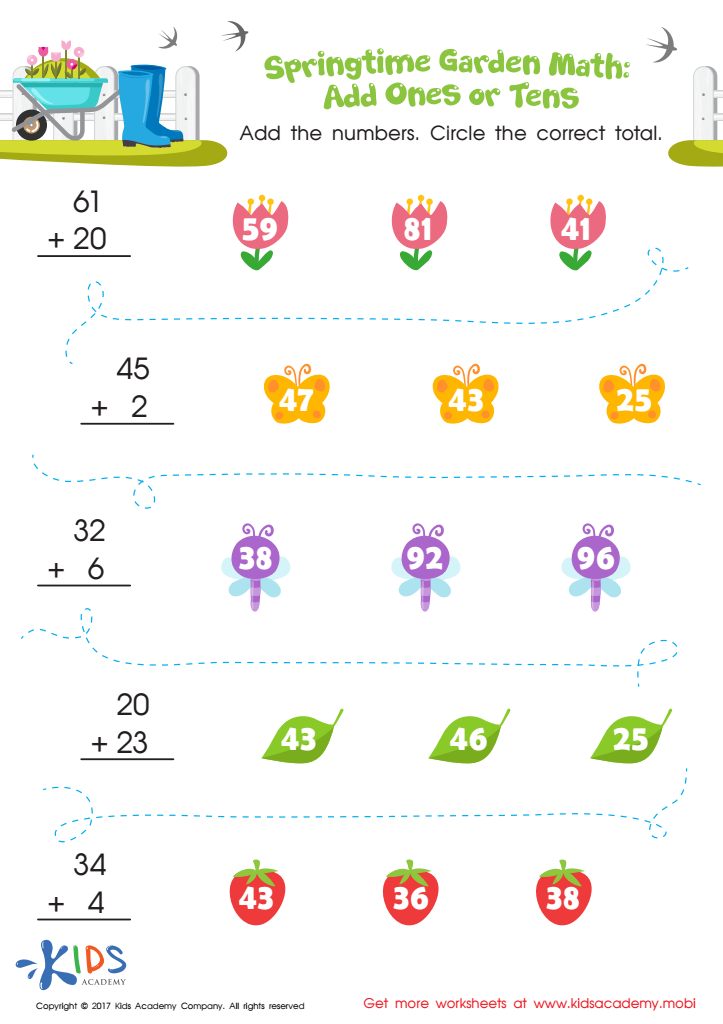
Springtime Garden Math Worksheet







Visualization skills in math are crucial for children aged 6-9 because they lay the foundation for deeper mathematical understanding and problem-solving abilities. At this stage, children are developing cognitive skills that enable them to manipulate and understand abstract concepts, and visualization plays a significant role in this process.
When children can visualize mathematical problems, they can more easily grasp concepts such as addition, subtraction, multiplication, and division. This not only boosts their confidence but also encourages a more profound engagement with the subject. For instance, visual aids like number lines, diagrams, or manipulatives can help students understand fractions, geometry, and basic algebraic ideas more effectively.
Moreover, strong visualization skills facilitate mental math, enabling children to perform calculations without relying solely on written methods. This skill is invaluable as they progress through school and face increasingly complex mathematical concepts.
For parents and teachers, fostering visualization in math not only supports academic success but also develops critical thinking and creativity, foundational skills for lifelong learning. By encouraging these abilities, parents and educators are not only helping children succeed in math but also nurturing well-rounded individuals capable of solving real-world problems.








