Comparing numbers Measurement Worksheets for Ages 6-9
3 filtered results
-
From - To
Help your child master essential math skills with our "Comparing Numbers Measurement Worksheets for Ages 6-9"! These engaging and educational worksheets are specifically designed to enhance young learners' understanding of numerical comparisons and measurements. Perfect for children aged 6-9, these worksheets offer varied exercises that build critical thinking, logical reasoning, and problem-solving skills through fun and interactive activities. Featuring bright graphics and appealing themes, each worksheet is crafted to make learning enjoyable and effective, ensuring your child gains confidence in comparing numbers and measuring objects. Empower your child's mathematical journey today with our expertly designed worksheets!
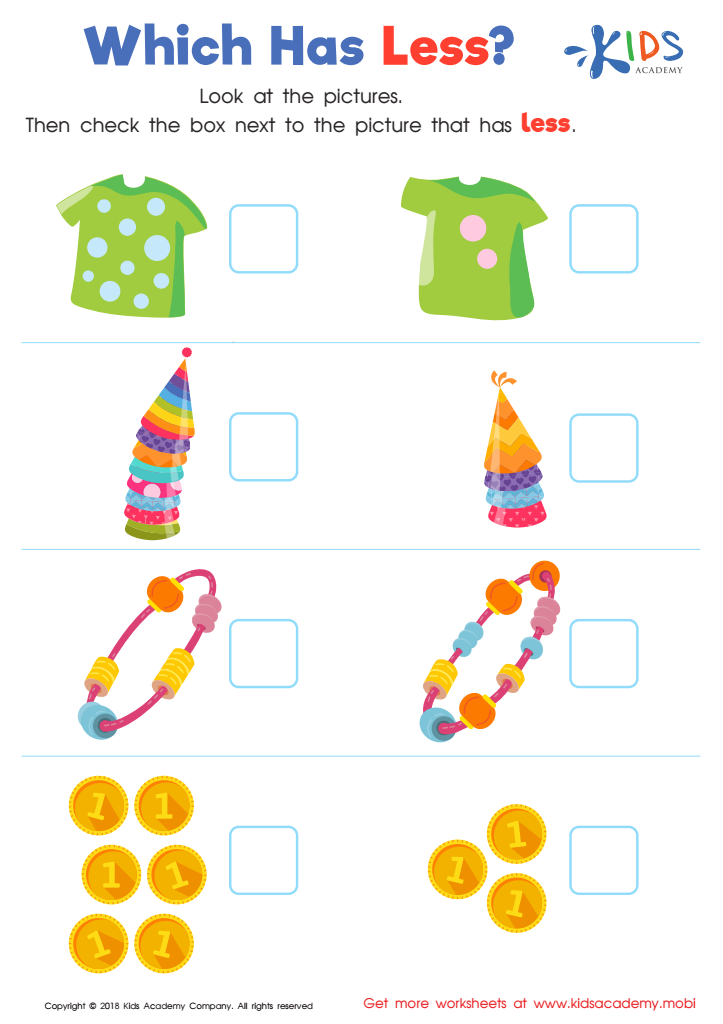
Which Has Less? Worksheet
 Assign to My Students
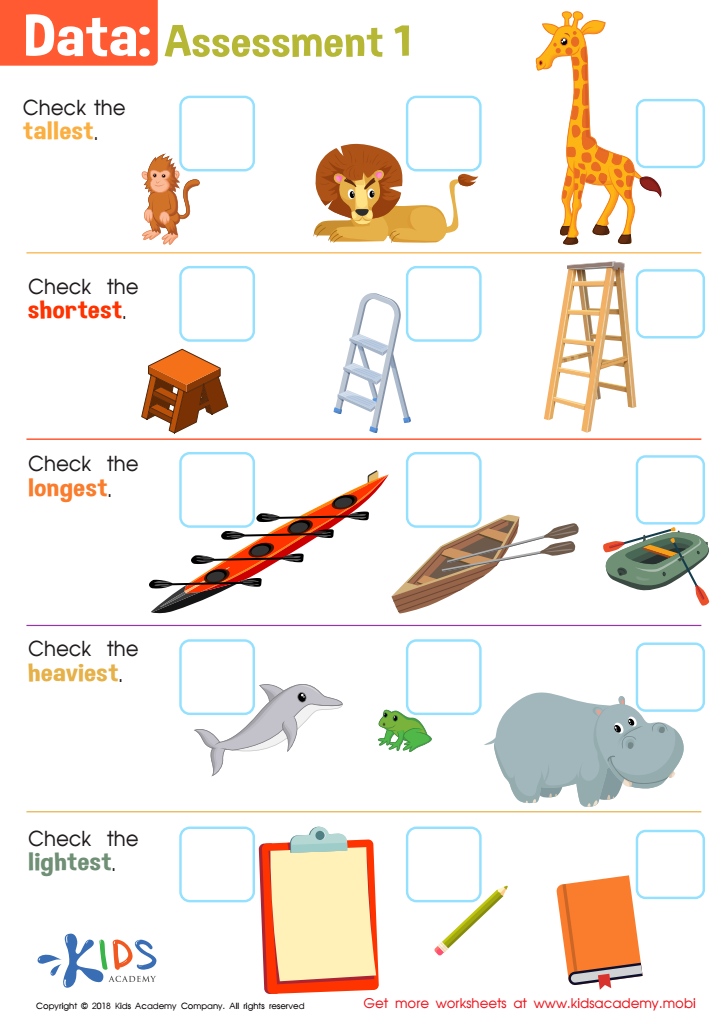
Data: Assessment 1 Worksheet
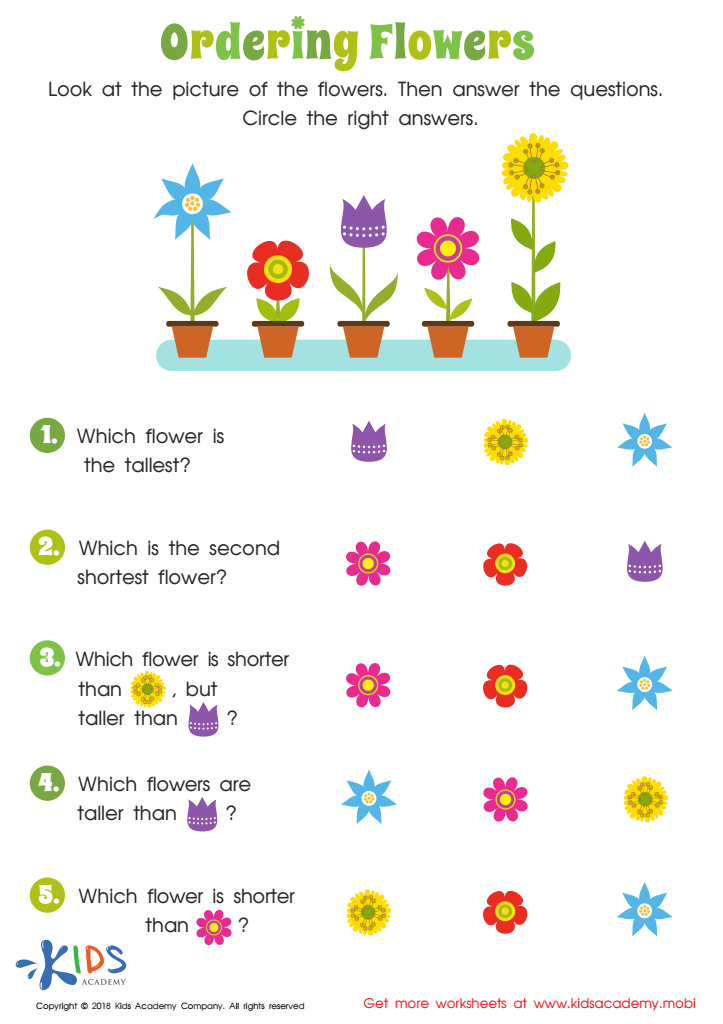
Ordering Flowers Worksheet








Comparing numbers and basic measurement concepts are fundamental skills for children aged 6-9 that lay the groundwork for future mathematical learning and everyday problem-solving. At this age, children are developing cognitive abilities that enable them to grasp more complex ideas. Teaching these concepts early helps them better understand the relationships between quantities, enhancing their numerical literacy.
Comparing numbers introduces children to greater-than, less-than, and equal-to concepts, vital for creating a solid mathematical foundation. This enhances their logical reasoning skills, as they're challenged to determine which number is bigger or smaller, fostering critical thinking and analytical skills. Measurement, on the other hand, connects abstract mathematical concepts to the real world. When children learn to measure length, weight, or volume, they begin to see math as a practical tool for everyday life. Understanding measurement also integrates with other subjects like science (e.g., measuring ingredients in experiments) and physical education (measuring time and distance).
Parents and teachers should prioritize these skills to encourage mathematical curiosity and confidence. Early competence in comparing numbers and measurement can lead to better problem-solving abilities, sharpened observation skills, and a strong base for advanced math topics. Moreover, it promotes a positive, lifelong attitude toward learning and applying math in various multifaceted real-world scenarios.








