Converting units Measurement Worksheets for Ages 6-9
4 filtered results
-
From - To
Welcome to our "Converting Units Measurement Worksheets" tailored for ages 6-9! These engaging and interactive worksheets introduce young learners to the essential skill of converting units of measurement. Designed to make learning fun, our worksheets cover various topics, including length, weight, and volume, through colorful visuals and age-appropriate challenges. Whether your child is measuring in inches or centimeters, these resources will build their confidence and understanding of measurement conversions. Perfect for classroom use or at-home practice, our worksheets encourage critical thinking and problem-solving skills while aligning with educational standards. Explore our dynamic resources to enhance your child’s math learning journey today!
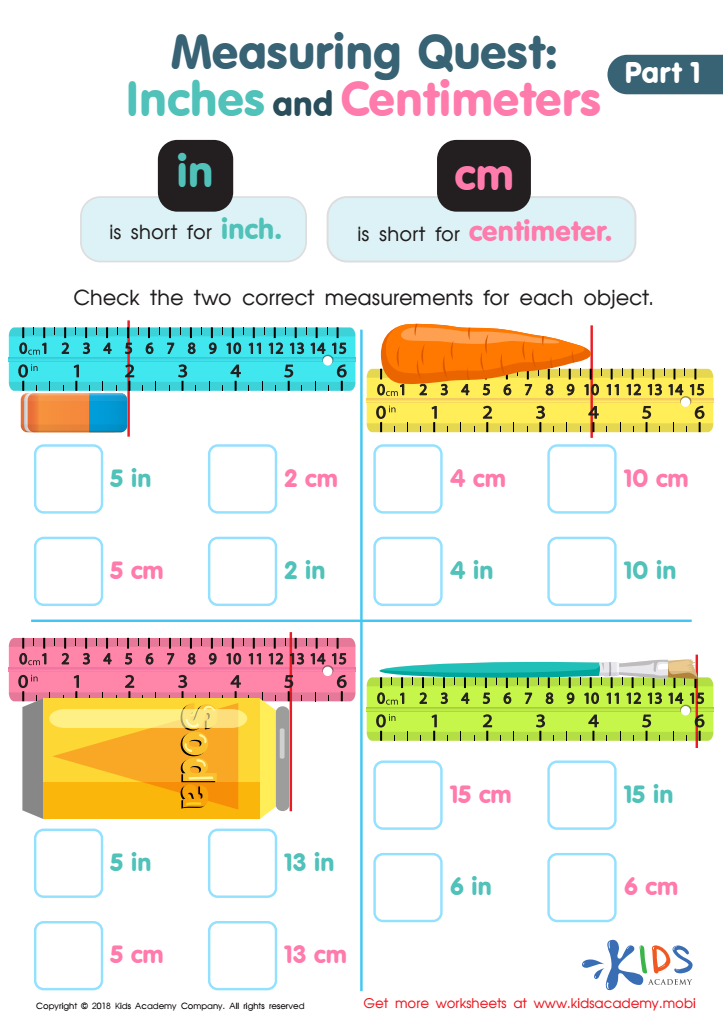
Measuring Quest: Inches and Centimeters Worksheet
 Assign to My Students
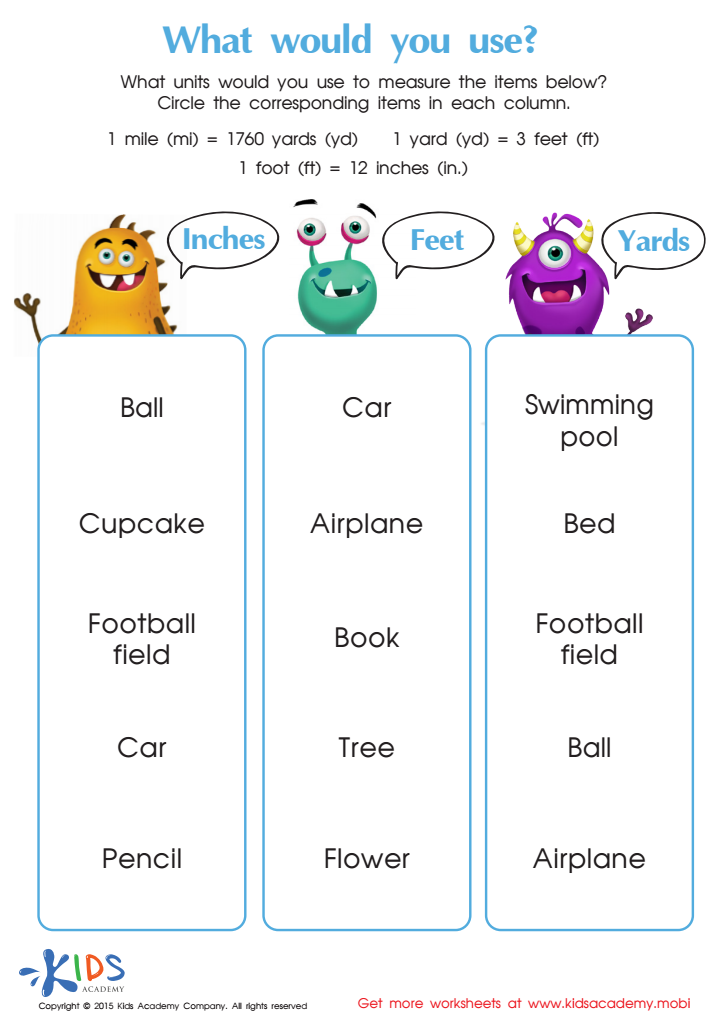
Learning about measuring objects in inches, feet and yards Worksheet
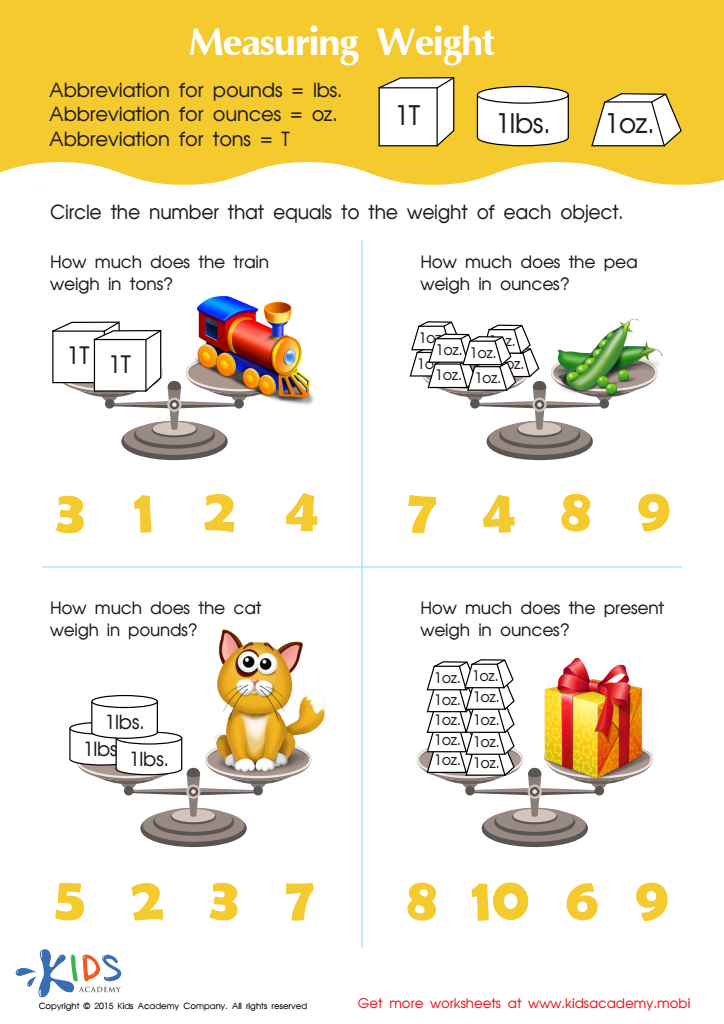
Measuring Weight in Ounces, Pounds and Tons Worksheet
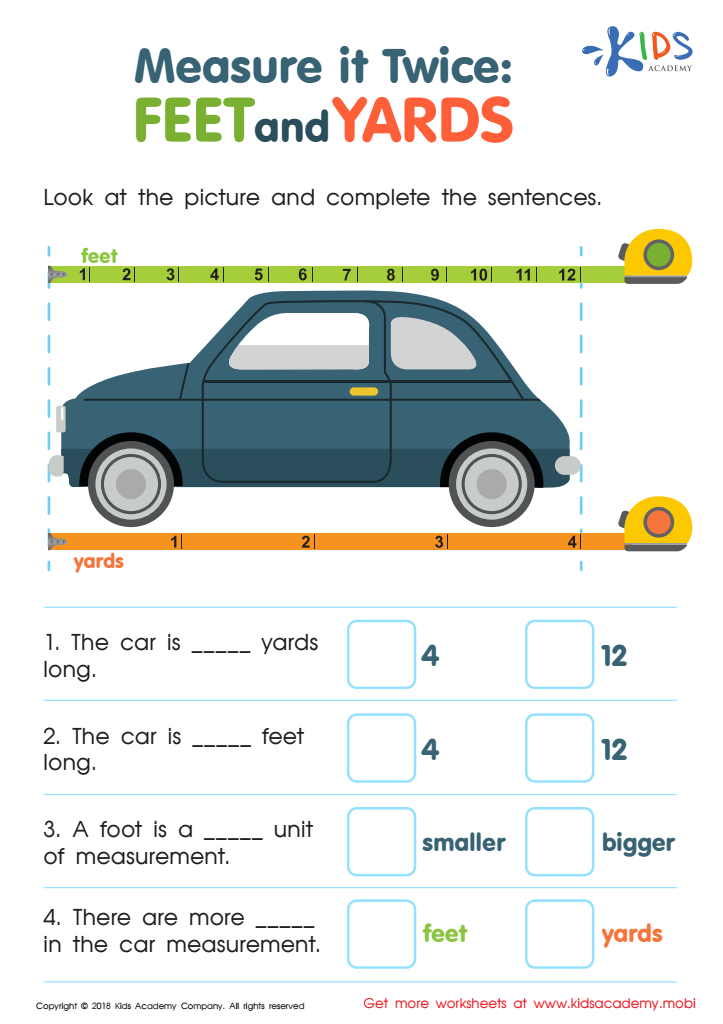
Measure It Twice: Feet and Yards Worksheet








Understanding unit conversion is essential for children aged 6-9 as it lays the groundwork for their mathematical skills and real-world problem-solving abilities. At this age, children are beginning to grasp basic measurement concepts, and introducing unit conversion helps them understand the relationships between different measurement systems, such as length, weight, and volume.
Kids encounter situations daily—like measuring ingredients for cooking or comparing heights—that necessitate measuring different items. Teaching unit conversion empowers them to tackle these challenges confidently. Additionally, it supports their cognitive development by enhancing critical thinking and reasoning skills. By engaging in conversion tasks, children learn to recognize patterns, develop spatial awareness, and explore mathematical concepts in a hands-on way.
Beyond academics, unit conversion connects to everyday experiences, making math more relevant and enjoyable. It encourages curiosity, showing children that math isn’t just abstract but deeply embedded in daily life. Lastly, by ensuring children grasp this skill, parents and teachers prepare them for more advanced mathematical concepts in the future, fostering a strong foundation for lifelong learning. Converting units cultivates not only mathematical understanding but also confidence in everyday challenges, positioning young learners for success both academically and personally.








