Visual perception Measurement Worksheets for Ages 6-9
4 filtered results
-
From - To
Discover our engaging Visual Perception Measurement Worksheets designed specifically for children ages 6-9! These worksheets help young learners enhance their visual perception skills, a key component in their overall learning and development. Through fun activities and exercises, students will practice identifying, comparing, and measuring various objects, building essential skills for future math and science understanding. Our printable resources are perfect for home or classroom use, making learning both enjoyable and effective. Foster your child's confidence and curiosity today with our carefully crafted worksheets that align with educational standards and promote cognitive growth. Explore visual perception measurement with us!
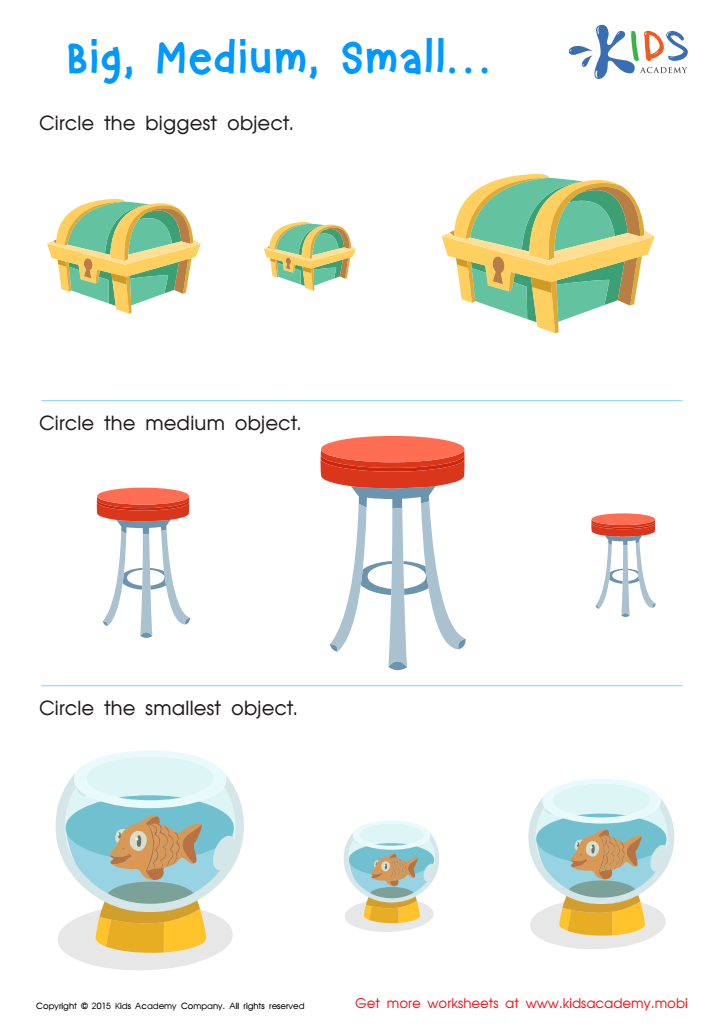
Big Medium Small Worksheet
 Assign to My Students
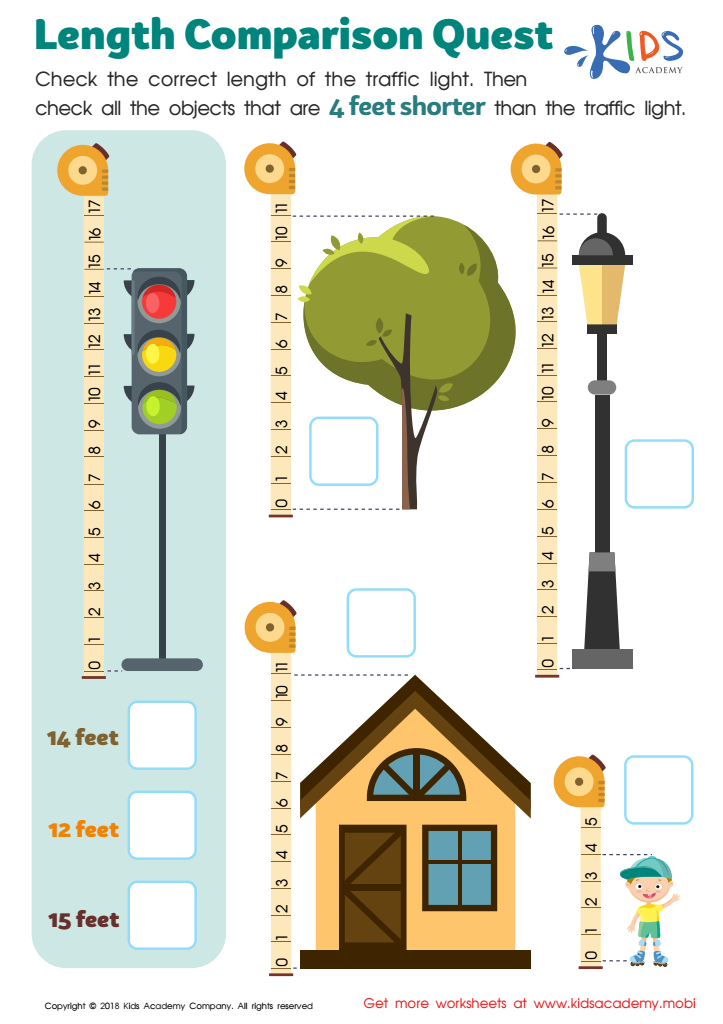
Length Comparison Quest Worksheet
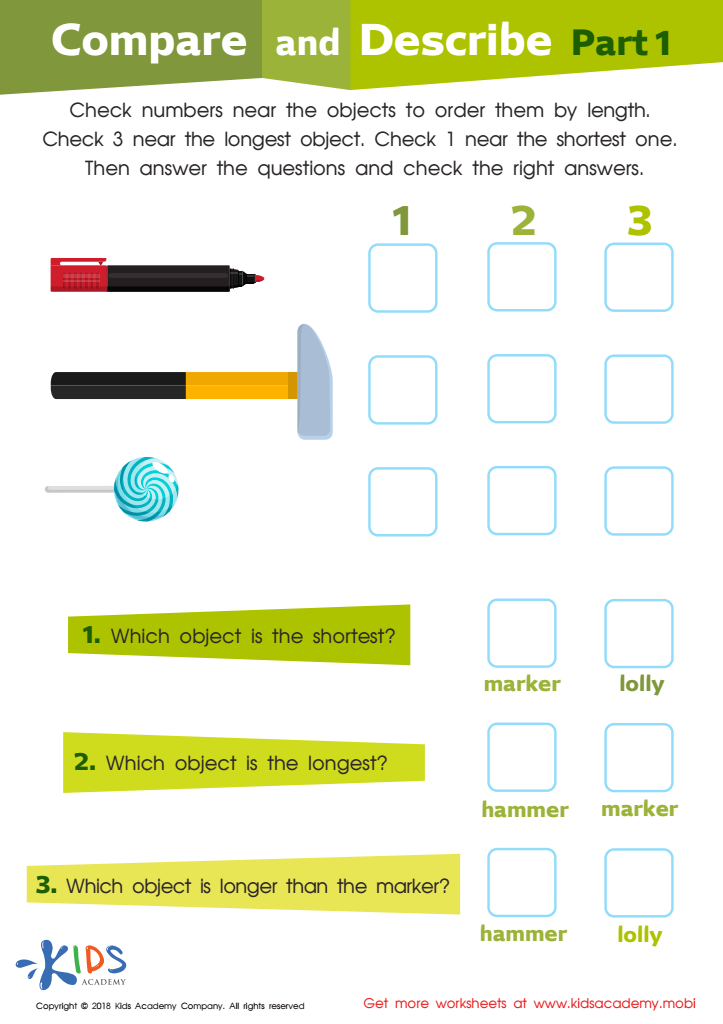
Compare and Describe: Part 1 Worksheet
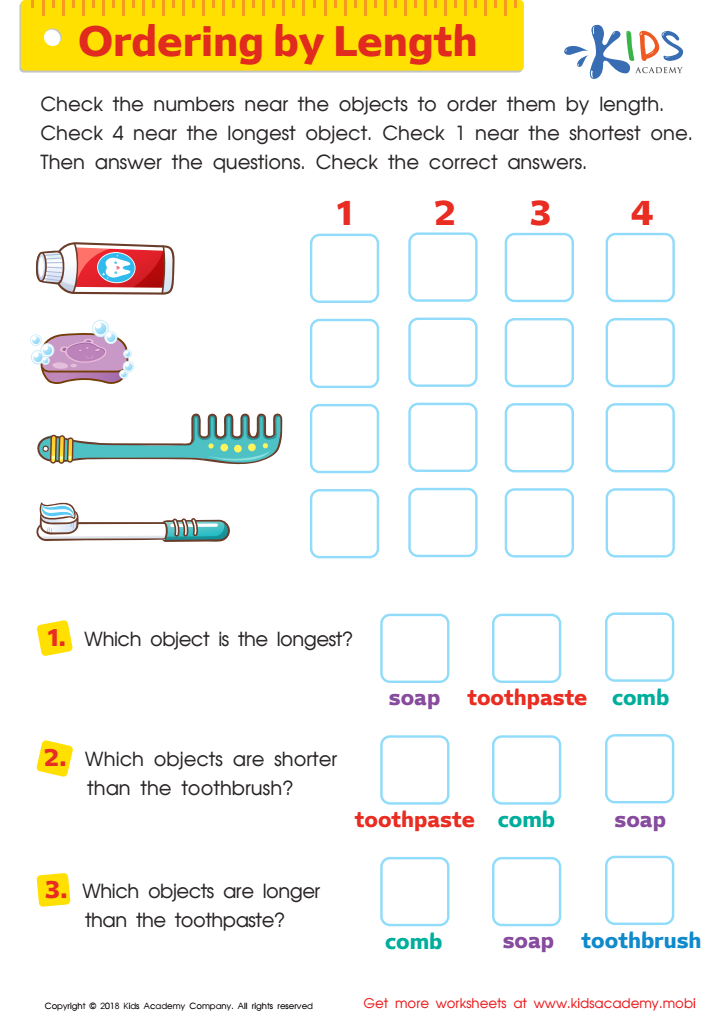
Ordering by Length Worksheet







Visual perception measurement is crucial for children aged 6-9 as it significantly impacts their academic and social development. For parents and teachers, understanding a child's visual perception skills can reveal insights into their learning abilities, helping to identify strengths and areas needing support. Visual perception encompasses the brain's ability to interpret and process visual information, including shape recognition, spatial relationships, and the ability to sequence visuals, all of which are foundational for reading and math proficiency.
At this age, children are starting to encounter more complex educational tasks that require solid visual skills, such as reading fluency, problem-solving, and even handwriting. Delayed visual perception can lead to difficulties that might manifest as frustration or behavioral issues in the classroom setting. Identifying challenges early through measurement allows for timely interventions, tailored teaching strategies, and suitable enrichment programs.
Moreover, supporting visual perception can enhance children's confidence and motivation to learn, creating positive learning experiences. Ultimately, when parents and teachers collaborate on understanding and improving visual perception, they contribute significantly to a child’s academic success and overall self-esteem, ensuring a solid foundation for lifelong learning.








