Number Sequencing Skip Counting Worksheets for Ages 6-9
4 filtered results
-
From - To
Explore our engaging Number Sequencing Skip Counting Worksheets designed specifically for children ages 6-9! These fun and interactive resources help young learners master skip counting by twos, fives, and tens, building a strong foundation in number sense and patterns. Our worksheets encourage critical thinking and boost confidence in math through colorful designs and age-appropriate challenges. Ideal for both classroom settings and at-home learning, each worksheet is structured to reinforce skills while making learning enjoyable. Give your child the tools to enhance their numerical fluency and pattern recognition with our thoughtfully crafted skip counting worksheets today! Ideal for all learning styles!
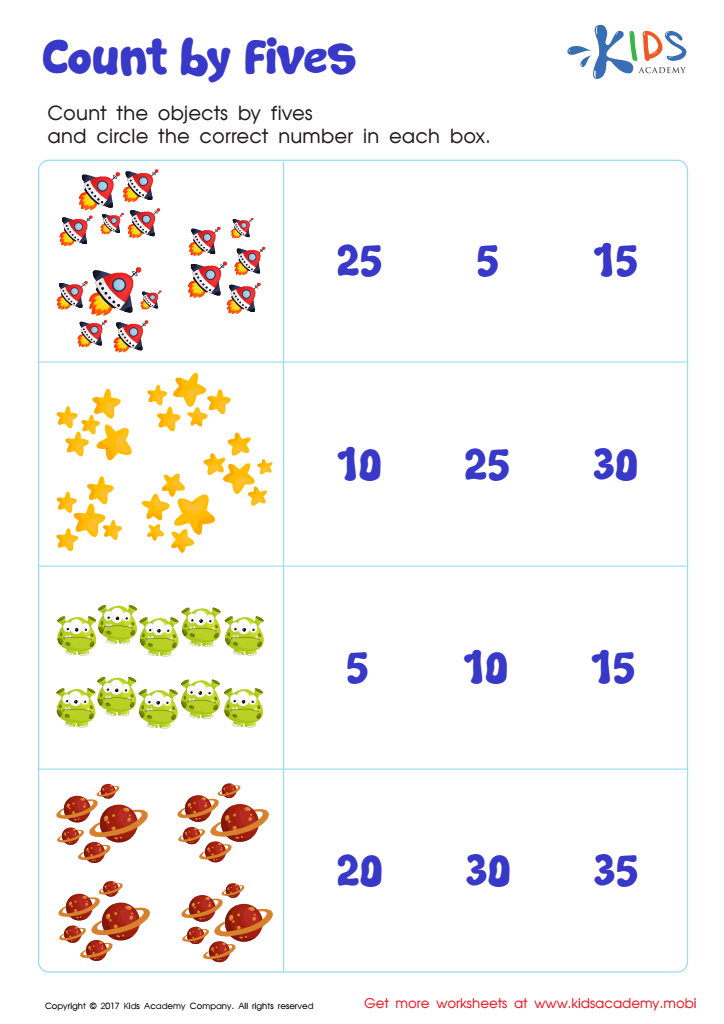
Skip Counting by 5s: Space Math Printable
 Assign to My Students
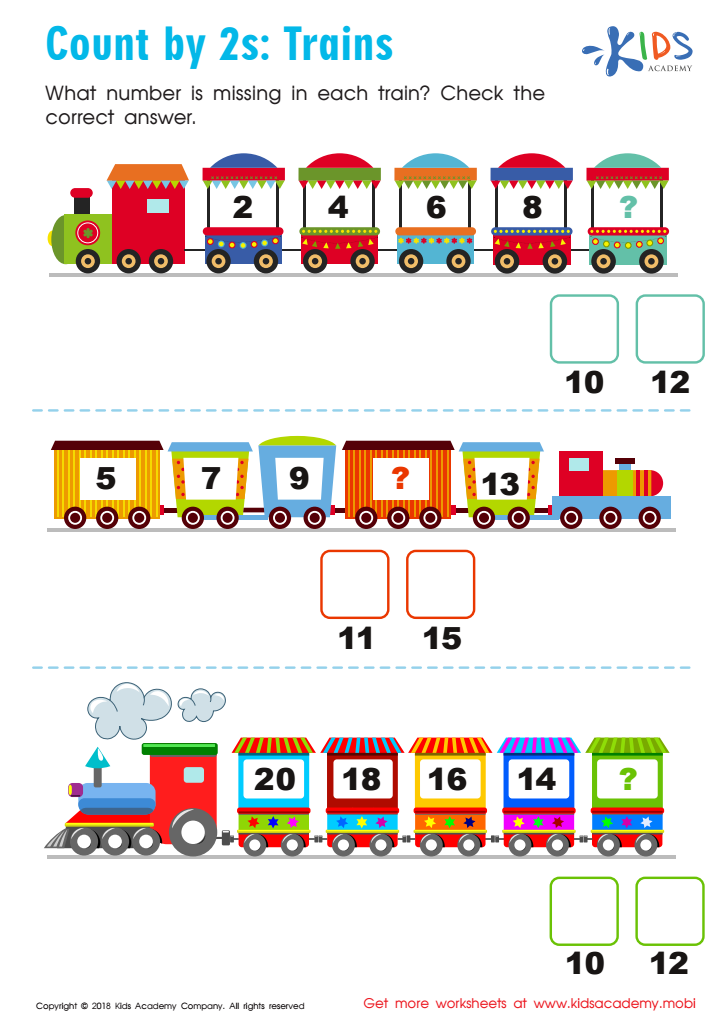
Count by 2's: Trains Worksheet
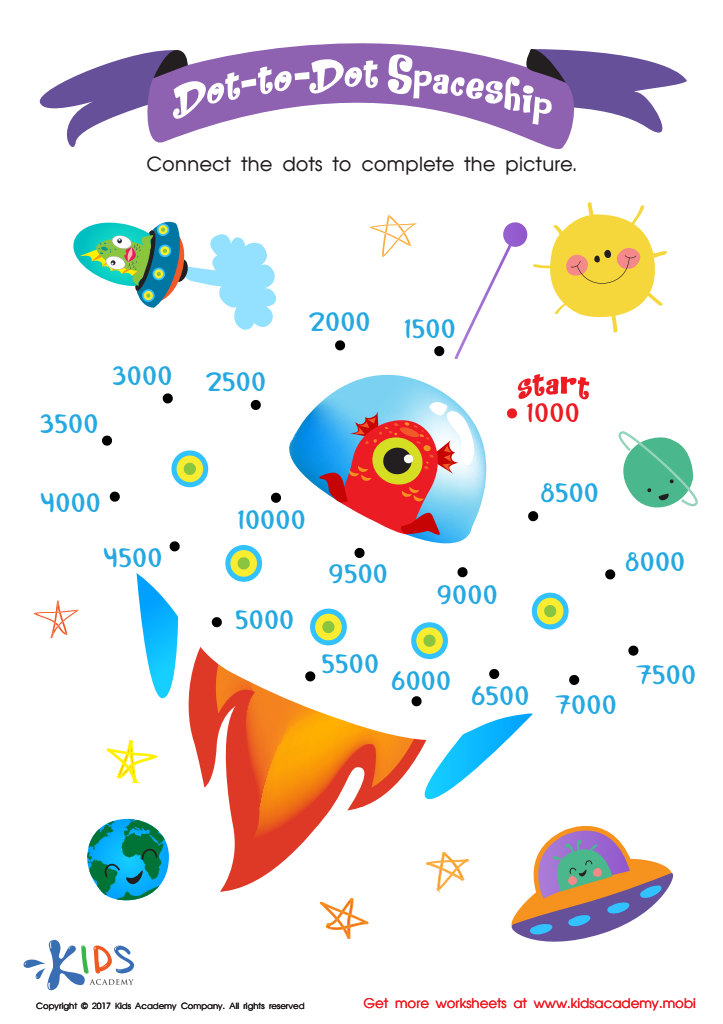
Dot to Dot Worksheet for 3rd Grade
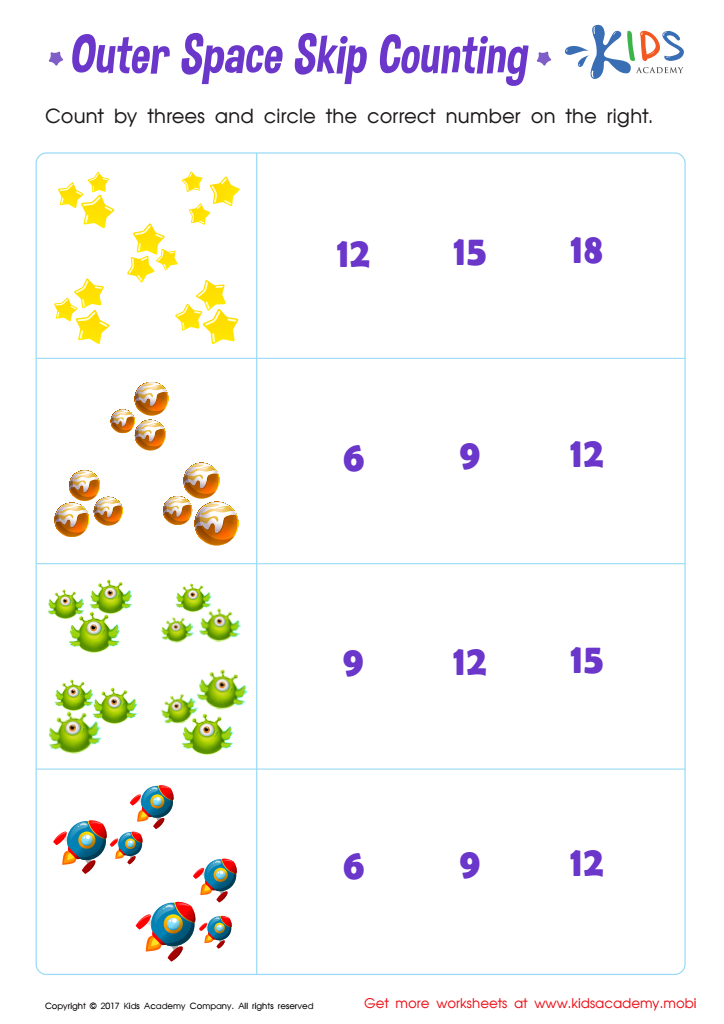
Skip Counting by 3s: Outer Space Skip Counting Printable





%20(1).jpg)


Number sequencing and skip counting are foundational skills that significantly benefit children aged 6-9. These skills foster a strong understanding of number relationships, which is crucial for more complex math concepts, including addition, subtraction, multiplication, and division. By mastering skip counting, children develop their ability to recognize patterns in numbers, enhancing their problem-solving skills and reasoning abilities.
For parents and teachers, focusing on these skills means instilling confidence in students as they progress through their educational journey. Skip counting serves as an introductory method to multiplication, making it easier for children to grasp times tables later on. Moreover, these activities promote critical thinking, as children learn to group numbers systematically, fundamentally aiding in their mathematical literacy.
Engaging in number sequencing games or activities also fosters a sense of achievement, motivating young learners and supporting positive attitudes toward mathematics. Additionally, these skills encourage social interactions in group activities, further enriching their learning experience. Therefore, emphasizing number sequencing and skip counting can substantially enhance a child's early mathematical development, laying the groundwork for academic success in mathematics and beyond.








