Multiplication practice Times Tables Worksheets for Ages 6-9 - Page 2
33 filtered results
-
From - To
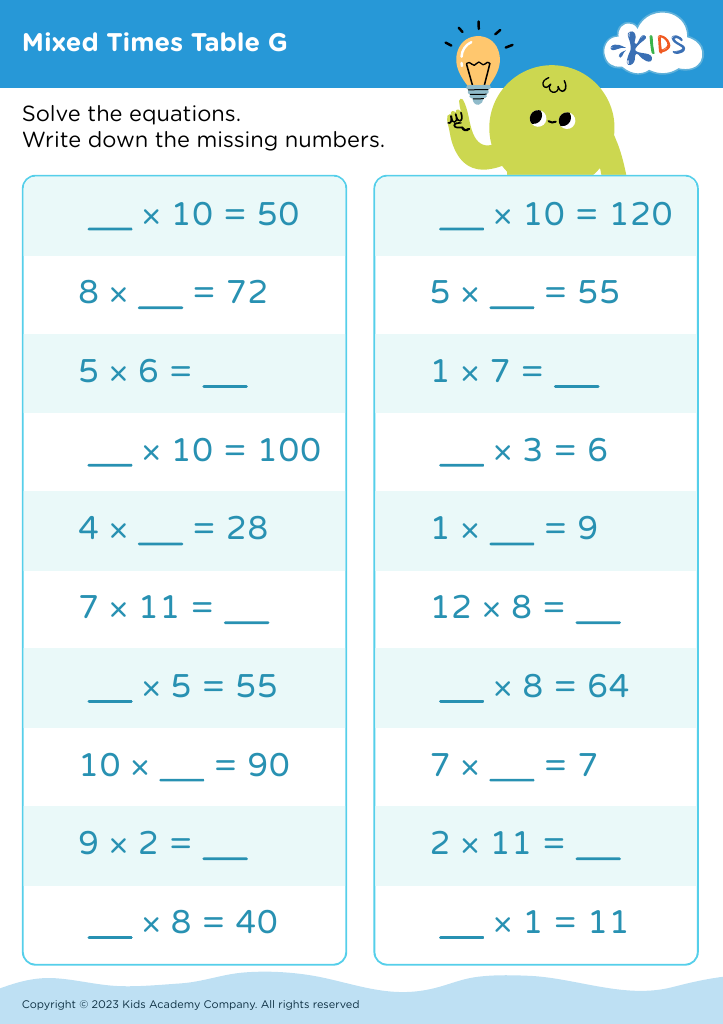
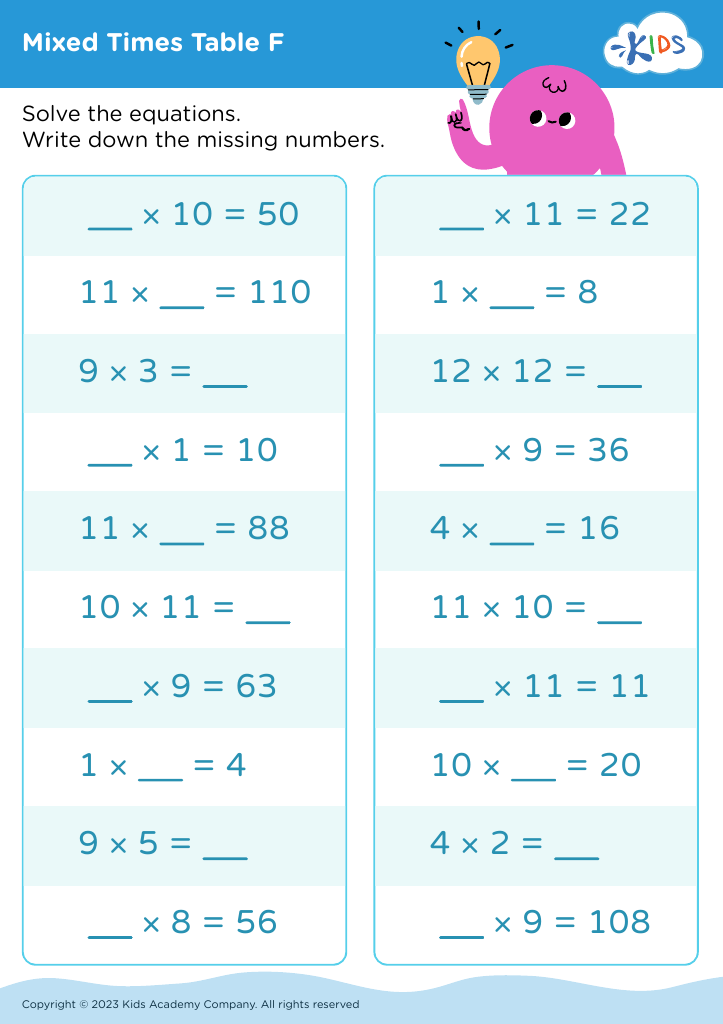
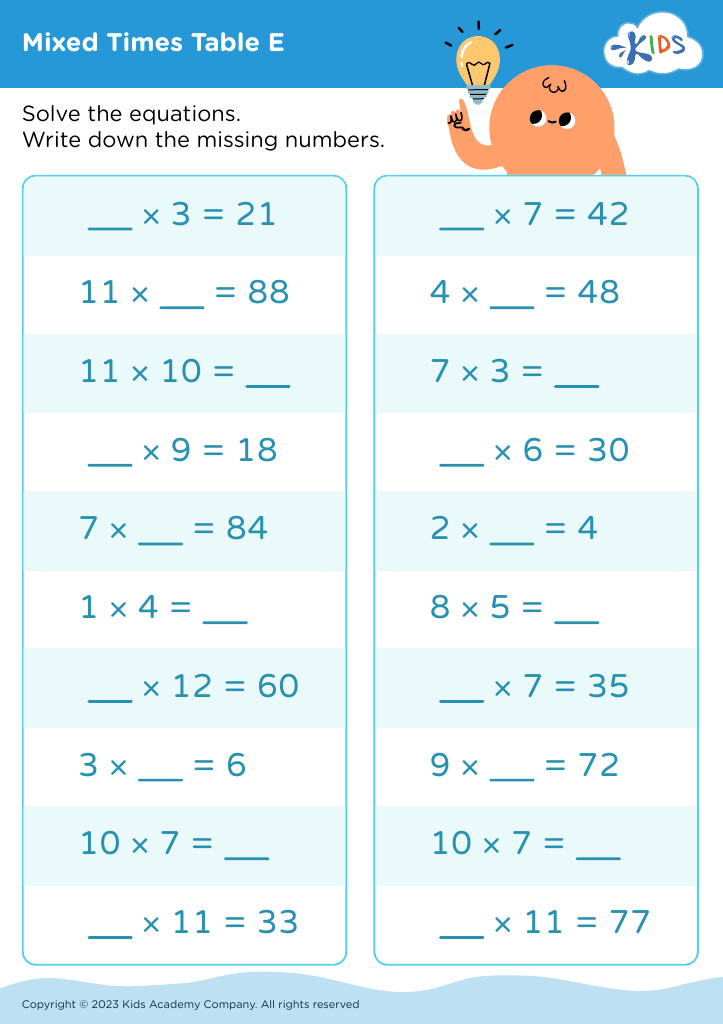
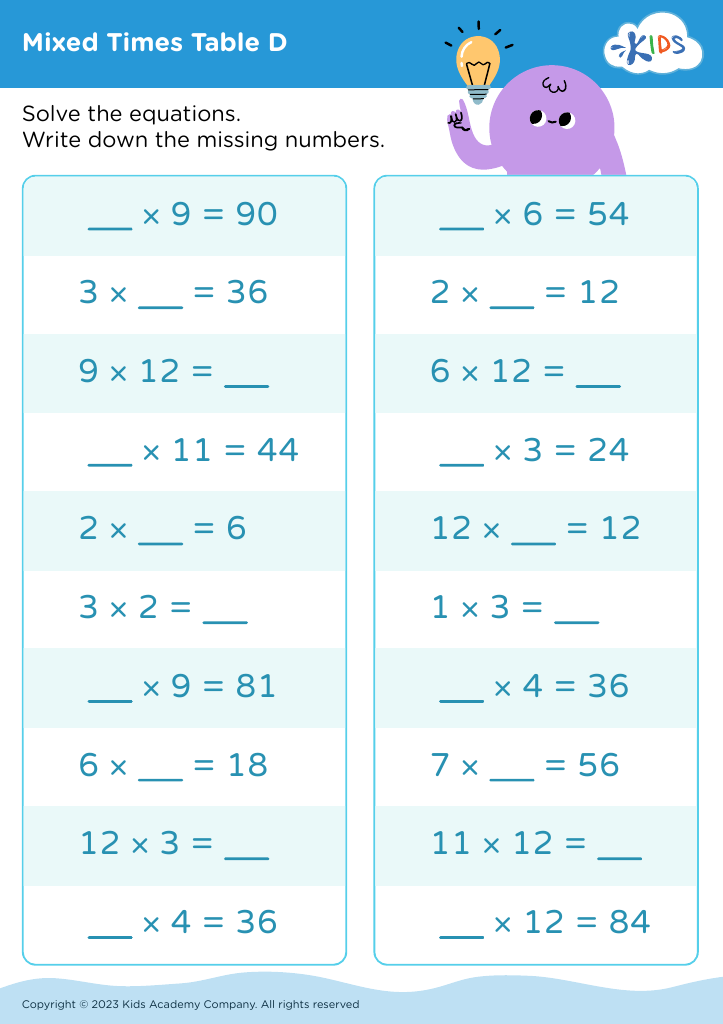
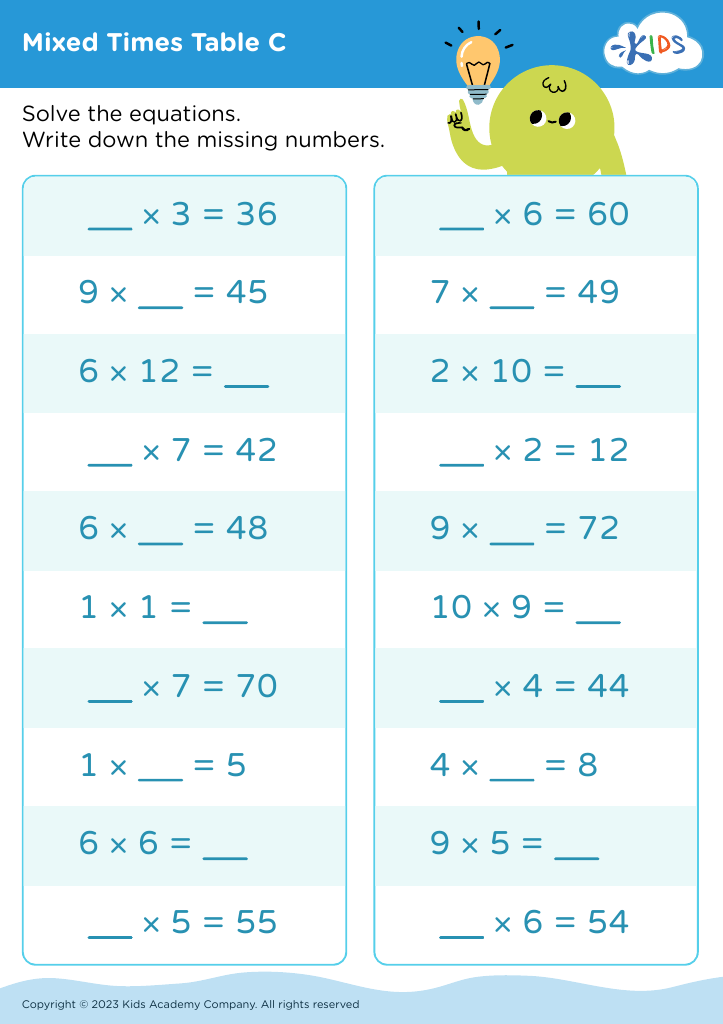
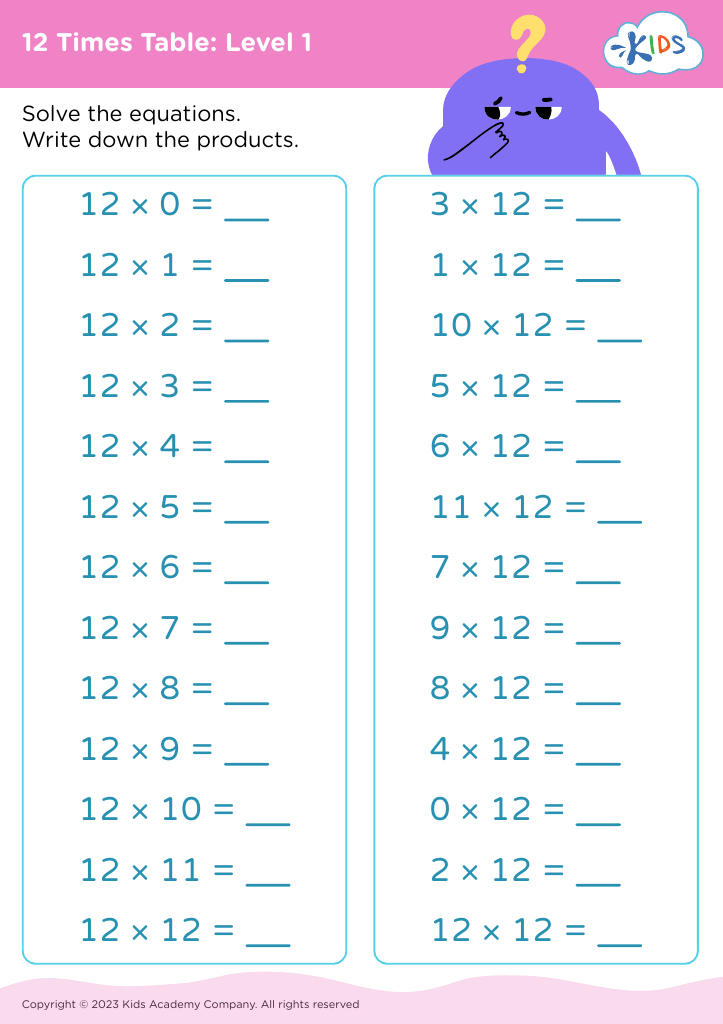
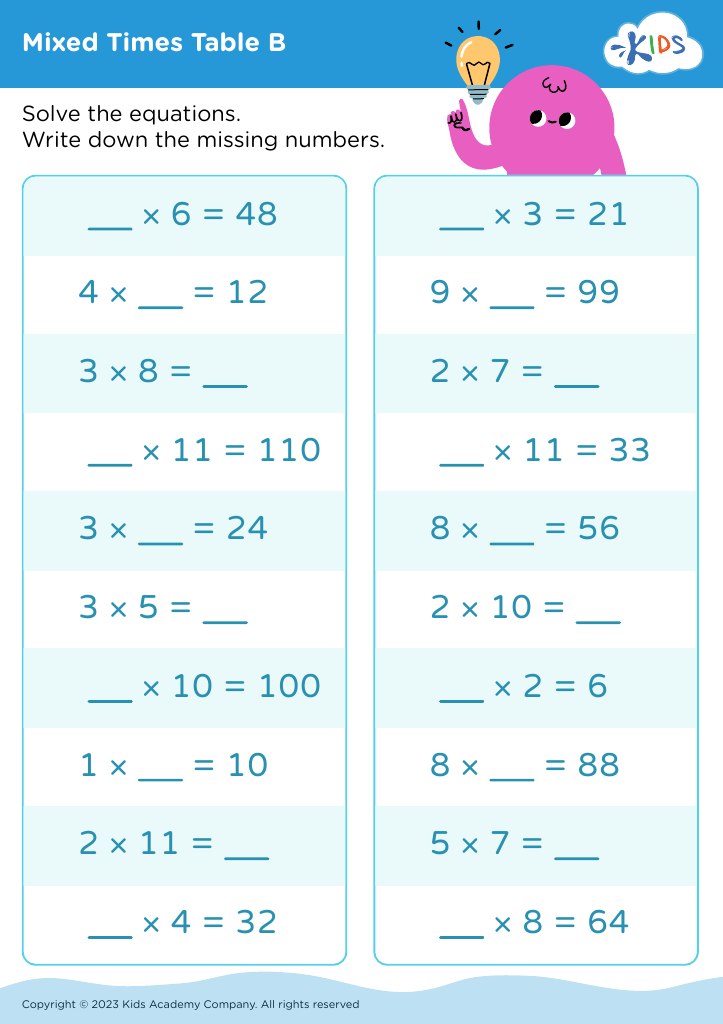
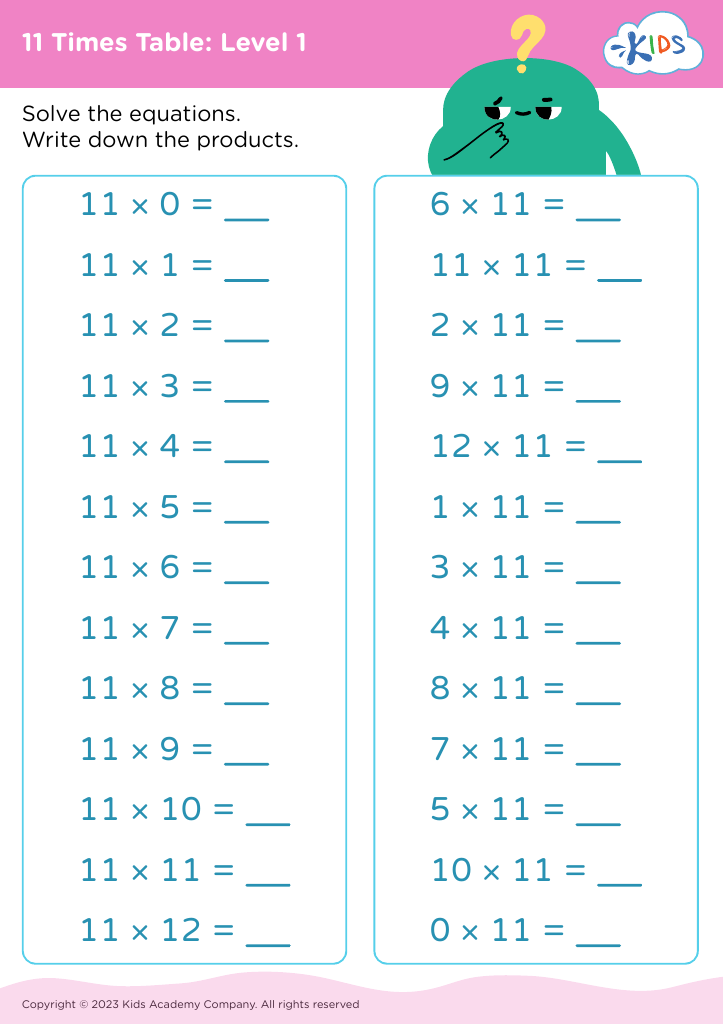
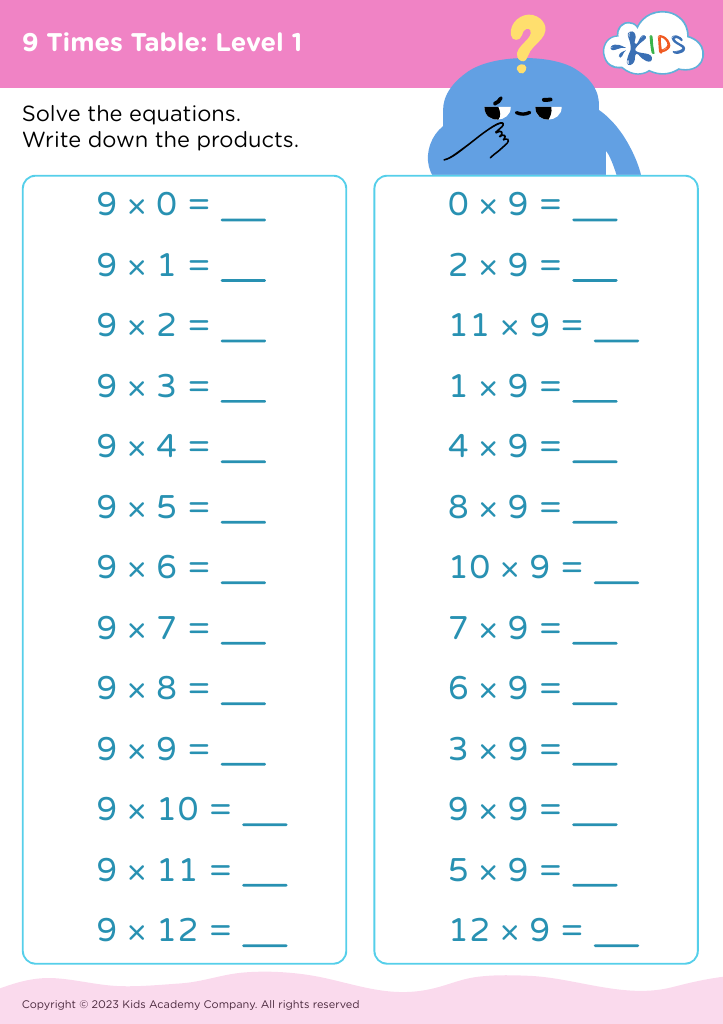





Multiplication practice through Times Tables is crucial for children aged 6-9 as it lays the foundational skills for more advanced mathematics. At this developmental stage, children are able to grasp abstract concepts more effectively, and mastering multiplication provides them with essential tools for problem-solving, logical reasoning, and critical thinking.
Firstly, fluency in Times Tables promotes confidence in young learners. As children become adept at multiplication, they experience a sense of achievement that encourages perseverance and a positive attitude towards learning mathematics.
Secondly, proficiency in multiplication is pivotal for success in future math topics, including division, fractions, and algebra. By cementing their understanding of Times Tables, students are better equipped to tackle more complex mathematical concepts later in their education.
Moreover, multiplication skills are not limited to the classroom; they are essential in everyday life situations, from measuring ingredients in recipes to managing money.
Parents and teachers play a vital role in fostering this skill. Engaging, interactive practices such as games, songs, and real-world applications can make learning enjoyable, ensuring that children not only understand multiplication but also appreciate its importance in academic and daily contexts. In short, multiplication mastery is a key stepping stone towards overall academic success.








