
Basic math operations Word Problems Worksheets for Ages 6-9
3 filtered results
Difficulty Level
Grade
Age
-
From - To
Subject
Activity
Standards
Enhance your child's problem-solving skills with our engaging "Basic Math Operations Word Problems Worksheets for Ages 6-9." These worksheets provide targeted practice in addition, subtraction, multiplication, and division, making math fun and accessible. Designed to align with Grade 1 to 3 curriculums, each worksheet presents real-life scenarios to help young learners apply their math knowledge practically. With colorful illustrations and easy-to-follow instructions, our worksheets help build confidence and boost performance in math. Perfect for at-home practice or classroom resources, let our worksheets turn math time into an exciting, educational adventure for your child.
Favorites
With answer key
Interactive
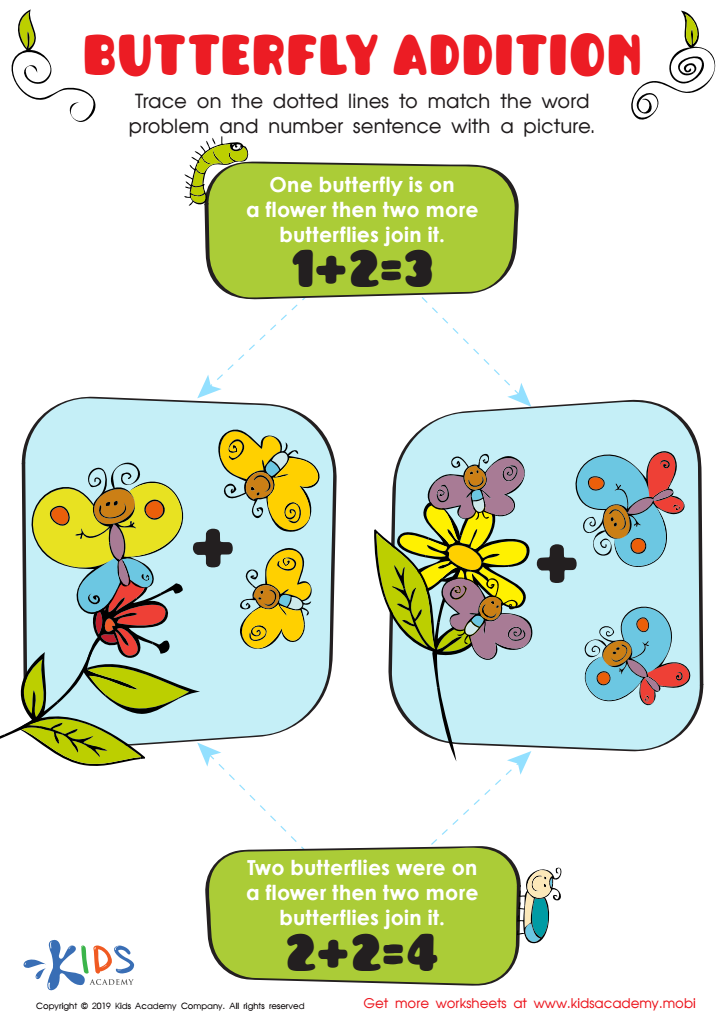
Butterfly Addition Worksheet
This tracing sheet is great for kids to work on math skills and have fun too. Read the word problems to them, then help them trace the dotted lines to match the problem and number sentence to a picture. Not only is it educational, it's beautiful too - your kids will love learning about butterflies!
 Assign to My Students
Butterfly Addition Worksheet
Worksheet
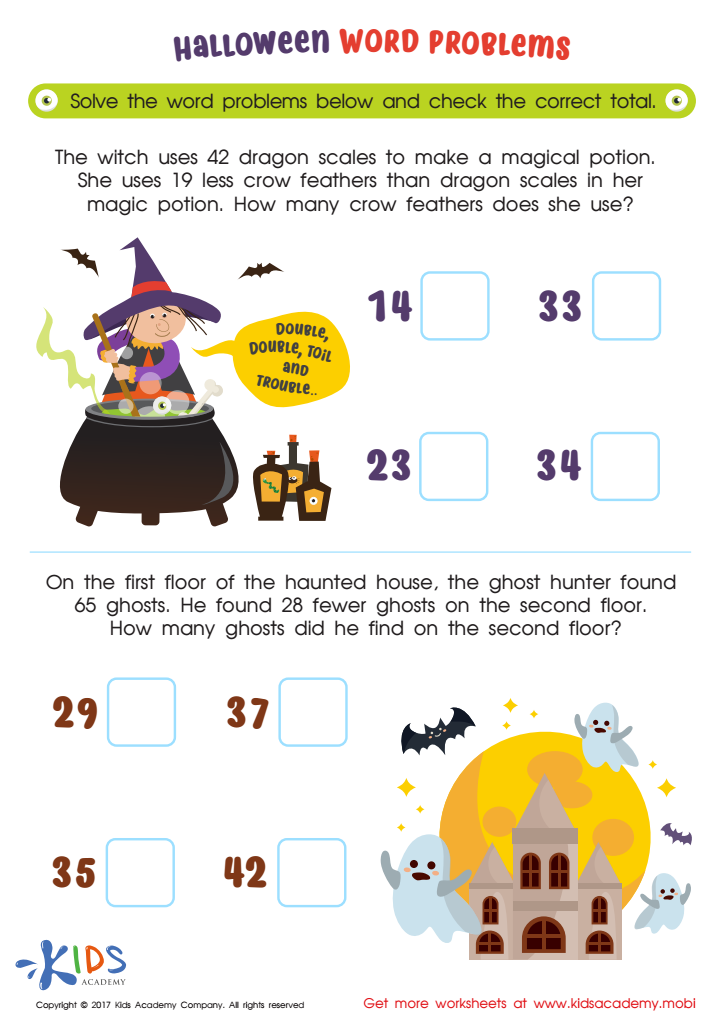
Halloween Word Problems Printable
Ghosts, witches, and other spooky characters make these problems exciting and interactive. Get ready to have some math fun!
Halloween Word Problems Printable
Worksheet
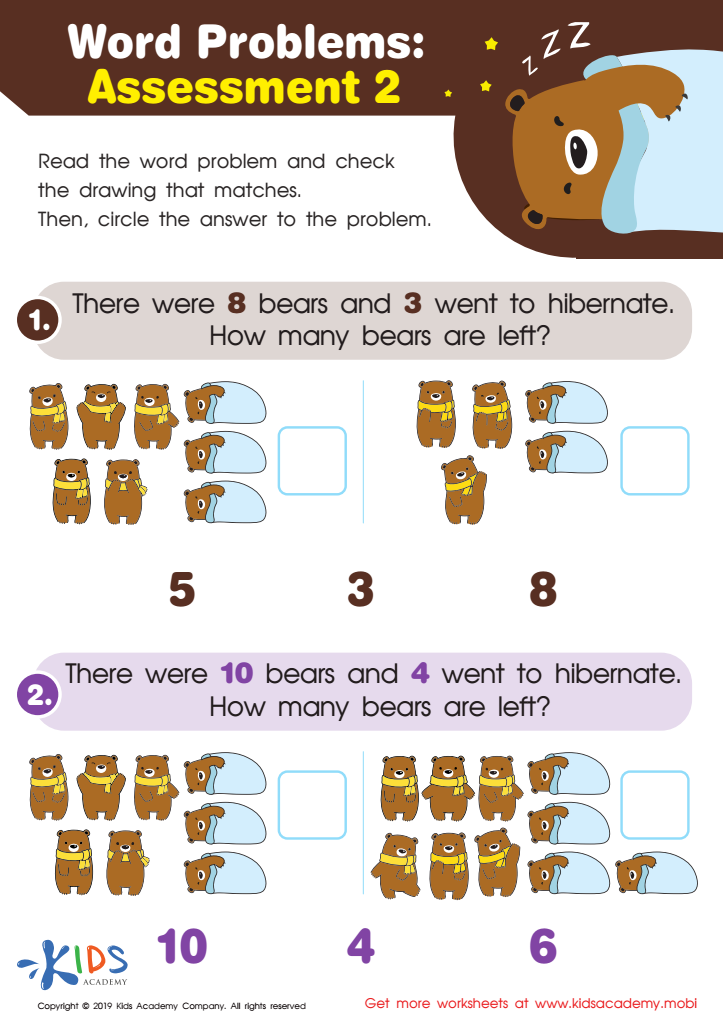
Word Problems: Assessment 2 Worksheet
This bear-themed worksheet is a great way to test subtraction skills. Have your child read the word problems and match the correct drawing with the answer. It's a fun way to quiz them without them even knowing. Enjoy counting cute snoozing bears! (80 words)
Word Problems: Assessment 2 Worksheet
Worksheet
Join Kids Academy for Free
Who is primarily going to use this learning content?








Parents and teachers should care deeply about basic math operations word problems for children ages 6-9 because they are integral to foundational learning. These word problems enhance cognitive development by requiring young minds to apply basic arithmetic—addition, subtraction, multiplication, and division—in real-life scenarios. This early practice strengthens problem-solving skills and fosters logical thinking.
Word problems also help children understand the relevance of math in everyday life, making abstract concepts more tangible and relatable. For example, when asked to calculate the total number of apples in a basket after buying more, children are directly translating everyday experiences into mathematical language, bridging the gap between theory and practice.
Additionally, solving word problems can build reading comprehension and critical thinking skills. To get to an answer, children must read the problem carefully, discern which pieces of information are essential, and understand the context. This multi-step process improves their ability to analyze and retain information.
Furthermore, early success in math builds confidence. When children master these problems, it cultivates a positive attitude towards more advanced math and academic subjects in the future. Therefore, prioritizing word problems at a young age sets a strong academic foundation, encouraging a lifelong appreciation and understanding of mathematics.








