Cognitive Development Word Problems Worksheets for Ages 6-9
4 filtered results
-
From - To
Unlock your child's cognitive potential with our engaging Cognitive Development Word Problems Worksheets for ages 6-9! Designed specifically to sharpen critical thinking skills, these worksheets provide a variety of fun and age-appropriate math word problems. Each worksheet encourages kids to analyze information, make connections, and apply their math knowledge in real-life scenarios, fostering problem-solving abilities. Ideal for parents and educators, these resources promote independent learning and motivate young minds to tackle challenges with confidence. Watch your child thrive academically while enjoying the process of learning! Explore our collection today and support your child’s cognitive development journey!
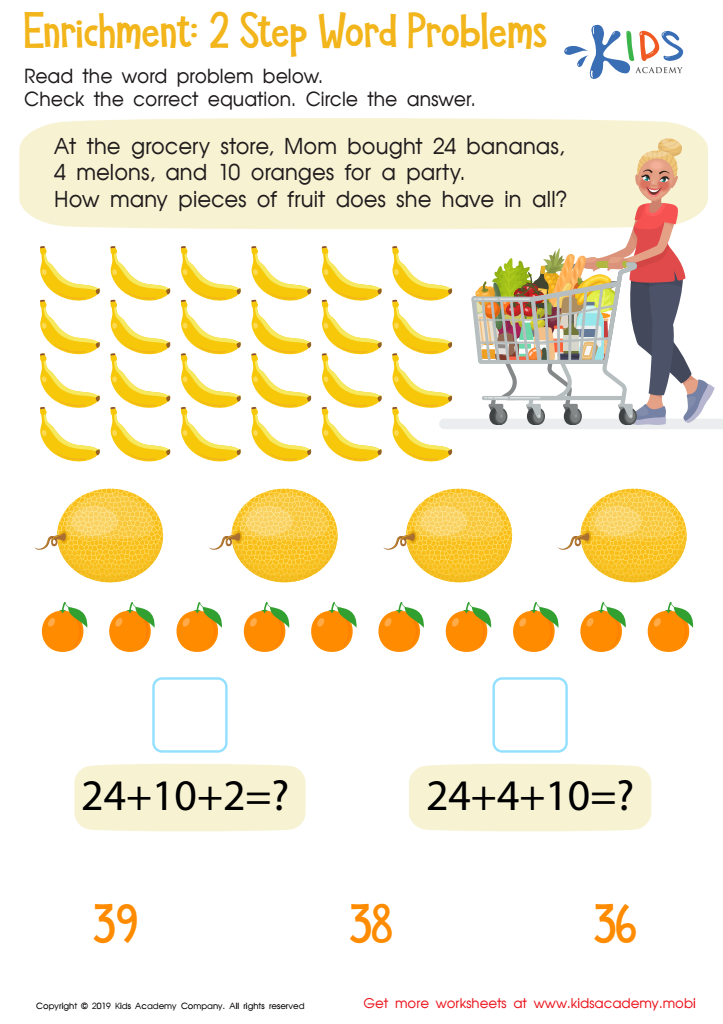
Enrichment -2 Step Word Problems Worksheet
 Assign to My Students
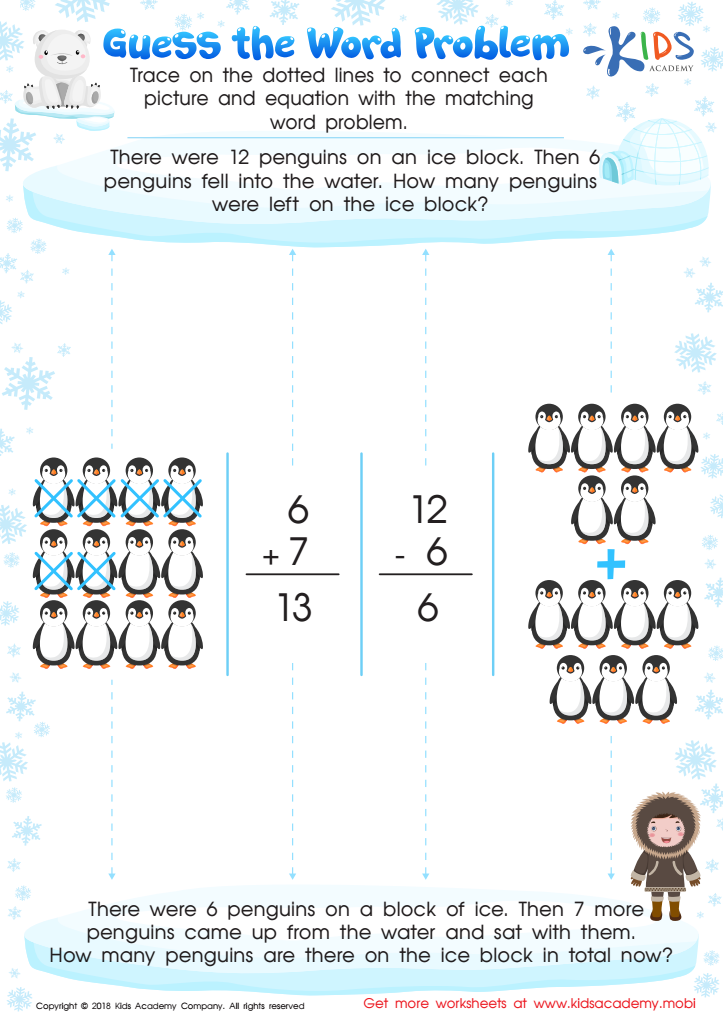
Guess the Word Problem Worksheet
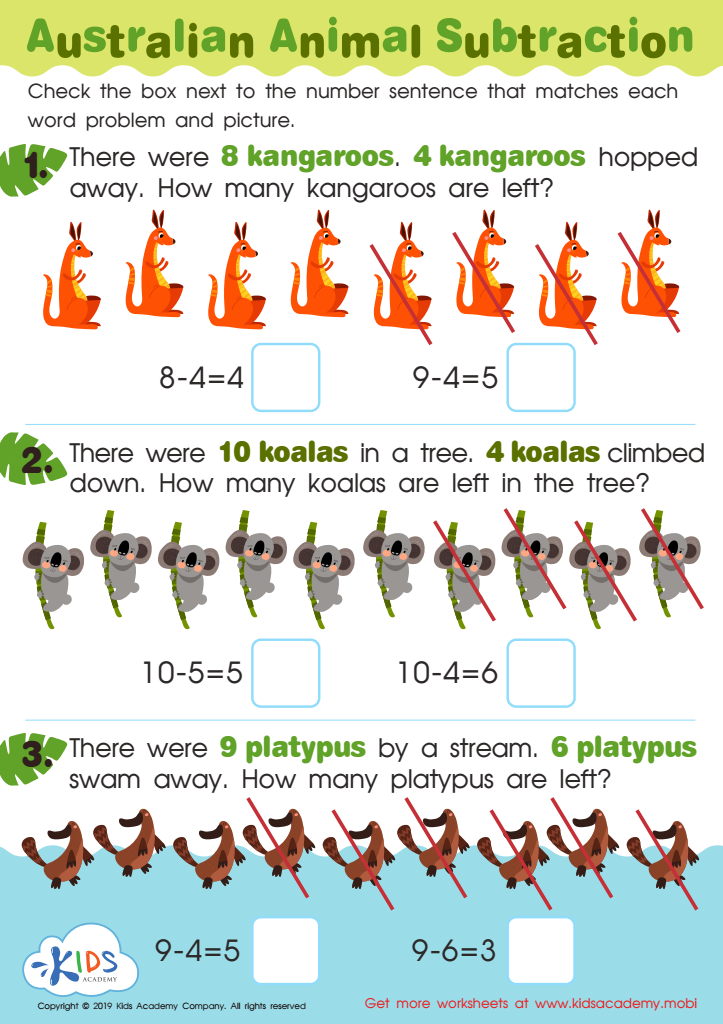
Australian Animal Subtraction Worksheet
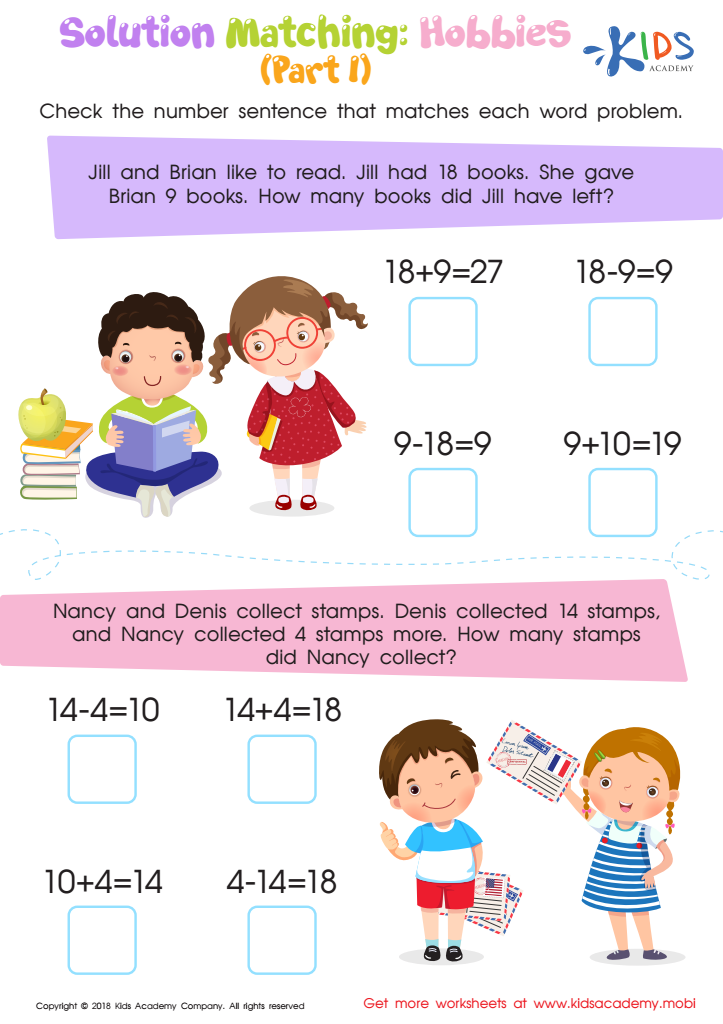
Solution Matching: Hobbies. Part 1 Worksheet








Cognitive development word problems for ages 6-9 are vital for enhancing children's analytical skills and problem-solving abilities. During these formative years, children transition from concrete to more abstract thinking, making it essential for parents and teachers to engage them with challenges that stimulate this growth. Word problems encourage children to interpret and analyze scenarios, fostering critical thinking—a skill crucial for future academic success and real-world applications.
Moreover, these problems help develop language skills as children learn to decode phrasing and vocabulary, promoting both literacy and numeracy. They also foster persistence and resilience, as confronting and overcoming challenges builds confidence in their abilities.
Incorporating cognitive word problems into learning routines can enhance collaboration and communication skills when students work together to solve them. Parents can reinforce this learning at home, making math exciting and relevant to everyday life.
Ultimately, prioritizing cognitive development through engaging word problems paves the way for independent reasoning and conceptual understanding, equipping children with the tools they need to navigate more complex academic tasks in the future. For parents and teachers, supporting this aspect of learning is imperative in nurturing well-rounded, capable, and confident learners.








