
Mathematical reasoning Word Problems Worksheets for Ages 6-9
9 filtered results
Difficulty Level
Grade
Age
-
From - To
Subject
Activity
Standards
Discover our engaging Mathematical Reasoning Word Problems Worksheets designed specifically for children aged 6-9! These worksheets help young learners develop essential problem-solving skills through real-life scenarios that stimulate critical thinking. Each problem is crafted to challenge students while reinforcing key math concepts such as addition, subtraction, and basic multiplication. Our printable resources promote a fun learning environment, making it easier for kids to grasp important mathematical principles. Perfect for teachers, parents, or homeschoolers, these worksheets can be used for extra practice or as part of a structured curriculum. Help your child build confidence in math while nurturing their reasoning abilities today!
Favorites
With answer key
Interactive
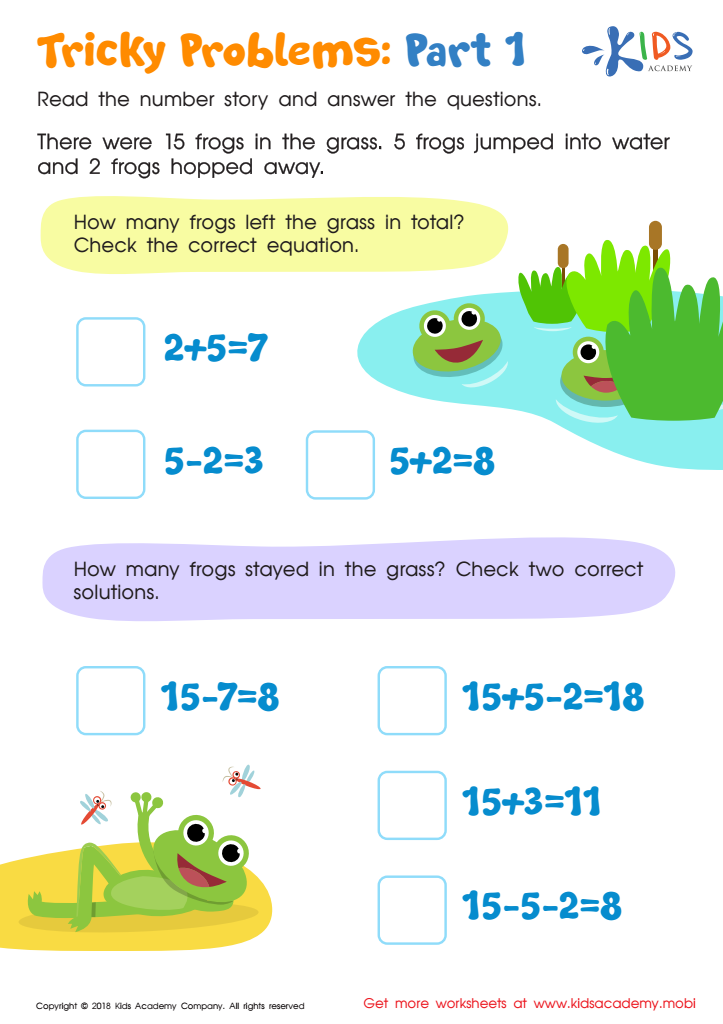
Tricky Problems Worksheet: Part 1
Visualizing word problems can help students solve them. This fun PDF worksheet encourages students to create mental images using math facts, then check boxes to match the equations for basic addition problems. It's a great way to build confidence in solving math.
 Assign to My Students
Tricky Problems Worksheet: Part 1
Worksheet
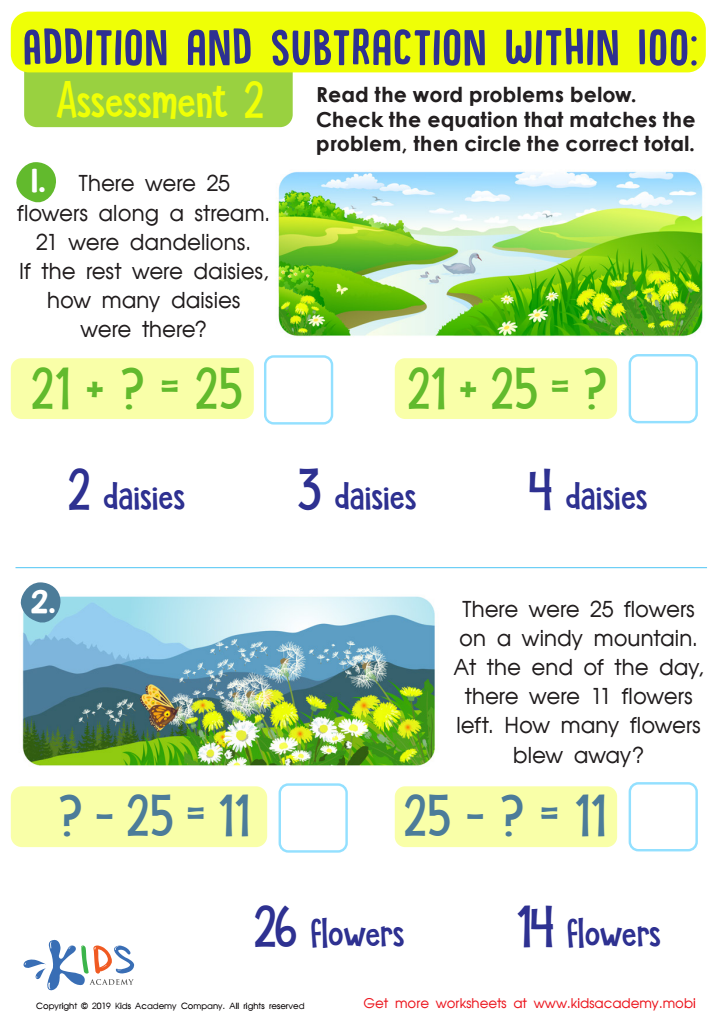
Assessment 2 Math Worksheet
Using fun exercises and pictures, you can get kids excited about math. With practice and reminders of what they've learnt, they'll be solving simple addition and subtraction equations with ease. Read the word problems in the picture to them, then help them check the equation and choose the correct answer.
Assessment 2 Math Worksheet
Worksheet
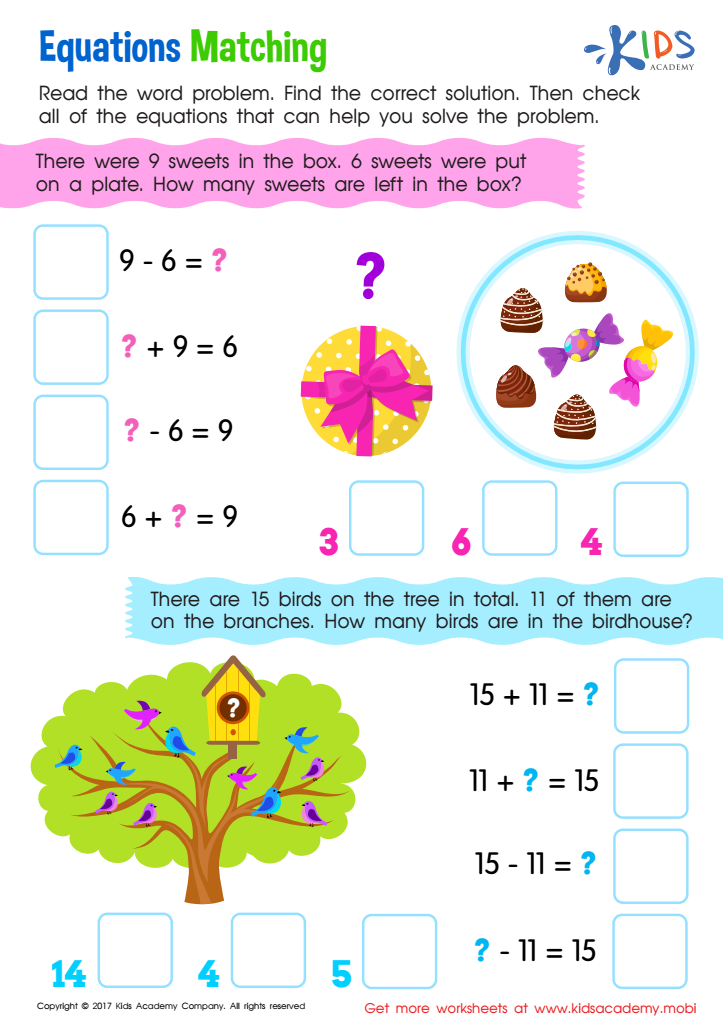
Equations Matching Word Problems Worksheet
Download this worksheet and give your young mathematician practice in solving equations using matching numbers and number family facts. They'll solve word problems, develop critical thinking and algebraic reasoning, and gain success with addition and subtraction.
Equations Matching Word Problems Worksheet
Worksheet
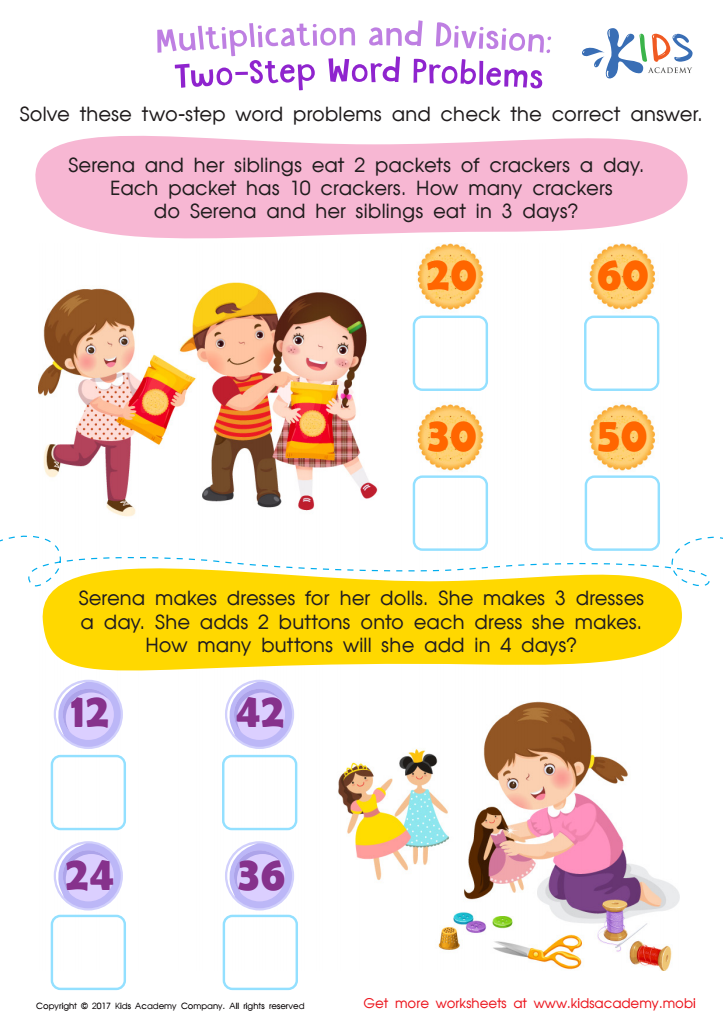
Two Step Word Problems Worksheet
Boost your child's math skills with this fun and realistic two-step word problems worksheet! Kids will learn to break down complex multiplication word problems into easier steps to solve. Download this free PDF worksheet and help them reach the next level.
Two Step Word Problems Worksheet
Worksheet
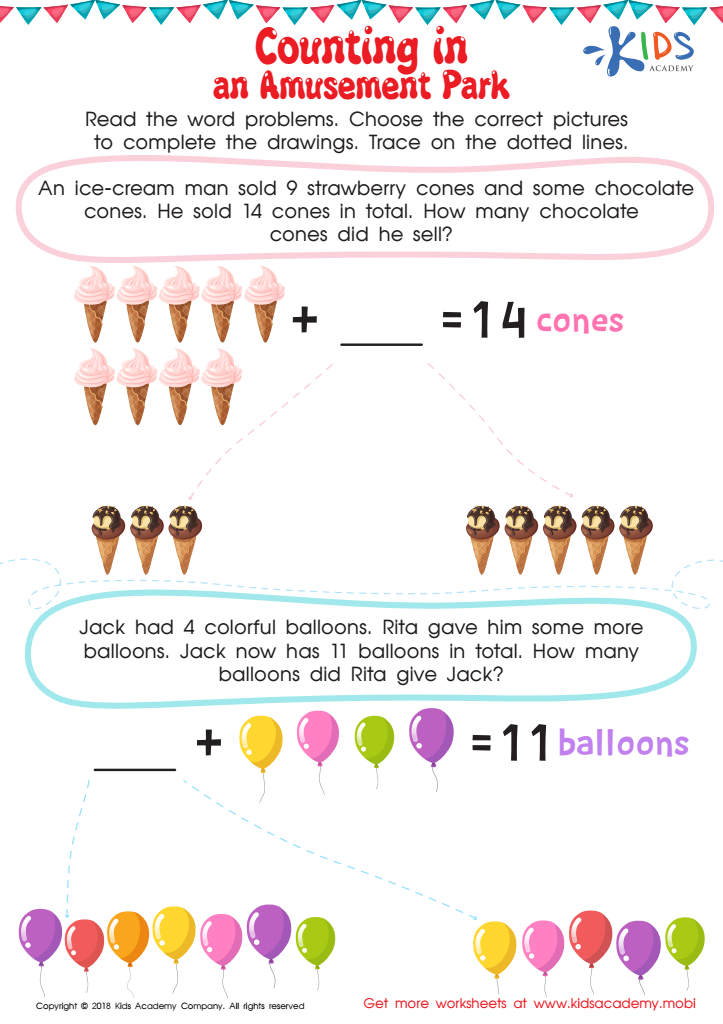
Counting in an Amusement Park Worksheet
Love amusement parks? This colorful worksheet is sure to delight your child as they solve basic addition problems with missing addends. Picture representations help them solve the math equations, while traceable lines help them accurately complete the drawings. No roller coaster ride here, but still loads of fun!
Counting in an Amusement Park Worksheet
Worksheet
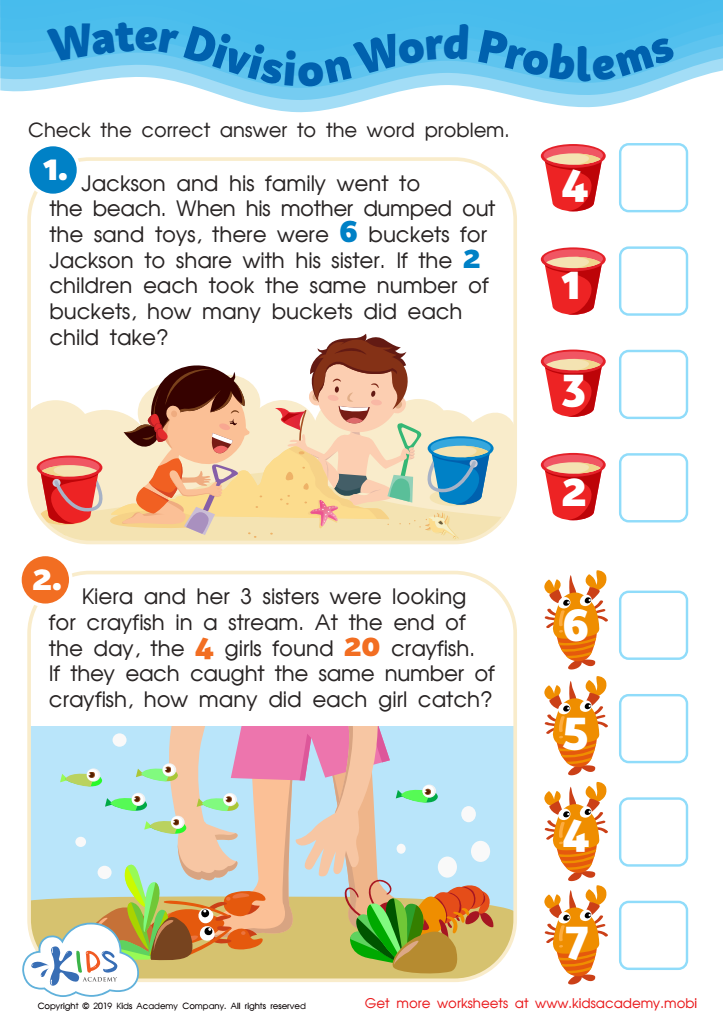
Water Division Word Problems Worksheet
Kids can sharpen their math skills with this fun PDF! They'll see pictures of friends at the beach, plus bold numbers and colorful pictures. All they need to do is read and understand the problem to find the answer - without even realizing they're doing division. A great way to make math enjoyable!
Water Division Word Problems Worksheet
Worksheet
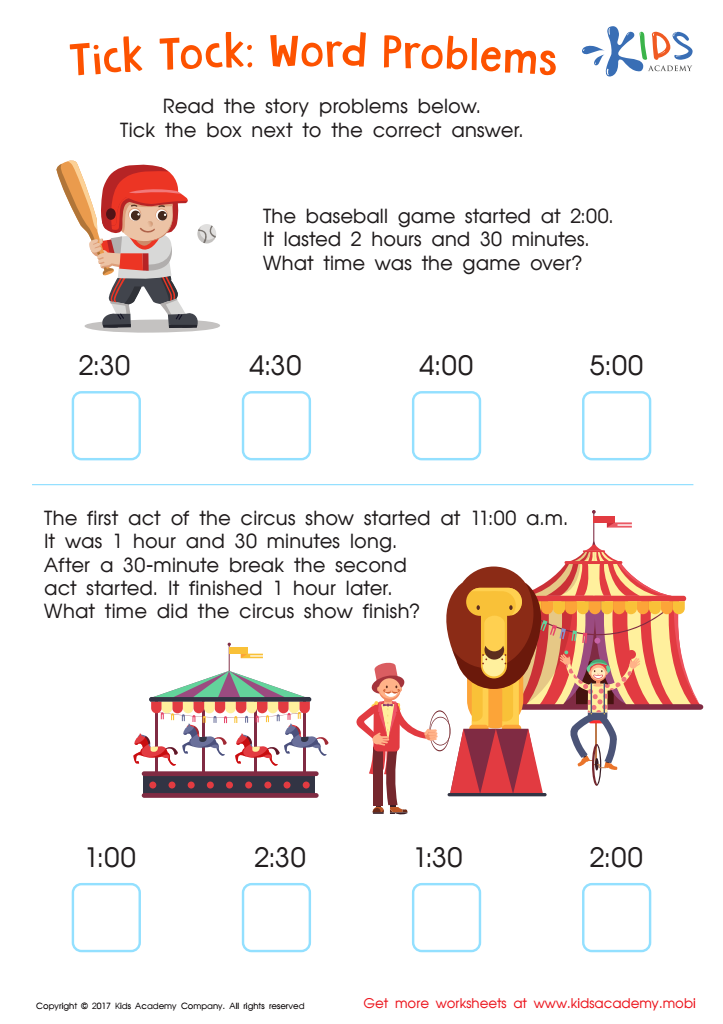
Tick Tock Word Problems Time Worksheet
Mix math and fun with this telling time word problems worksheet! Your child will love solving the events' finishing times using the vivid colors and joyful illustrations. Tick Tock!
Tick Tock Word Problems Time Worksheet
Worksheet
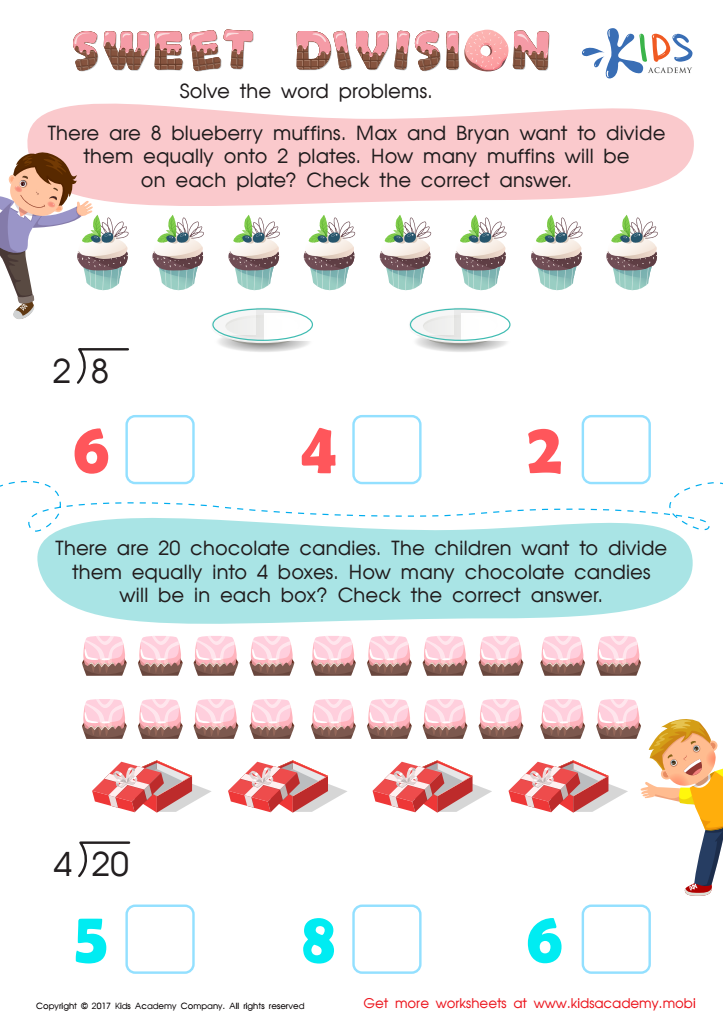
Division Word Problems Worksheet
This division worksheet helps kids understand how long division problems appear as word problems. Perfect for 3rd graders, it'll boost their confidence in solving division problems.
Division Word Problems Worksheet
Worksheet
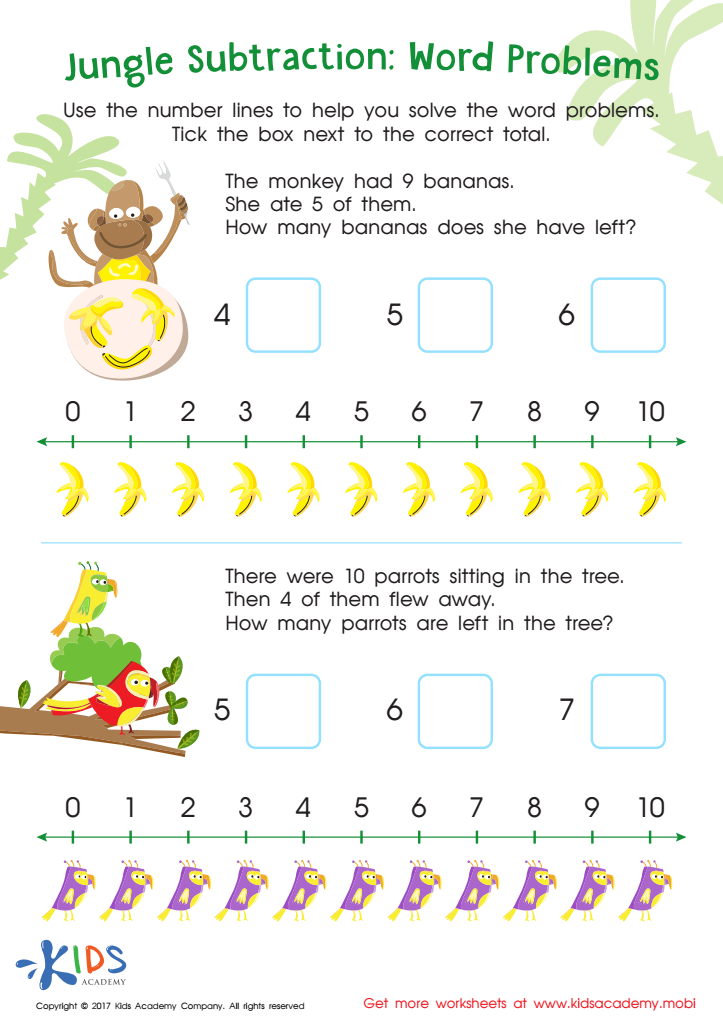
Jungle Subtraction Word Problems Substraction Worksheet
Kids will love this jungle-themed worksheet: subtraction word problems! Help the monkey work out how many bananas he has, using the number line. Encourage your child to use colorful parrots to subtract with ease and make calculations fun!
Jungle Subtraction Word Problems Substraction Worksheet
Worksheet
Join Kids Academy for Free
Who is primarily going to use this learning content?








Mathematical reasoning through word problems is crucial for children aged 6-9 as it significantly enhances their cognitive and problem-solving skills. At this developmental stage, children are not just learning to perform arithmetic operations; they are also beginning to understand how to apply these skills in real-world situations. Engaging with word problems nurtures critical thinking, helping children analyze situations, extract relevant information, and integrate their knowledge to arrive at solutions.
For parents and teachers, fostering an environment where children regularly encounter and solve word problems is essential. It promotes language development, as kids learn to interpret phrases and narrative structures, allowing them to build context around mathematical concepts. This integration of language and math helps improve comprehension and communication skills, which are vital for overall academic success.
Moreover, working through word problems encourages resilience and perseverance, as children learn that trial and error is a normal part of the learning process. This emotional growth is just as vital as academic achievement. By prioritizing mathematical reasoning through word problems, parents and teachers help children develop a strong foundation for future math concepts, equip them with essential life skills, and instill a more profound appreciation for mathematics as a tool for understanding the world.








