Problem-solving abilities Word Problems Worksheets for Ages 6-9
4 filtered results
-
From - To
Discover our engaging "Problem-solving Abilities Word Problems Worksheets" designed specifically for children aged 6 to 9! These worksheets aim to enhance critical thinking and analytical skills through fun and relatable scenarios. Each problem encourages young learners to apply their math knowledge in real-world situations, fostering creativity and problem-solving abilities. Varied in difficulty, our worksheets cater to different learning paces, ensuring that every child can excel. Perfect for weekend practice, classroom use, or after-school activities, these resources make math enjoyable! Empower your child’s learning journey today with our interactive and educational worksheets designed to spark curiosity and develop confidence in problem-solving.
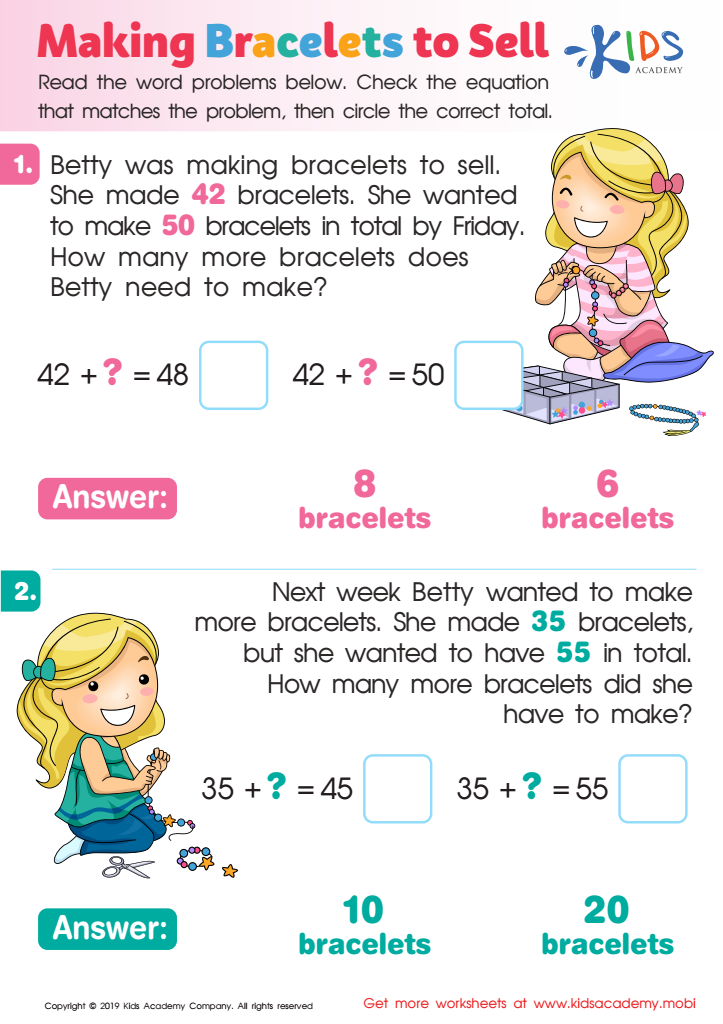
Making Bracelets to Sell Worksheet
 Assign to My Students
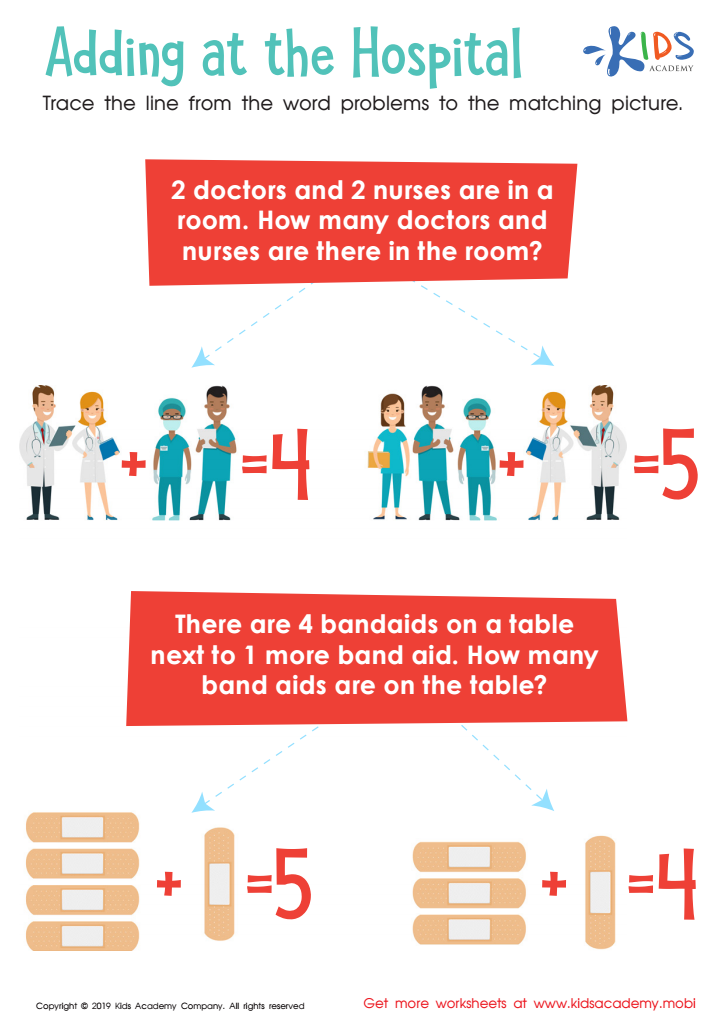
Adding at the Hospital Worksheet
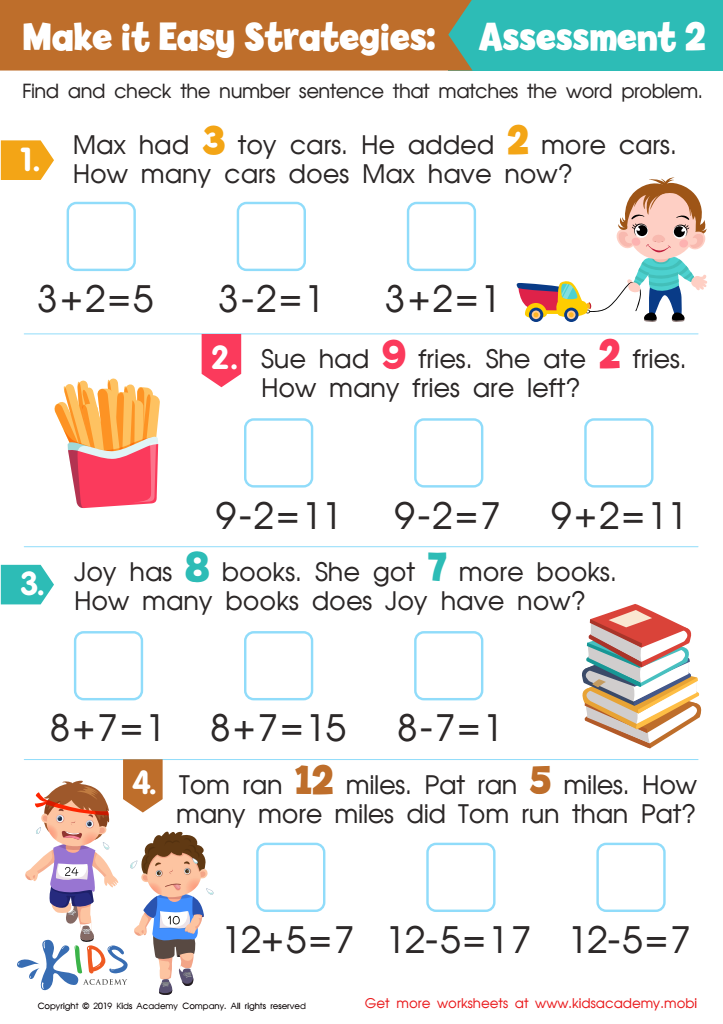
Make it Easy Strategies: Assessment 2 Worksheet
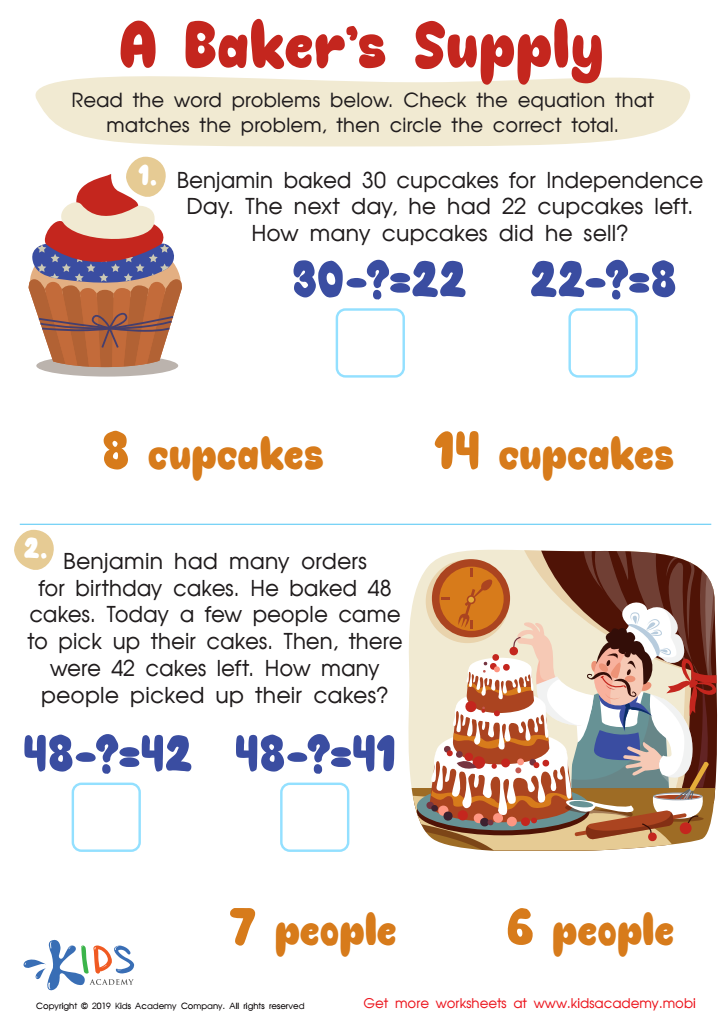
A Baker's Supply Worksheet








Problem-solving abilities, particularly through word problems, are essential for children aged 6-9 as they lay the foundation for critical thinking and analytical skills. At this developmental stage, children transition from concrete operational thought to more abstract reasoning, making it an ideal time to engage them in problem-solving tasks.
Word problems encourage students to read carefully, interpret information, and identify relationships between concepts. By decoding the language of word problems, children not only improve their reading comprehension skills but also learn to translate real-world situations into mathematical equations. This reinforces the practical application of mathematics in everyday life, fostering a positive attitude toward the subject.
Moreover, developing problem-solving abilities promotes resilience and perseverance. When faced with challenging problems, children learn to explore various strategies and consider multiple perspectives, nurturing creativity and innovation. Engaging with word problems often requires collaboration, as children can work together to discuss and strategize, enhancing their communication and social skills.
Finally, improving problem-solving skills boosts children's confidence. As they master different strategies and successfully solve complex problems, they build a sense of achievement that sets a foundation for lifelong learning. By prioritizing word problems, parents and teachers support a holistic educational development that benefits children's cognitive and emotional growth.








