Vocabulary enhancement Word Problems Worksheets for Ages 6-9
3 filtered results
-
From - To
Boost your child's vocabulary with our Vocabulary Enhancement Word Problems Worksheets designed for ages 6-9! These engaging worksheets integrate math challenges with rich language use, helping young learners expand their word knowledge while developing critical thinking skills. Each worksheet presents fun, age-appropriate word problems that not only reinforce math concepts but also introduce new vocabulary in context. Perfect for at-home practice or classroom activities, these resources encourage kids to explore language meaningfully and confidently. Enhance your child's learning experience and set a strong foundation for future success with our interactive and educational worksheets today!
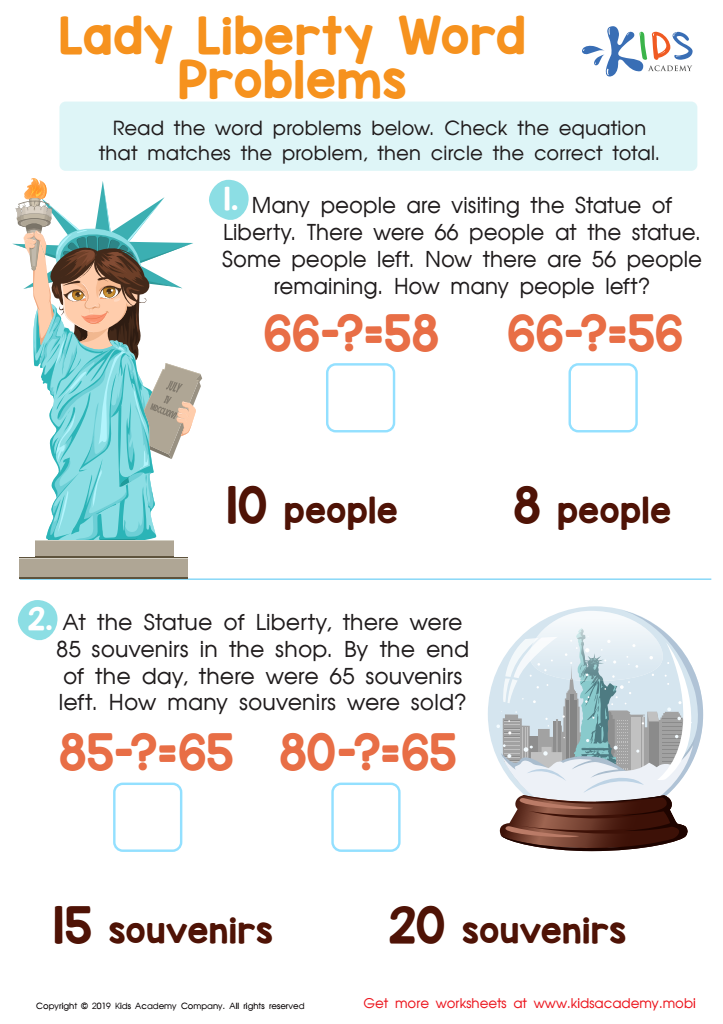
Lady Liberty Worksheet
 Assign to My Students
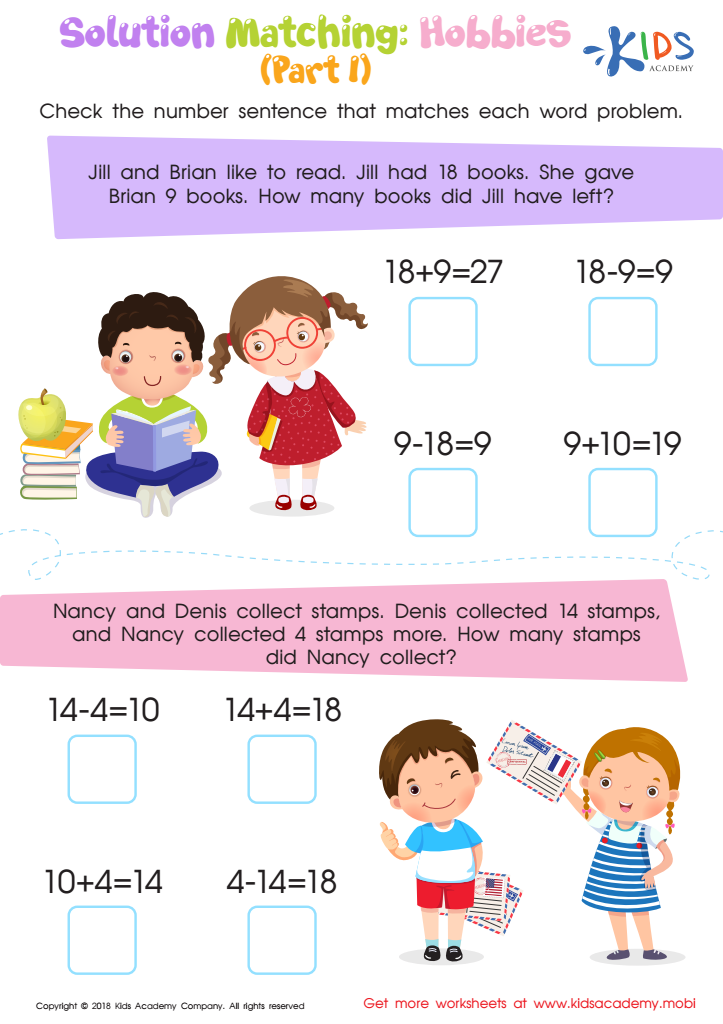
Solution Matching: Hobbies. Part 1 Worksheet
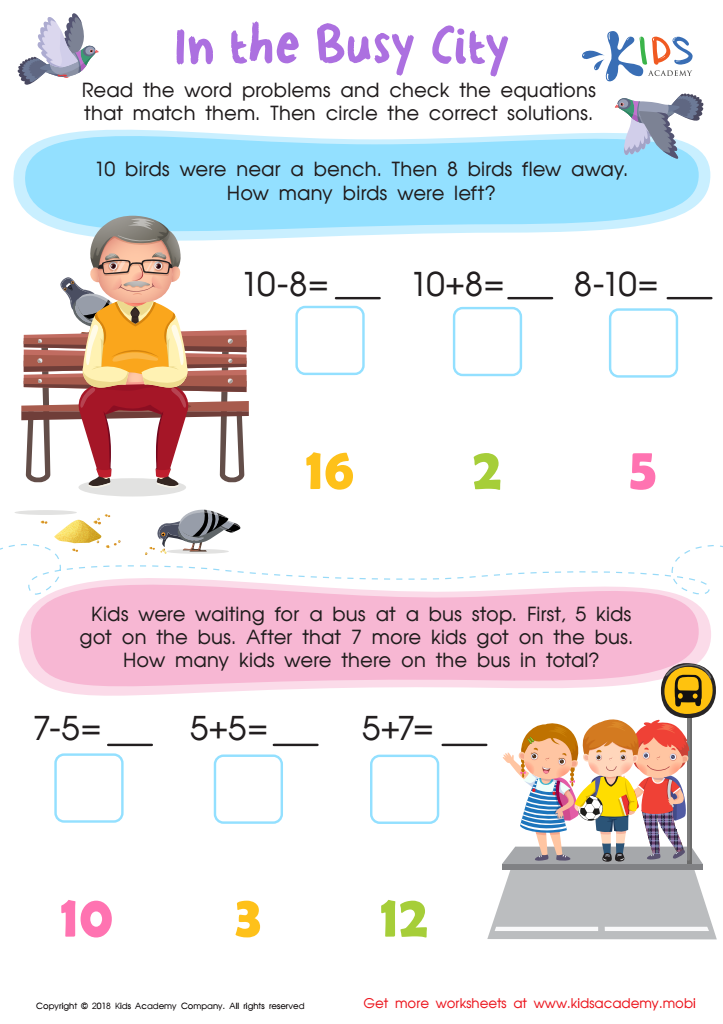
In the Busy City Word Problems Worksheet








Vocabulary enhancement word problems are crucial for children aged 6-9, as they significantly contribute to linguistic and cognitive development. During these formative years, children are expanding their vocabulary and learning to articulate their thoughts. By incorporating word problems into their learning, parents and teachers foster critical thinking and comprehension skills.
These problems often require learners to decode language, grasp new words, and understand contexts before they can even attempt to solve the mathematical components. This dual focus not only reinforces vocabulary but also teaches children to approach challenges from multiple angles. For example, a problem like "If Jenny has five apples and gives two to her friend, how many does she have left?" combines math with reading comprehension and encourages children to break down the information, enhancing both language and arithmetic skills.
Moreover, vocabulary-rich word problems prepare children for more advanced academic tasks in later grades. By promoting a strong vocabulary base early on, parents and teachers can help build confidence, improve communication skills, and ensure academic success down the line. This holistic approach to learning nurtures a love of language and a robust problem-solving mindset essential for lifelong learning.








