
Improve vocabulary Building Vocabulary Worksheets for Ages 6-9
5 filtered results
Difficulty Level
Grade
Age
-
From - To
Subject
Activity
Standards
Boost your child's lexical skills with our engaging Vocabulary Building Worksheets, designed specifically for ages 6-9. These cheerful and interactive worksheets enhance word recognition, strengthen language fundamentals, and foster a love for reading. Using theme-based activities, puzzles, and picture-word associations, kids will enjoy learning new words and applying them in varied contexts. Ideal for at-home practice or classroom use, our worksheets aim to build a solid vocabulary foundation to support future academic success. Embark on an exciting vocabulary adventure today and watch your child's language skills thrive!
Favorites
With answer key
Interactive
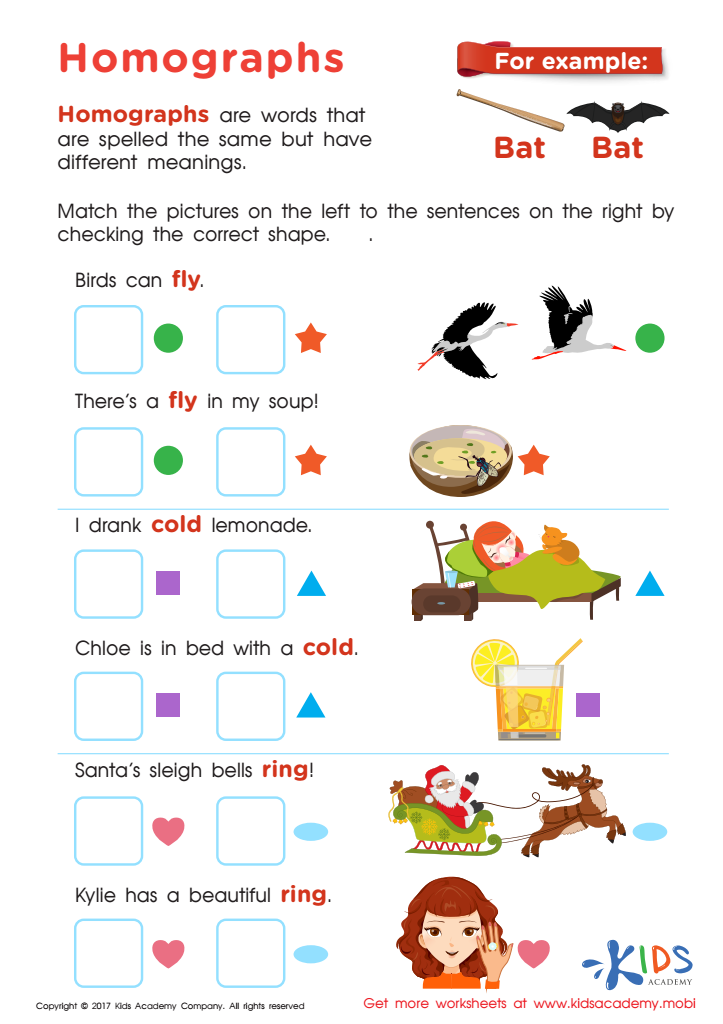
Homographs Free Printable Worksheet
Homographs can be tricky for kids. Help them gain valuable practice with this free printable worksheet. It has a selection of funny words with double meanings, and can be a great learning experience!
 Assign to My Students
Homographs Free Printable Worksheet
Worksheet











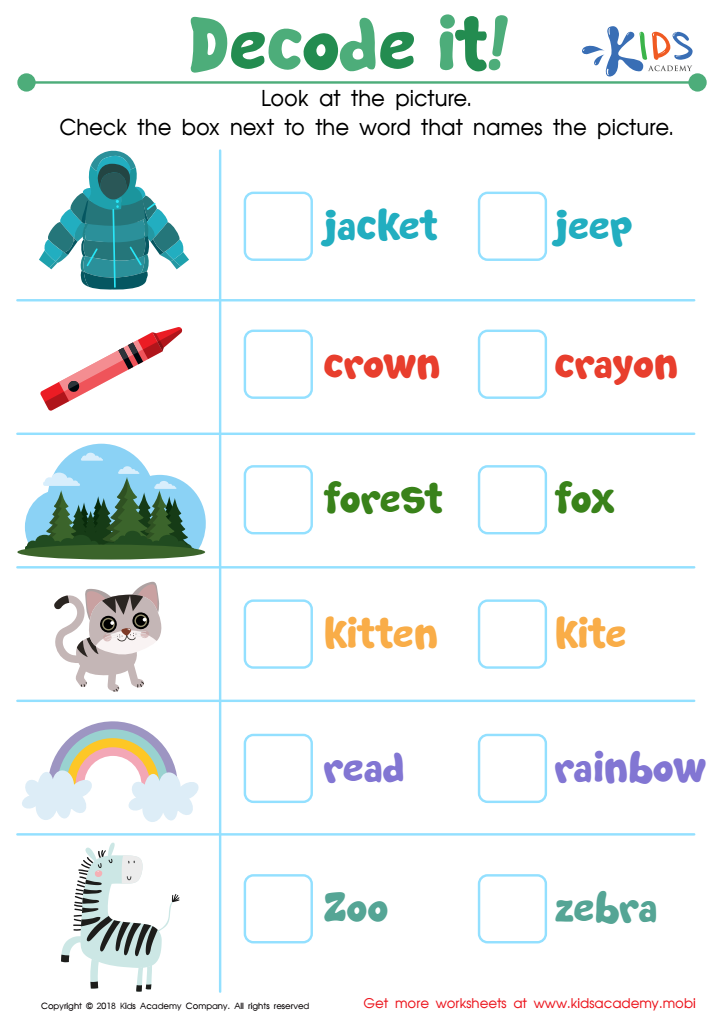
Reading: Decode It Worksheet
Look at the picture and circle the word that names it. This exercise helps kids practice picture cues and decoding words, with the same beginning sound. It builds their fluency and comprehension, giving them the skills to read unfamiliar words.
Reading: Decode It Worksheet
Worksheet
Join Kids Academy for Free
Who is primarily going to use this learning content?







.jpg)
Improving vocabulary for children aged 6-9 is crucial as it forms the foundation for academic success and effective communication. During these formative years, children's brains are particularly receptive to new information, making it an ideal time to expand their vocabulary. A robust vocabulary enhances reading comprehension, allowing children to understand texts more deeply and engage with learning materials across subjects such as science, social studies, and math.
Parents and teachers should prioritize vocabulary building because it directly influences a child’s ability to express thoughts, emotions, and ideas clearly and confidently. A strong vocabulary helps children to articulate their needs, ask questions, and participate in discussions, which boosts their social interactions and confidence levels.
Furthermore, vocabulary skills are closely tied to writing proficiency. Children with a rich vocabulary can create more expressive and detailed written work, which is essential for academic tasks throughout their school years.
Additionally, cultivating a rich vocabulary from an early age prepares children for standardized tests and future educational pursuits. It also fosters a lifelong love for reading and learning, by making these activities more enjoyable and less frustrating. Therefore, both parents and teachers play a crucial role in enriching children’s vocabularies, setting them on a path to ongoing academic achievement and personal growth.








