
Story sequencing Building Vocabulary Worksheets for Ages 6-9
5 filtered results
Difficulty Level
Grade
Age
-
From - To
Subject
Activity
Standards
Enhance your child's reading skills with our engaging Story Sequencing Building Vocabulary Worksheets designed specifically for ages 6-9. These interactive worksheets help young learners improve their understanding of narrative structure by arranging events in the correct order, fostering critical thinking and comprehension. Each worksheet is tailored to build vocabulary, featuring age-appropriate words and phrases. By participating in this fun activity, children will strengthen their storytelling abilities and gain confidence in their reading language. Perfect for home or classroom use, our resources make learning enjoyable while promoting essential skills that set the foundation for future academic success. Explore our collection today!
Favorites
With answer key
Interactive
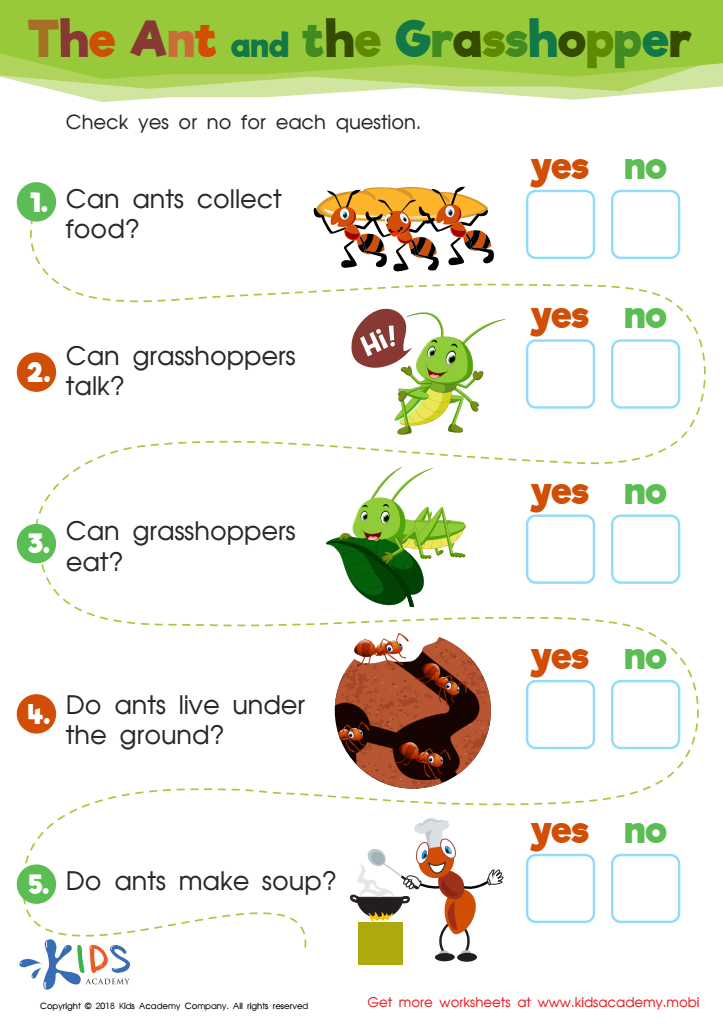
The Ant and The Grasshopper Worksheet
Does your child know about insects? If they're a nature lover or scared of them, use this worksheet to learn more. Read each of the questions and help them fill in the yes or no boxes. This may help them become less scared of insects.
 Assign to My Students
The Ant and The Grasshopper Worksheet
Worksheet











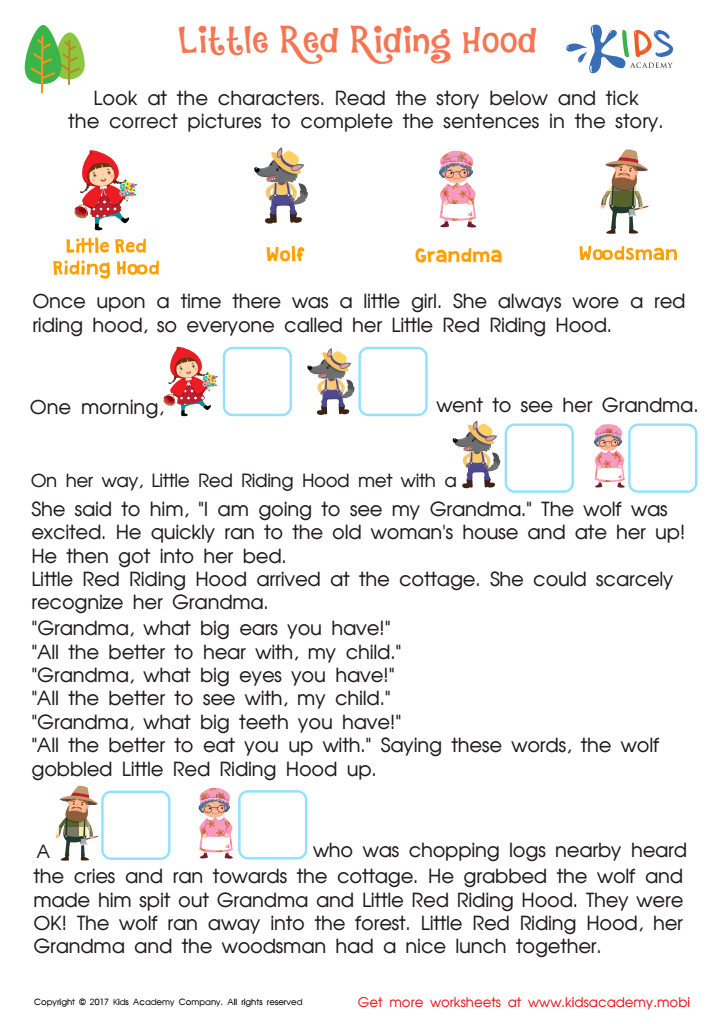
Little Red Riding Hood Printable
Give them this worksheet to practice.
Help your child strengthen their reading skills with this worksheet. It asks them to read Little Red Riding Hood and fill in the missing words using context clues from the text. Encourage your child to look at the surrounding words to determine the answer and get the best results!
Little Red Riding Hood Printable
Worksheet
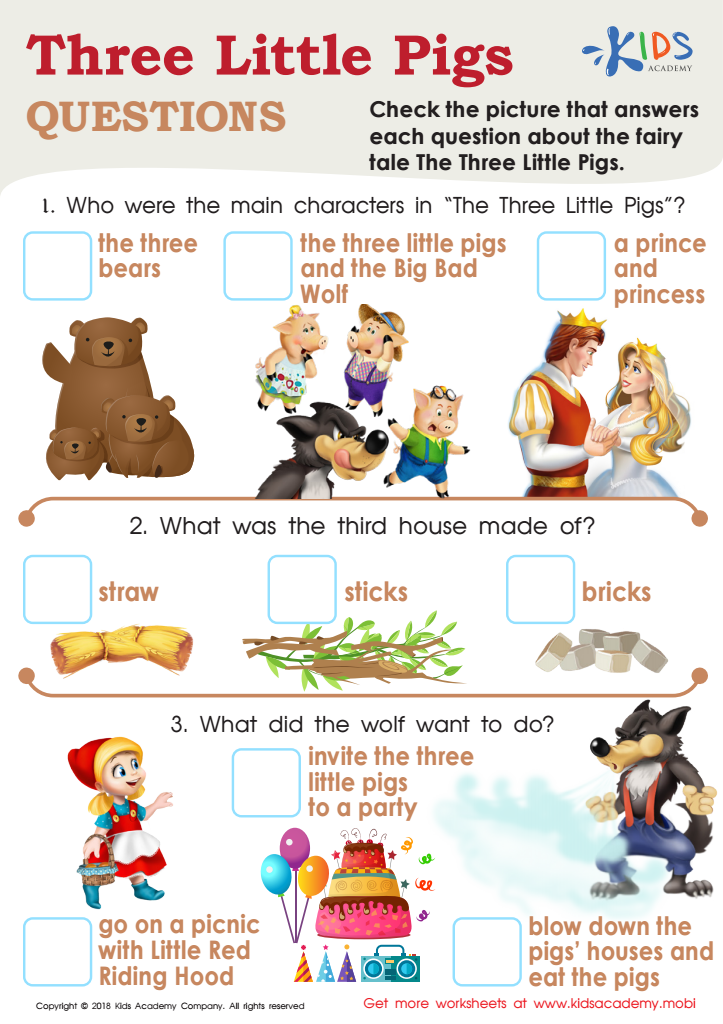
Three Little Pigs Questions Worksheet
Does your kid love bedtime stories? Test their classic fairytale knowledge with this worksheet! If they mention The Three Little Pigs, they're in luck - this pdf has them answering questions based off the classic fairytale. They'll check the picture that answers each question about the story. Is their fairytale knowledge up to scratch?
Three Little Pigs Questions Worksheet
Worksheet
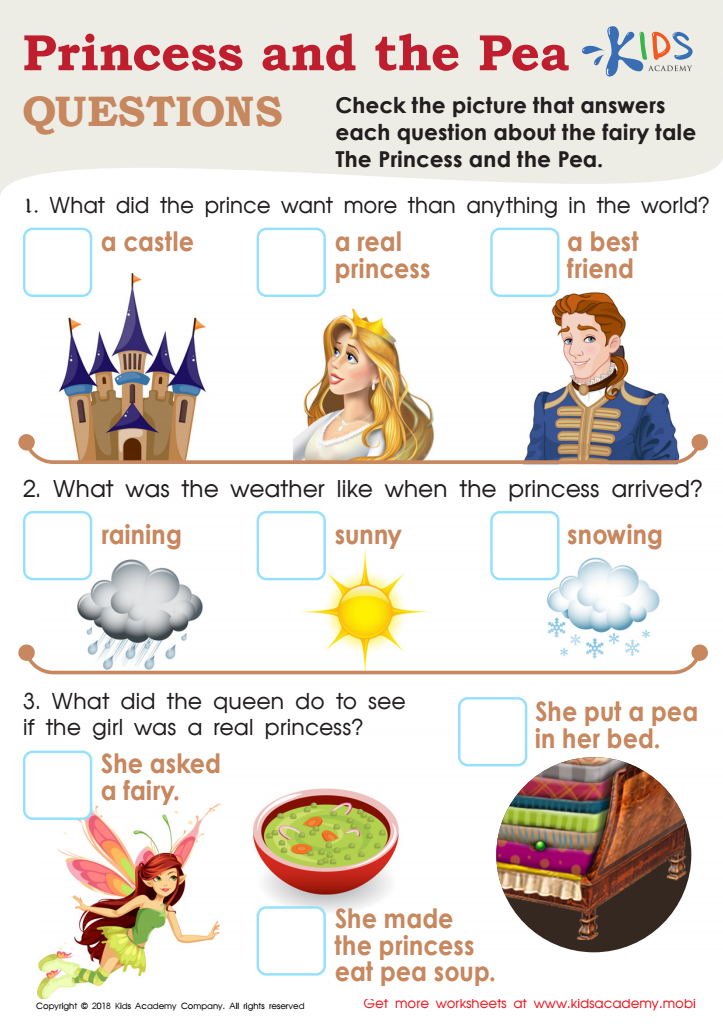
Princess and the Pea Questions Worksheet
Your kid knows The Princess and the Pea inside-out? Test their knowledge with this worksheet. Ask your little one to read the questions and match each one to the picture. It's a fun way to see just how much attention they've paid to their bedtime story.
Princess and the Pea Questions Worksheet
Worksheet
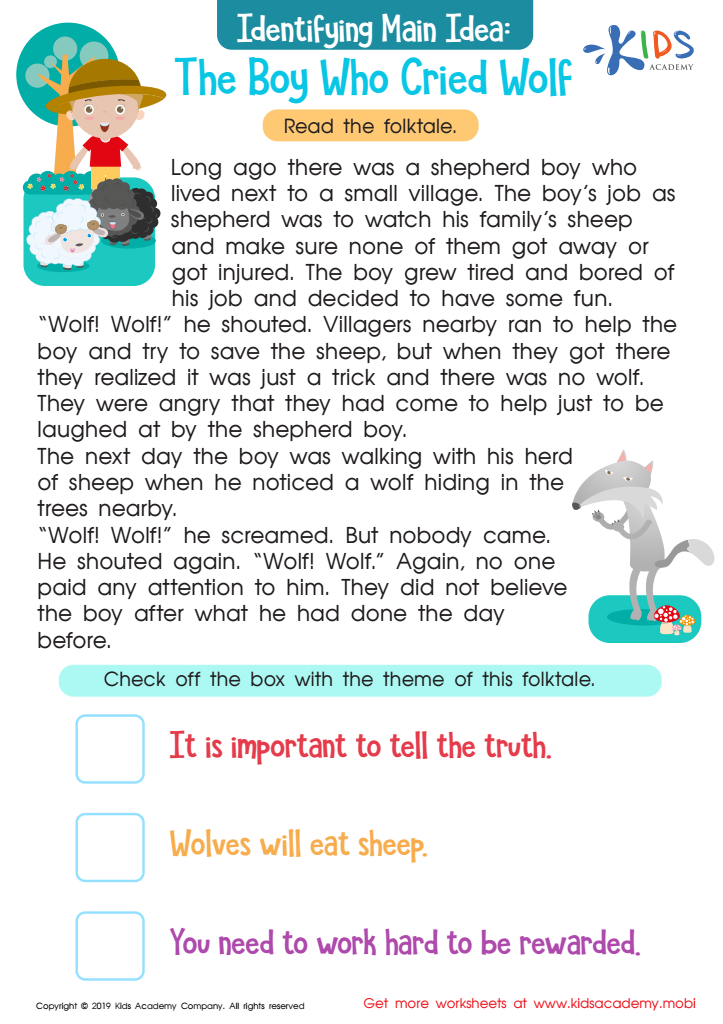
The Boy Who Cried Wolf Part 2 Worksheet
Kids love story time - no doubt they know their favorites! This worksheet tells a story with a theme or main idea. Read it carefully with your kids and ensure they understand every word. Then, help them answer the simple questions at the bottom of the page.
The Boy Who Cried Wolf Part 2 Worksheet
Worksheet
Join Kids Academy for Free
Who is primarily going to use this learning content?


.jpg)





Story sequencing and building vocabulary are essential components of language development for children ages 6-9. During this pivotal period, children are developing their reading and comprehension skills, which form the foundation for future academic success.
Understanding story sequencing helps children grasp the logical order of events in narratives, enhancing their ability to make connections, predict outcomes, and retain information. When children can sequence stories, they become better at summarizing and discussing the content, fostering critical thinking and communication skills.
Meanwhile, building vocabulary is equally crucial. A rich vocabulary allows children to express themselves more clearly and comprehend diverse texts, boosting their confidence in literacy. Learning new words in context, particularly through stories, makes vocabulary acquisition more relatable and memorable.
Parents and teachers play a vital role by providing engaging reading materials and activities that promote both story sequencing and vocabulary development. Using interactive storytelling, games, and discussions encourages children to explore language in a fun and supportive environment. By emphasizing these skills, adults can inspire a lifelong love for reading and learning, equipping children with the tools needed for personal and academic growth. This will not only impact their current capabilities but set the stage for lifelong literacy and critical thinking.








