Basic Addition Skills Reading Worksheets for Ages 6-9
6 filtered results
-
From - To
Enhance your child's arithmetic abilities with our "Basic Addition Skills Reading Worksheets" tailored for ages 6-9! These interactive and engaging worksheets provide a fun way for young learners to master essential addition skills while building their reading comprehension. Each worksheet features age-appropriate exercises that combine vibrant illustrations with practical math problems, keeping children excited about learning. Our resources promote critical thinking and problem-solving, helping kids develop a strong foundation in math. Perfect for classroom activities or home practice, these worksheets will help ensure your child gains confidence in their addition skills while enjoying the learning process!
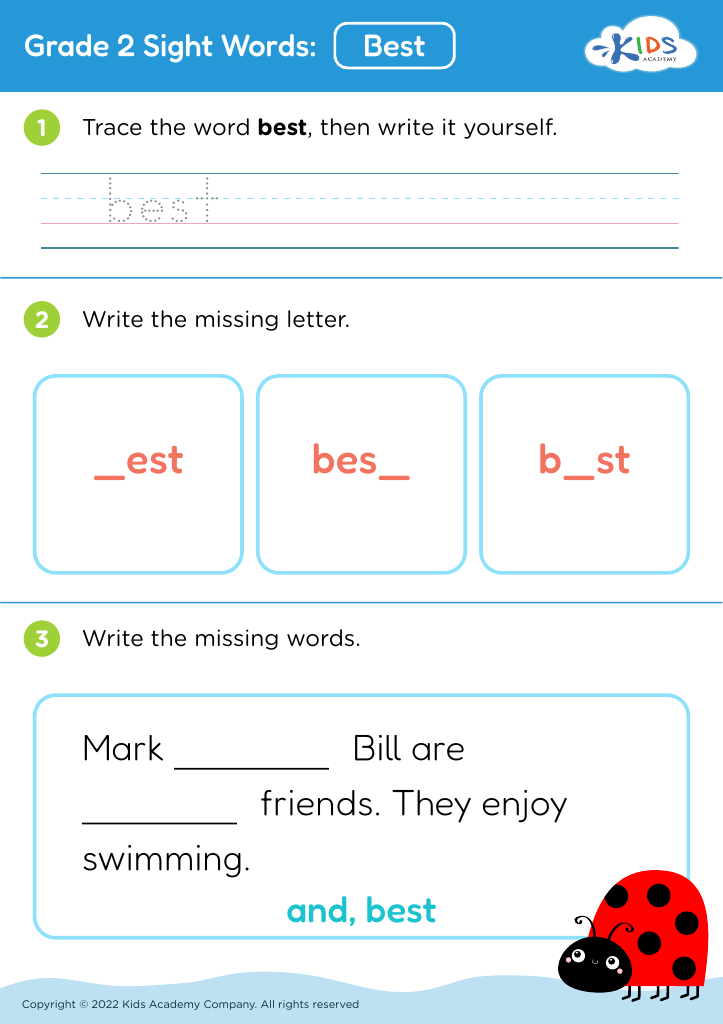
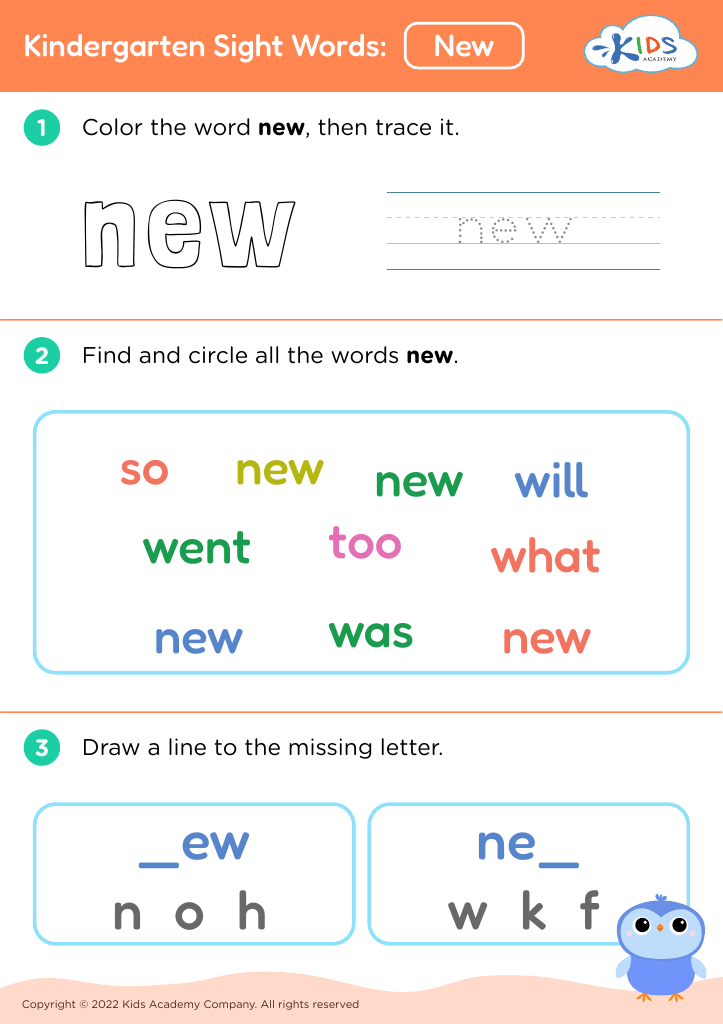








Basic addition skills are foundational for a child's academic journey, particularly for students aged 6-9. During this formative period, children not only learn to grasp mathematical concepts but also develop critical thinking and problem-solving abilities. Proficient addition skills pave the way for more complex math topics in the future and are essential in everyday life, such as managing time, money, and resources.
Parents and teachers should care about fostering these skills because early mastery of addition can boost a child's confidence and enthusiasm for learning. When children feel competent in basic math, they are more likely to engage actively in their studies and take on new challenges without fear. Additionally, regular practice of addition encourages the development of a growth mindset—teaching children that effort can lead to improvement.
Moreover, effective addition skills can significantly influence a child's academic performance across various subjects. Math forms the basis of many science and engineering concepts, and weaker addition skills can hinder progress in these areas. By prioritizing basic addition, parents and teachers not only set children up for immediate success but also lay a strong foundation for lifelong learning and critical reasoning skills.








