Shape Recognition Reading Comprehension Worksheets for Ages 6-9
4 filtered results
-
From - To
Discover our engaging Shape Recognition Reading Comprehension Worksheets designed for children aged 6-9! These interactive resources help students enhance their reading skills while learning to identify and understand various shapes. Each worksheet is crafted to boost comprehension through vibrant imagery and relatable contexts, ensuring kids enjoy the learning process. By connecting shape recognition with reading comprehension, we empower young learners to improve their critical thinking and problem-solving abilities. Ideal for classroom use or at-home learning, our worksheets provide fun, educational activities that make learning shapes an enjoyable adventure. Explore our collection and watch your child's confidence soar!
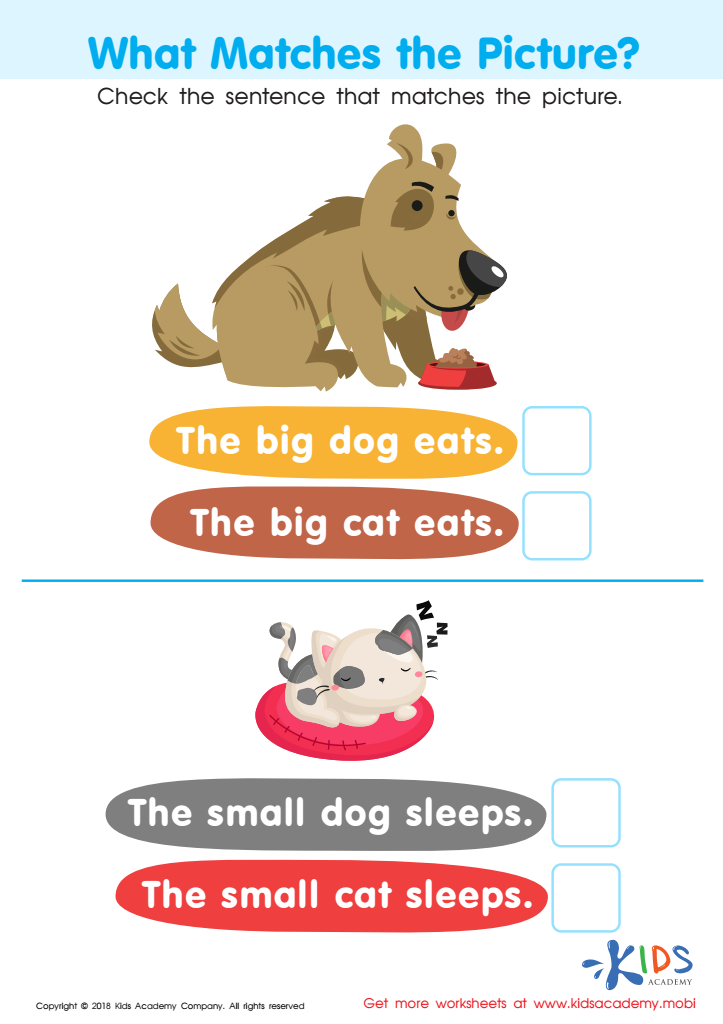
What Matches the Picture? Worksheet
 Assign to My Students
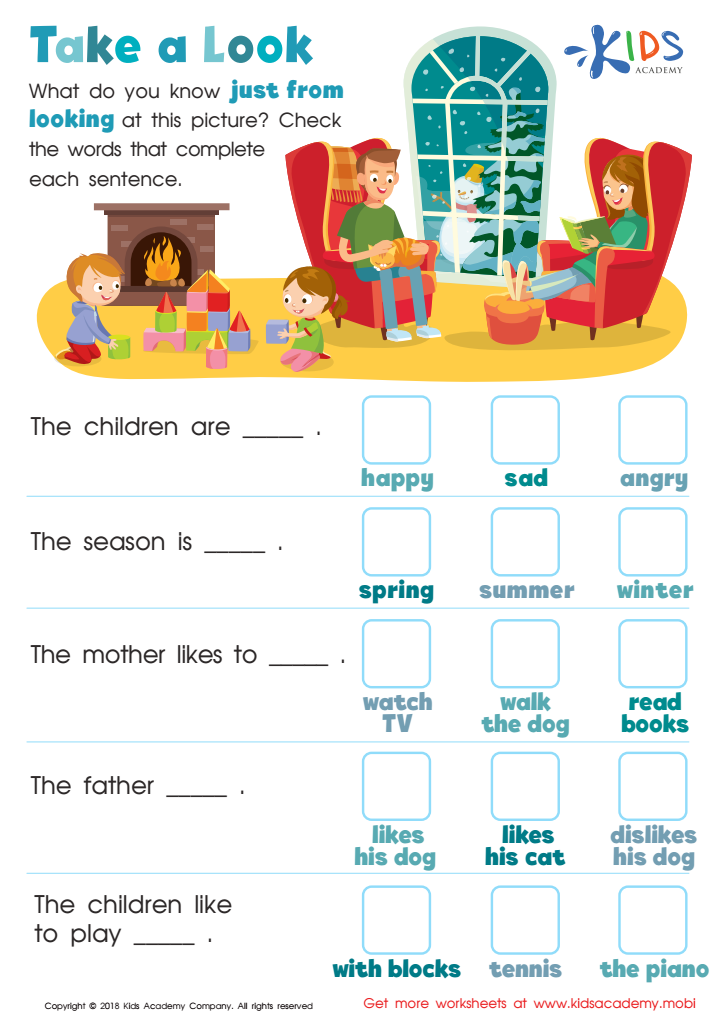
Take a Look - Part 1 Worksheet
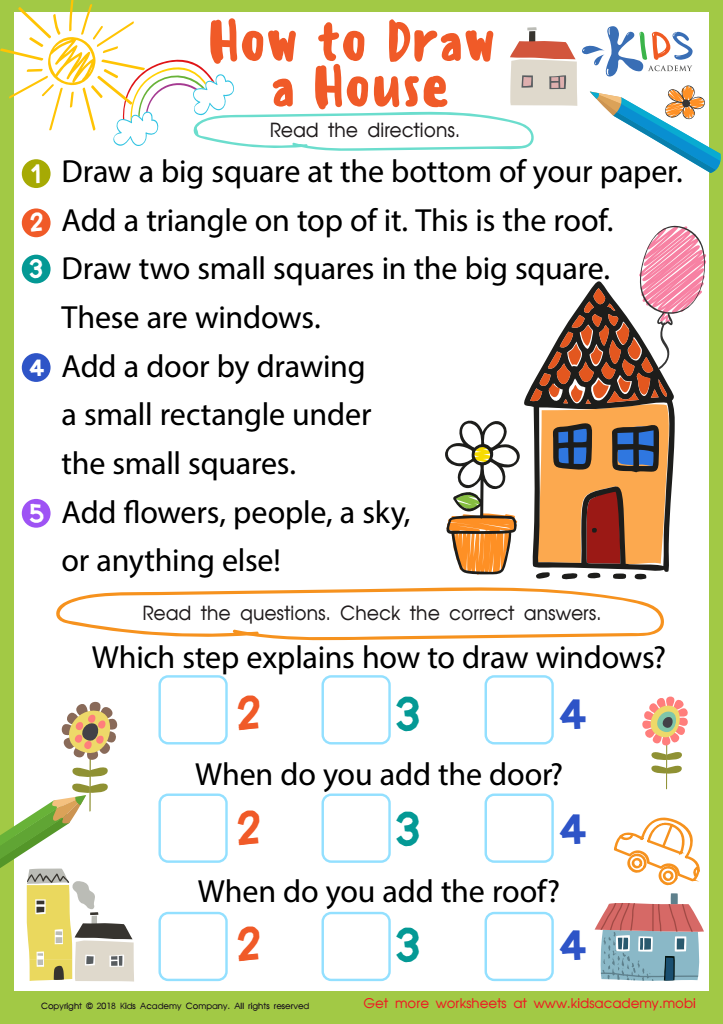
How to Draw House Worksheet
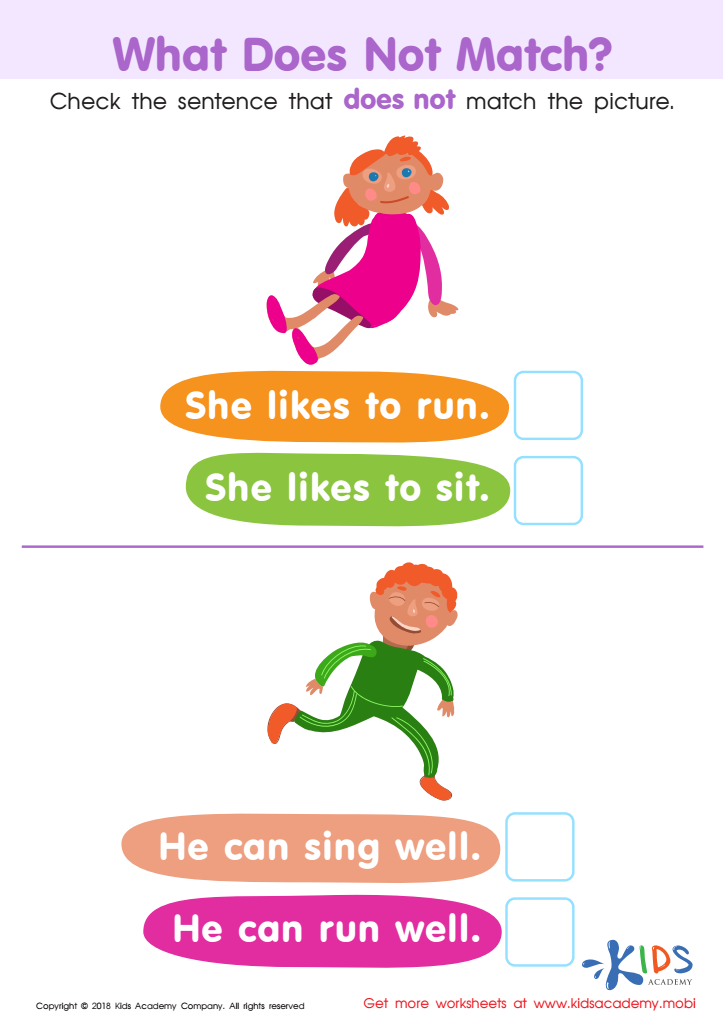
What Does Not Match? Worksheet







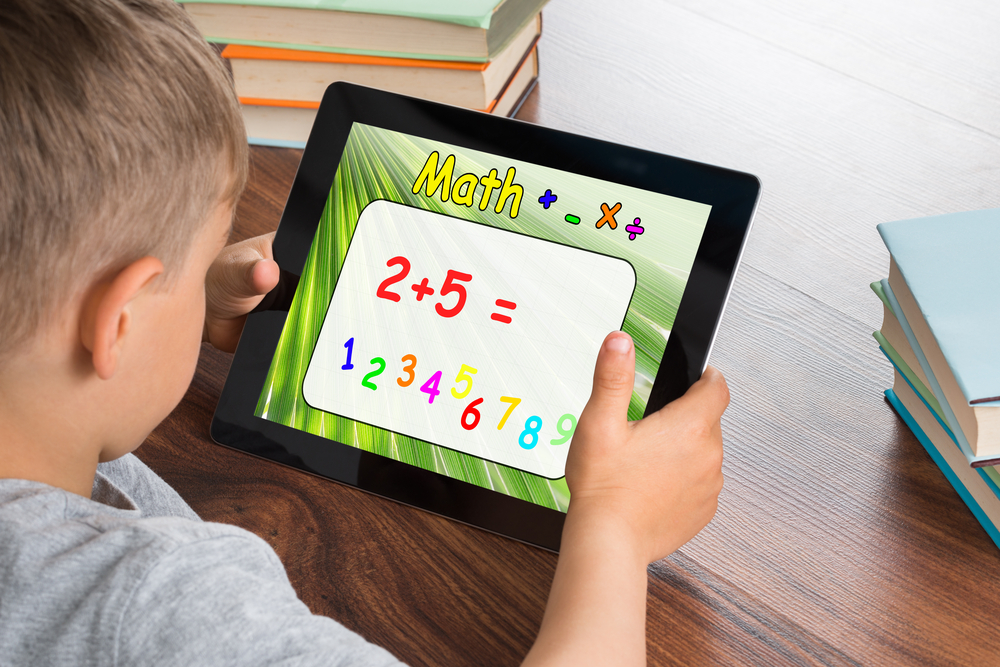
Shape recognition is a crucial cognitive skill for children aged 6-9, particularly as it relates to reading comprehension. Understanding shapes helps develop spatial awareness, which is essential for interpreting graphical elements in texts, such as charts, maps, or illustrations. As children engage with different types of literature, their ability to recognize and differentiate shapes can provide context that enhances overall comprehension.
Teachers and parents should emphasize shape recognition as it directly correlates to children's learning abilities in mathematics and literacy. Recognizing shapes strengthens critical thinking and problem-solving skills, which are vital for grasping complex concepts later on. Furthermore, interactive and engaging shape activities foster a positive attitude towards learning, encouraging kids to explore, ask questions, and express their thoughts effectively.
Additionally, linking shape recognition exercises with reading can create multi-sensory learning experiences, making education holistic and dynamic. Engaging with shapes in books or educational games not only entertains but matches visual literacy with verbal comprehension.
Ultimately, investing time in shape recognition helps children build a strong foundation for academic success, enhancing their confidence and interest in learning, while promoting essential skills vital for their future educational endeavors. Parents and teachers can work together to support this fundamental aspect of development.








