Shape Recognition Reading Fiction Worksheets for Ages 6-9
3 filtered results
-
From - To
Unlock your child’s potential with our engaging Shape Recognition Reading Fiction Worksheets designed for ages 6-9! These worksheets blend essential reading skills with shape identification to create an interactive learning experience. Kids will enjoy reading fun stories while recognizing shapes like circles, squares, and triangles embedded in the narratives. Each activity fosters comprehension, vocabulary development, and critical thinking. Perfect for home or classroom use, our resources are tailored to enhance early literacy by making learning enjoyable and effective. Encourage your young readers to explore the world of shapes through captivating fiction—download these worksheets today and watch their confidence soar!
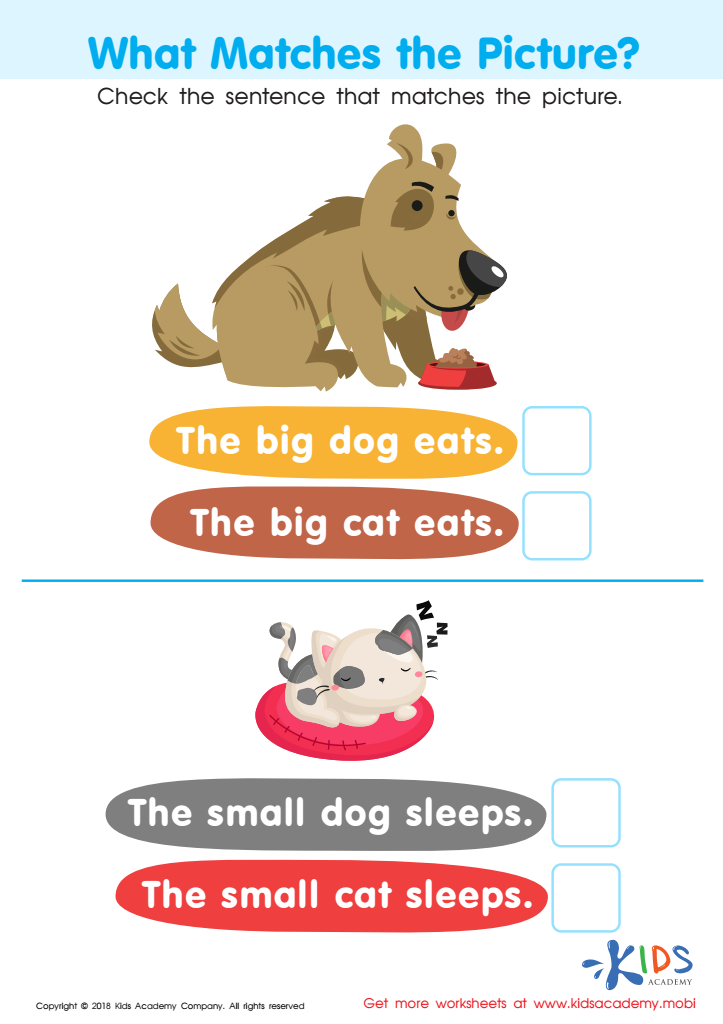
What Matches the Picture? Worksheet
 Assign to My Students
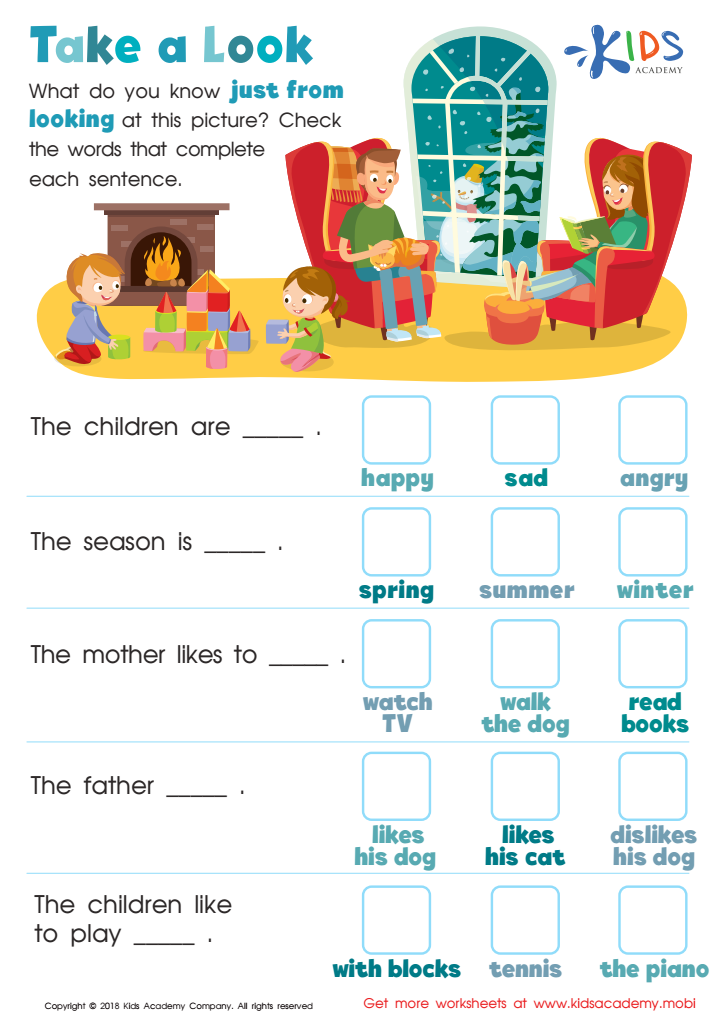
Take a Look - Part 1 Worksheet
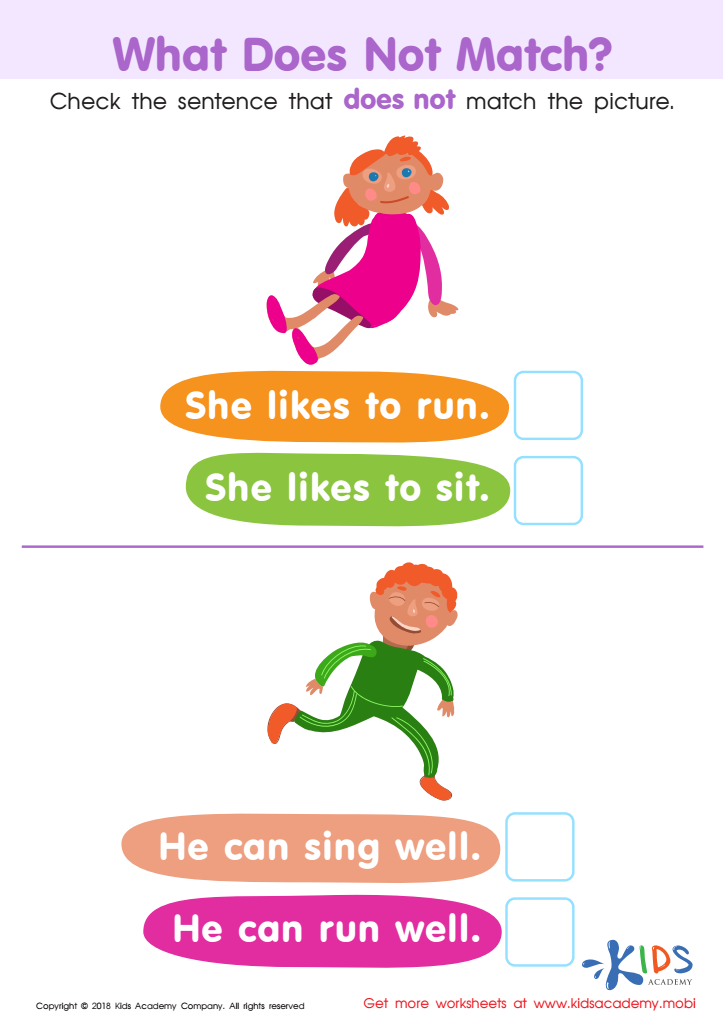
What Does Not Match? Worksheet







Shape recognition plays a crucial role in early literacy development, particularly in the context of reading fiction for children aged 6-9. This age group is at a critical stage in cognitive development, where they are learning to associate symbols with sounds and meanings. Understanding shapes helps children recognize letters and words, thereby enhancing their decoding skills.
When parents and teachers foster shape recognition, they are laying the groundwork for more advanced reading and writing skills. Shapes are the building blocks of letters; understanding their properties allows children to differentiate between letters like 'b' and 'd,' which can often be confusing. Engaging fiction often incorporates visuals that emphasize shapes, helping young readers make connections between text and imagery.
Moreover, shape recognition promotes spatial awareness and problem-solving skills, fundamental for mathematical concepts. This connection aids in developing a well-rounded cognitive ability that will benefit students in all subjects. Ultimately, fostering shape recognition in a playful, engaging manner empowers children to enjoy reading and develop essential literacy skills, leading to greater confidence and academic success. Therefore, parents and teachers should prioritize this foundational element in their educational strategies.








