Enhancing Reading Comprehension Reading Non-Fiction Worksheets for Ages 6-9
3 filtered results
-
From - To
Unlock your child's potential with our "Enhancing Reading Comprehension" non-fiction worksheets tailored for ages 6-9! Our expertly designed activities build essential skills in analyzing facts, summarizing information, and making connections, making reading an enjoyable and enriching experience. Each worksheet offers engaging content to captivate young readers while prioritizing comprehension and critical thinking. Perfect for at-home learning or classroom use, these printable resources ensure children gain confidence and proficiency in understanding real-world texts. Empower your child today with tools that foster lifelong learning and a love for reading non-fiction. Explore, download, and enhance their reading journey effortlessly!
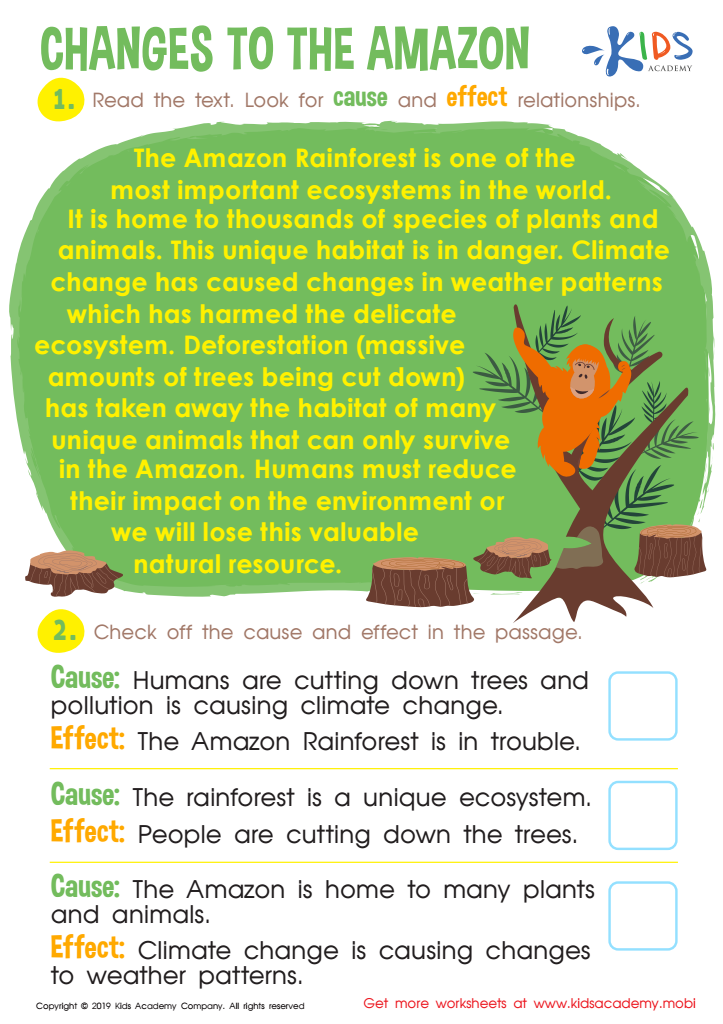
Changes to the Amazon Worksheet
 Assign to My Students
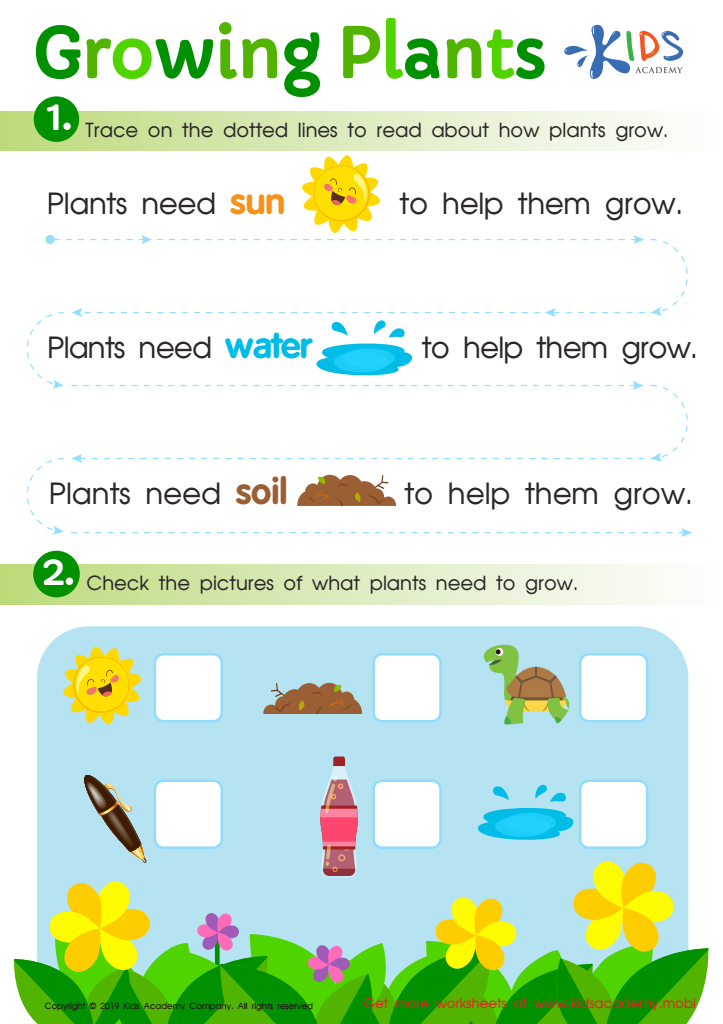
Growing Plants Worksheet
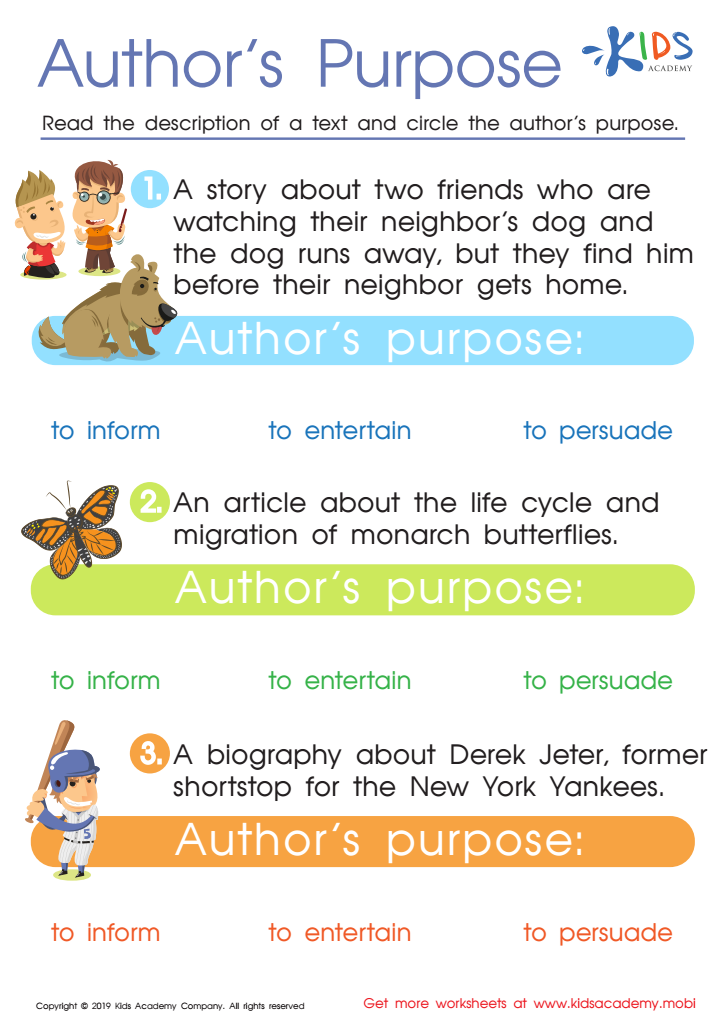
Author's Purpose Worksheet








Enhancing reading comprehension in non-fiction for ages 6-9 is crucial for fostering a foundational love for learning and future academic success. At this developmental stage, children are expanding their reading skills and starting to understand more complex concepts. Reading non-fiction texts introduces them to a wide range of vocabulary and real-world knowledge, supporting cognitive growth and critical thinking abilities.
Non-fiction reading helps children become adept at identifying main ideas, facts, and details, which are essential skills for academic achievement not only in language arts but across all subjects, including science, social studies, and even mathematics. It encourages curiosity, enabling them to explore subjects beyond their immediate experience, thus broadening their understanding of the world.
Furthermore, building strong reading comprehension skills in non-fiction equips children with the ability to retrieve and use information effectively. This empowers them to discern, analyze, and synthesize information from various sources, an increasingly important skill in an information-rich society.
Engaging with non-fiction also supports personal interests, sparking a child's enthusiasm for topics they are passionate about, from space to animals to history. Ultimately, teachers and parents should prioritize this aspect of early literacy because it lays the groundwork for lifelong learning, critical thinking, and informed citizenship.








