Improve reading skills Sight Words Worksheets for Ages 6-9
10 filtered results
-
From - To
Boost your child's reading skills with our expertly crafted Sight Words Worksheets for Ages 6-9! Designed to enhance early literacy, these engaging worksheets focus on essential sight words, helping young learners recognize and remember commonly used words effortlessly. By practicing with these worksheets, children can improve their reading fluency, comprehension, and confidence. Perfect for both classroom and at-home learning, our activities provide a fun and effective way to build a strong foundational vocabulary. Start your child's journey to becoming a proficient reader today with our top-quality sight words resources!
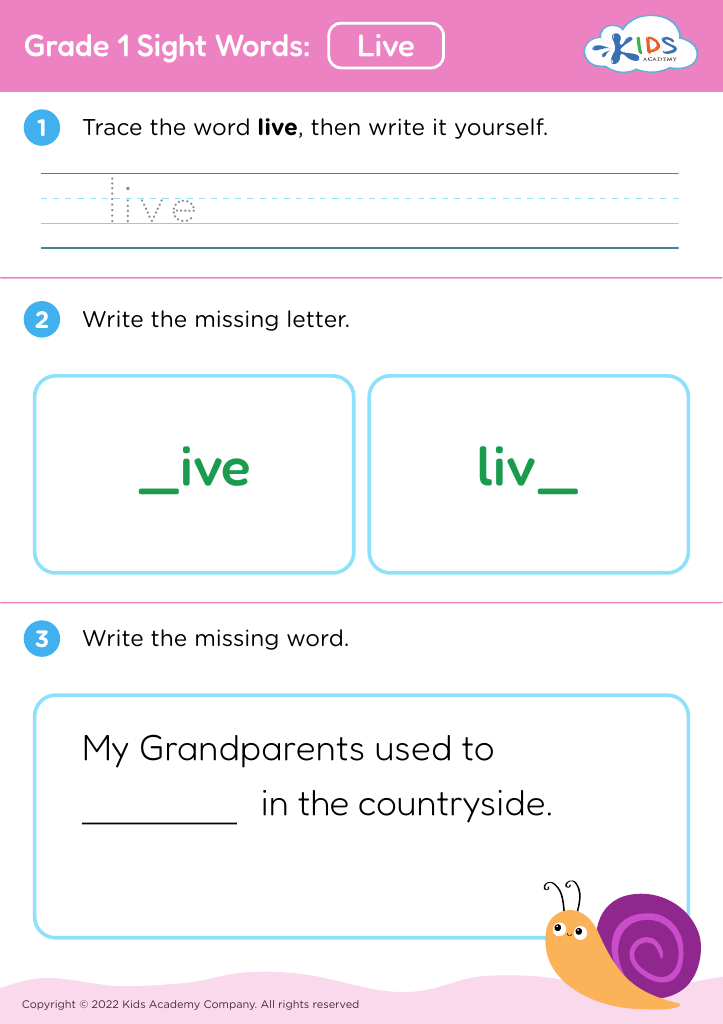




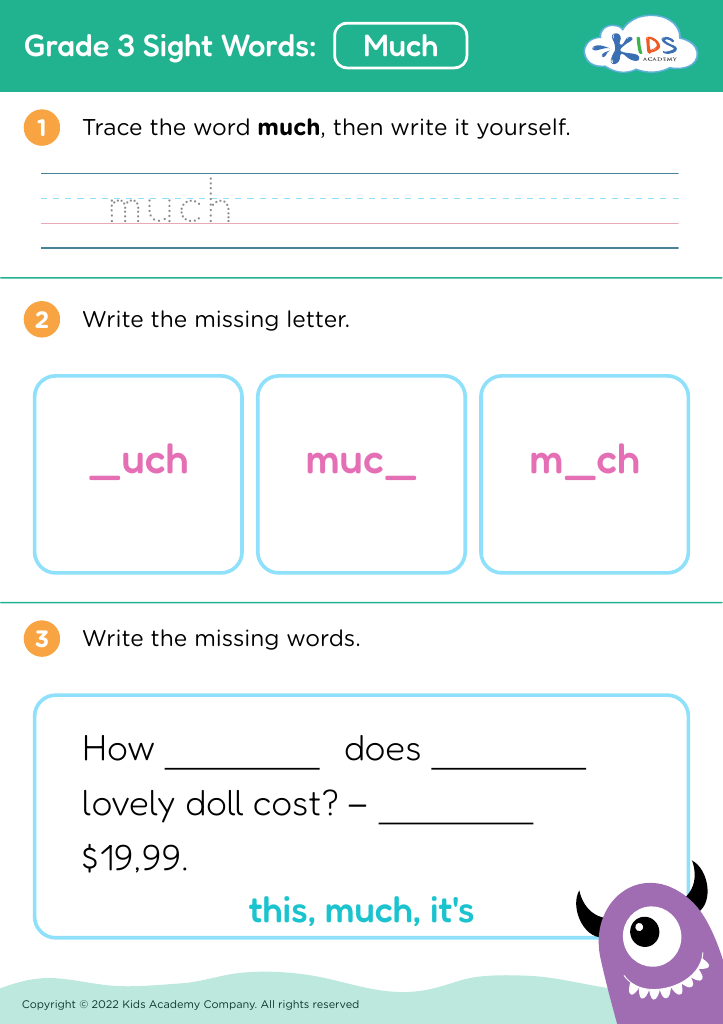
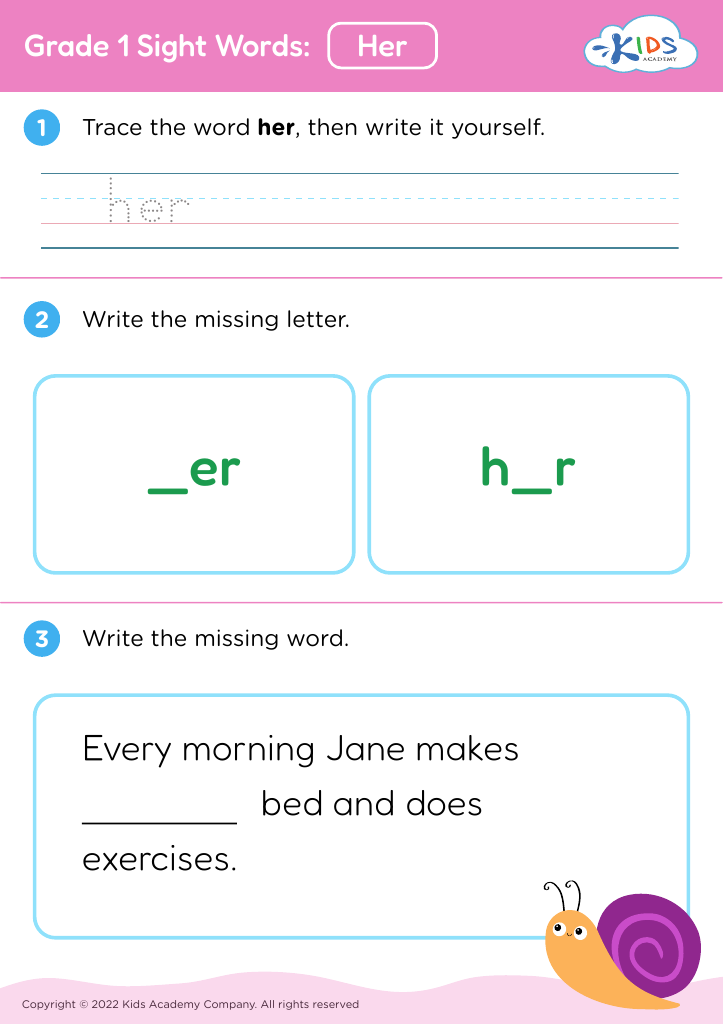
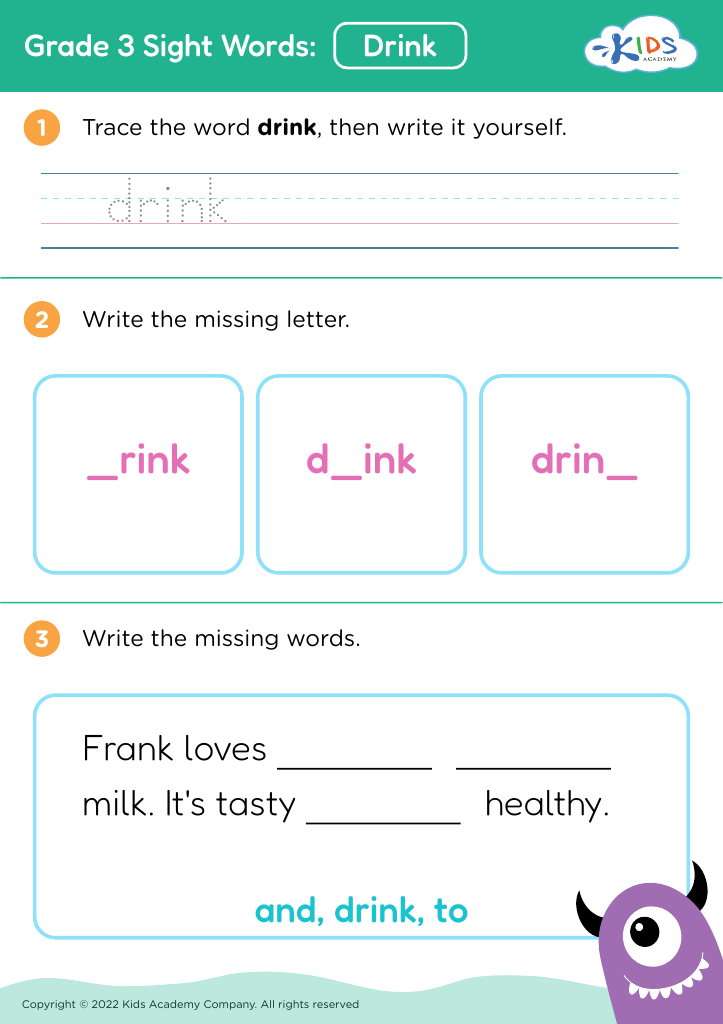
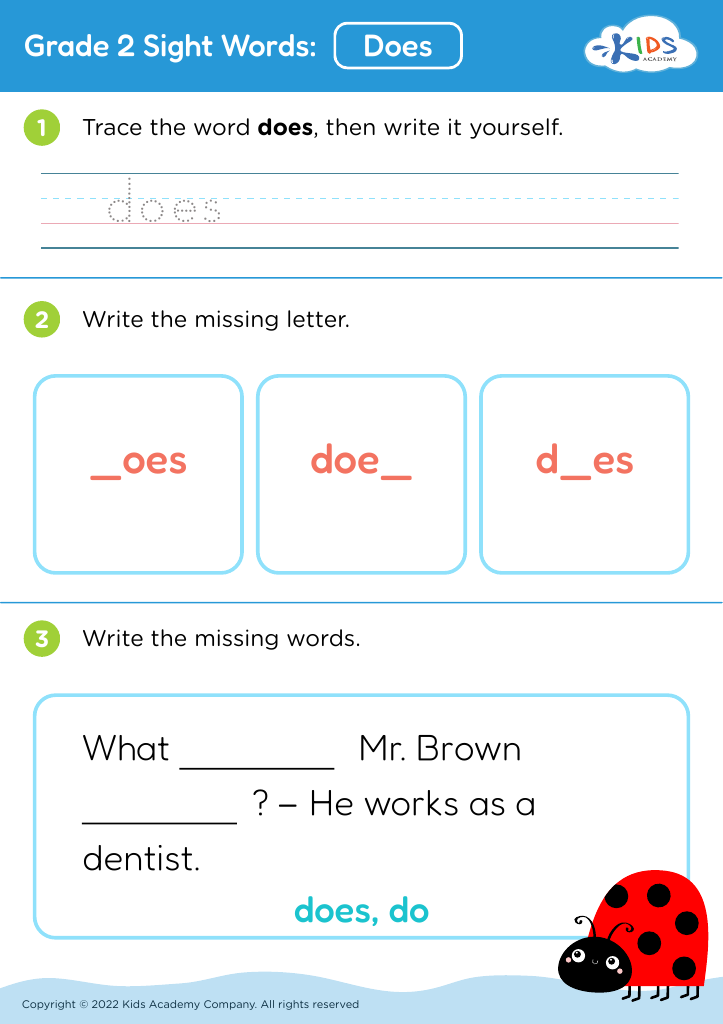
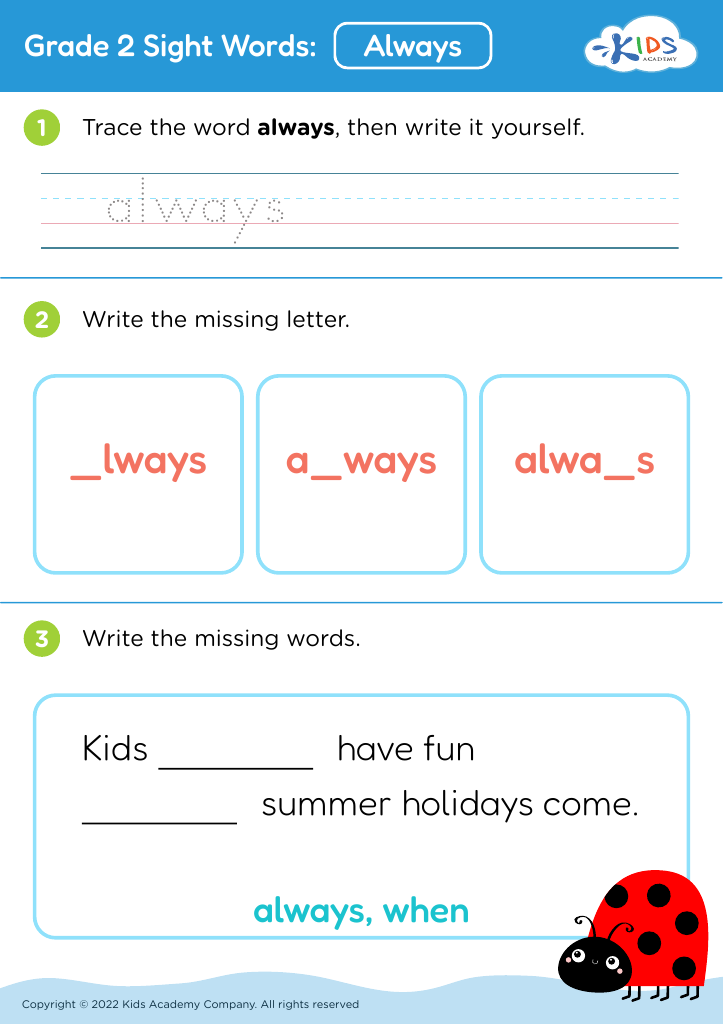
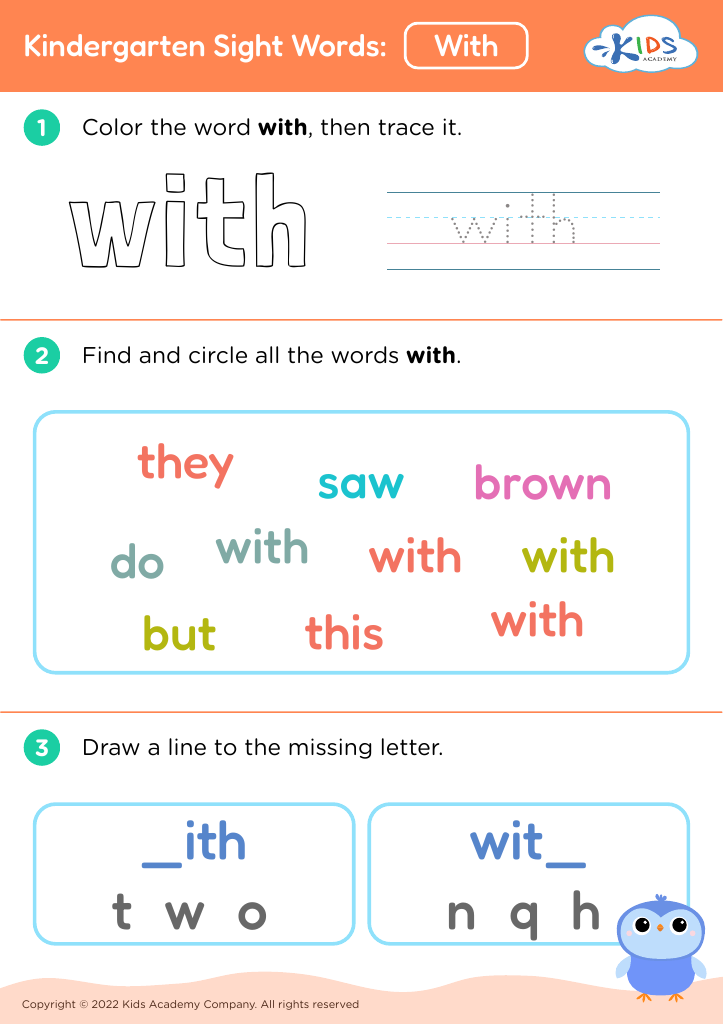
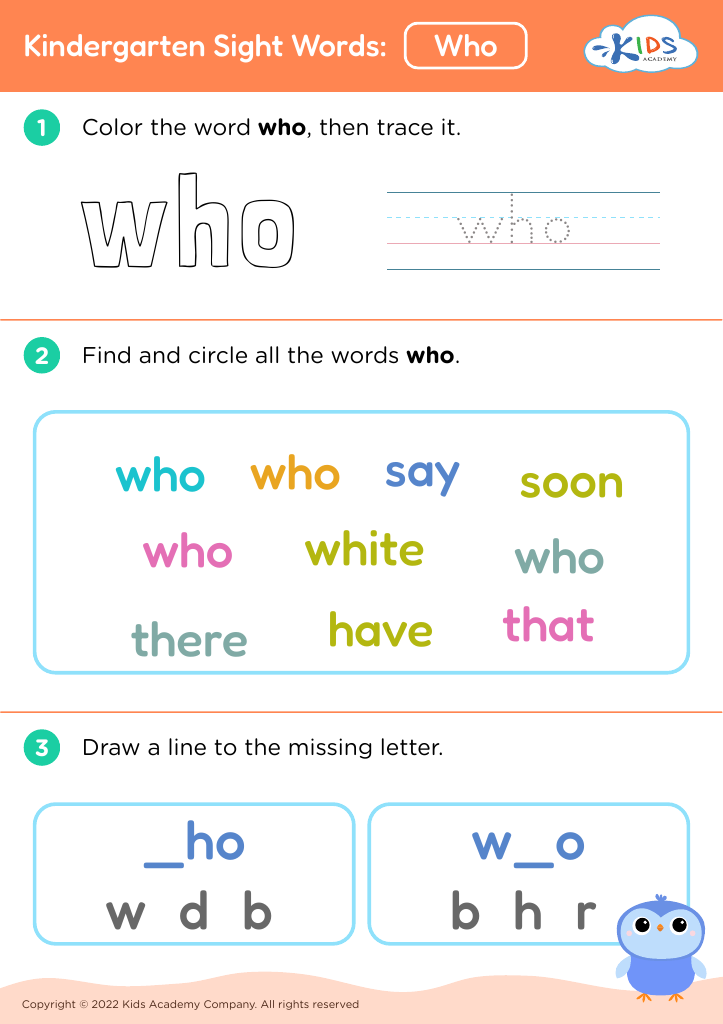
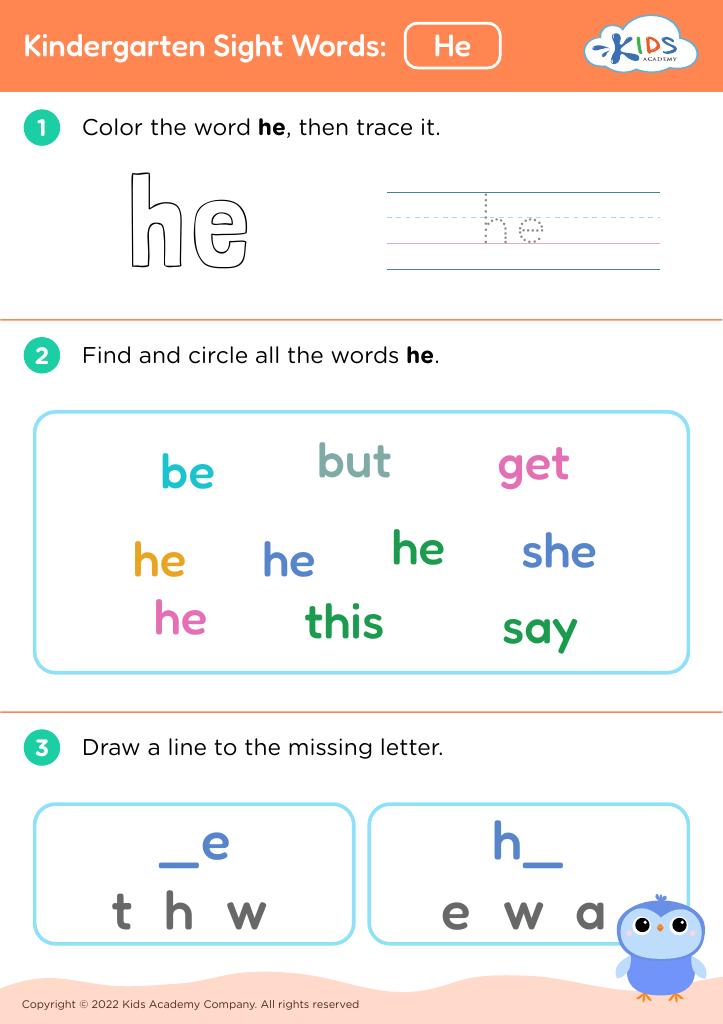
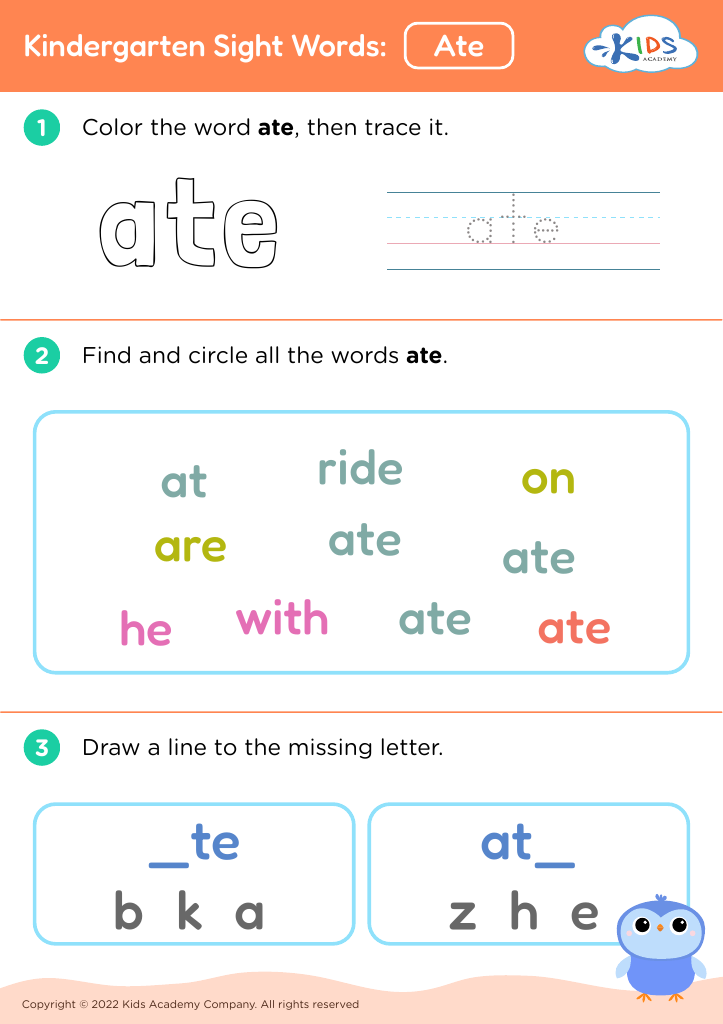








Enhancing reading skills through the use of sight words is crucial for children aged 6-9, as it lays a strong foundation for their literacy and overall academic success. Sight words, which are the most frequently used words in the English language, often do not follow regular phonetic patterns. Therefore, children cannot always decode them using standard reading strategies. Mastering these words by sight allows young readers to achieve greater reading fluency and comprehension.
For parents and teachers, focusing on sight word proficiency means children can read more smoothly and with greater confidence. When kids recognize these common words instantly, they're not slowed down trying to sound them out. This fluency enhances their ability to understand and enjoy more complex texts, which translates to better academic performance across subjects, not just in reading.
Moreover, developing reading skills has a profound impact on a child's self-esteem and motivation. Children who struggle with reading often experience frustration and may eventually develop a negative attitude towards learning. By making sight words a key part of early reading curricula, parents and teachers can help children build the skills they need for lifelong learning and curiosity. Investing time in sight words, therefore, is more than just a step towards reading proficiency; it's an investment in the child's future educational engagement and success.