
Enhancing observation skills Animals Worksheets for Ages 6-9
3 filtered results
Difficulty Level
Grade
Age
-
From - To
Subject
Activity
Standards
Improve your child's observation skills with our engaging "Enhancing Observation Skills Animals Worksheets" designed for ages 6-9! These fun, interactive worksheets encourage young learners to explore the animal kingdom while honing their attention to detail. Through various activities such as matching, identifying differences, and drawing observations, students will develop critical thinking and analytical abilities. Perfect for homeschool or classroom settings, our resources support science education while promoting curiosity about wildlife. Help your students connect with nature by fostering observation skills that are essential for lifelong learning. Download today and turn science into an exciting adventure!
Favorites
With answer key
Interactive
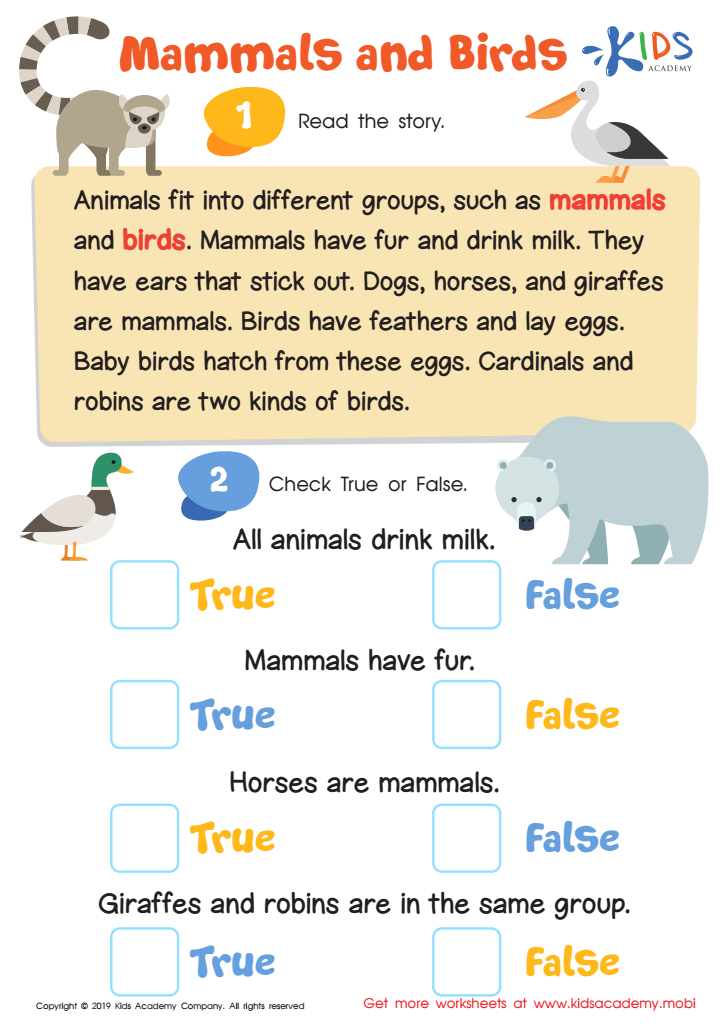
Mammals and Birds Worksheet
This worksheet challenges kids to read an informational text and review science facts about mammals and birds. Have them read the passage then mark statements true or false. Remind them to go back to the text if they get stuck! Get started now and help your child enhance multiple skills in one go!
 Assign to My Students
Mammals and Birds Worksheet
Worksheet
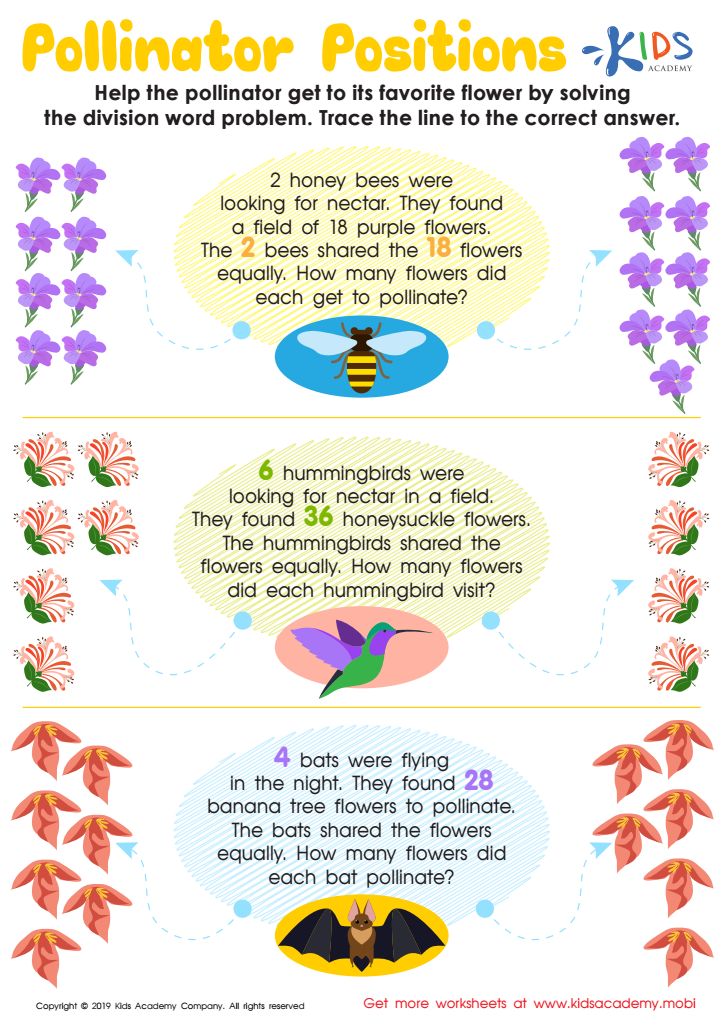
Pollinator Positions Worksheet
Kids will love learning about pollinators and how vital they are. Help their favorite friends get to the right flowers with this fun PDF. Children can solve the problems without even knowing they're doing division; just read the word problems and use the highlighted numbers. Finish by tracing the lines to the correct quotient!
Pollinator Positions Worksheet
Worksheet
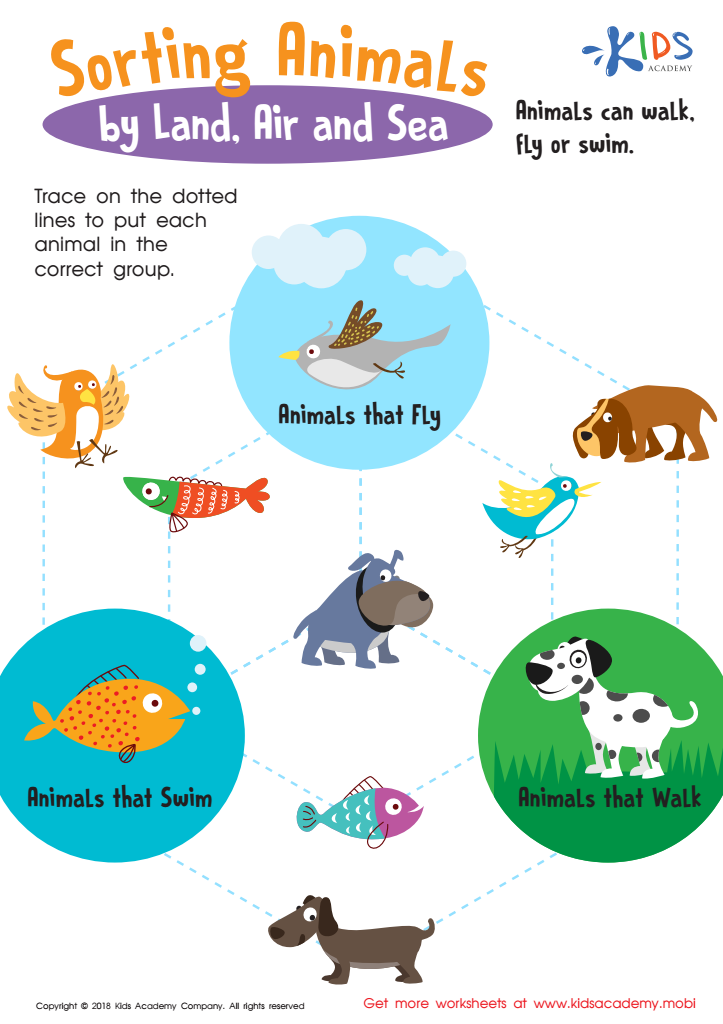
Sorting Animals by Land, Air and Sea Worksheet
Kids will use critical thinking and fine motor skills with this worksheet! They'll analyze animal traits and draw lines to sort them into groups of those that fly, swim, or walk. It's a fun way to hone skills and have a great time!
Sorting Animals by Land, Air and Sea Worksheet
Worksheet
Join Kids Academy for Free
Who is primarily going to use this learning content?







%20(1).jpg)
Enhancing observation skills among children aged 6-9, particularly regarding animals, is crucial for several reasons. Firstly, developing these skills fosters curiosity and encourages children to explore their surroundings, leading to a deeper appreciation of biodiversity. When children observe animals in their natural habitats, they not only learn about animal behavior but also about ecosystems and environmental conservation, nurturing a sense of responsibility towards nature.
Moreover, observational skills are foundational for critical thinking and scientific inquiry. Observing details, patterns, and changes in animal behavior helps children practice making hypotheses and conclusions, essential components of scientific literacy. Engaging with animals allows for experiential learning, where children can directly apply theoretical knowledge to real-world situations.
Additionally, enhancing observation skills can improve a child’s focus and concentration, assisting them academically. Activities that encourage observation, such as nature walks or keeping a nature journal, stimulate sensory experiences and language development, enriching vocabulary as children articulate their findings.
Finally, this engagement provides opportunities for social learning. Working in pairs or small groups encourages collaboration and discussion, enhancing communication skills. By prioritizing observation skills, parents and teachers equip children with essential lifelong skills that foster an empathetic connection to both wildlife and their community.








