Filters

9 filtered results

Clear all filters
Favorites
With answer key
Interactive

9 filtered results

Difficulty Level

Grade


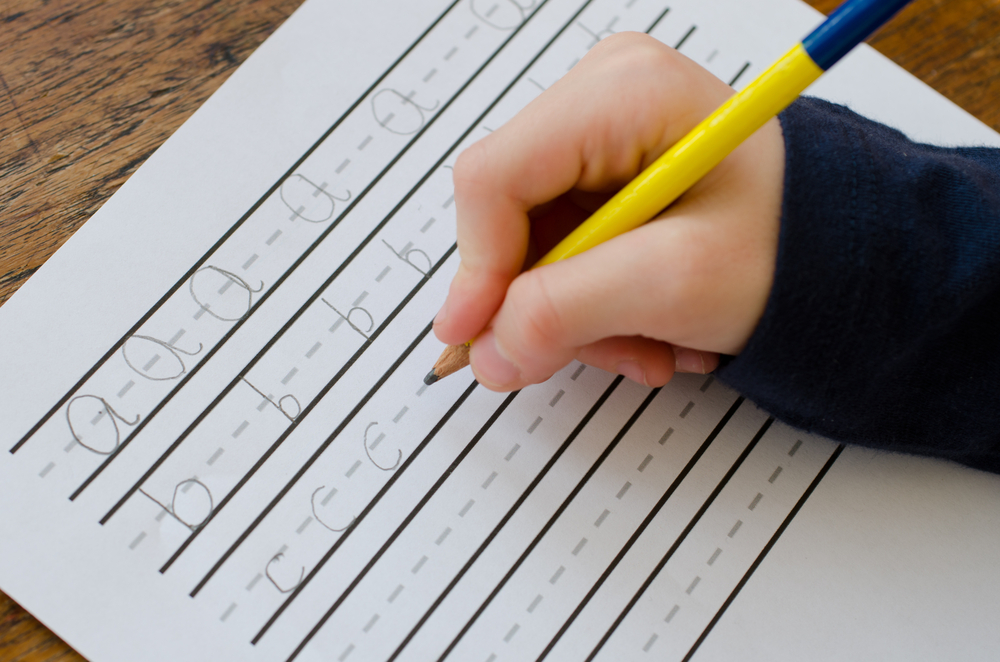
Enhance your child's handwriting with our "Fine Motor Skills Cursive Writing Worksheets for Ages 6-9." These engaging, printable worksheets are designed to develop fine motor control, making cursive writing fun and effective. Each worksheet focuses on letter formation, connecting strokes, and fluid pen movements, essential for beautiful, legible cursive script. Tailored for children aged 6-9, these activities blend educational principles with creative practice, helping young learners improve their writing skills and hand-eye coordination. Perfect for classroom use or homeschooling, these resources provide an essential foundation for confident, proficient writing. Try our worksheets today and see remarkable progress!

Check out this FREE Trial Lesson on Cursive Writing for age 6-9!

D

Favorites
With answer key
Interactive
  • 6-9
  • Fine Motor Skills
  • Cursive Writing
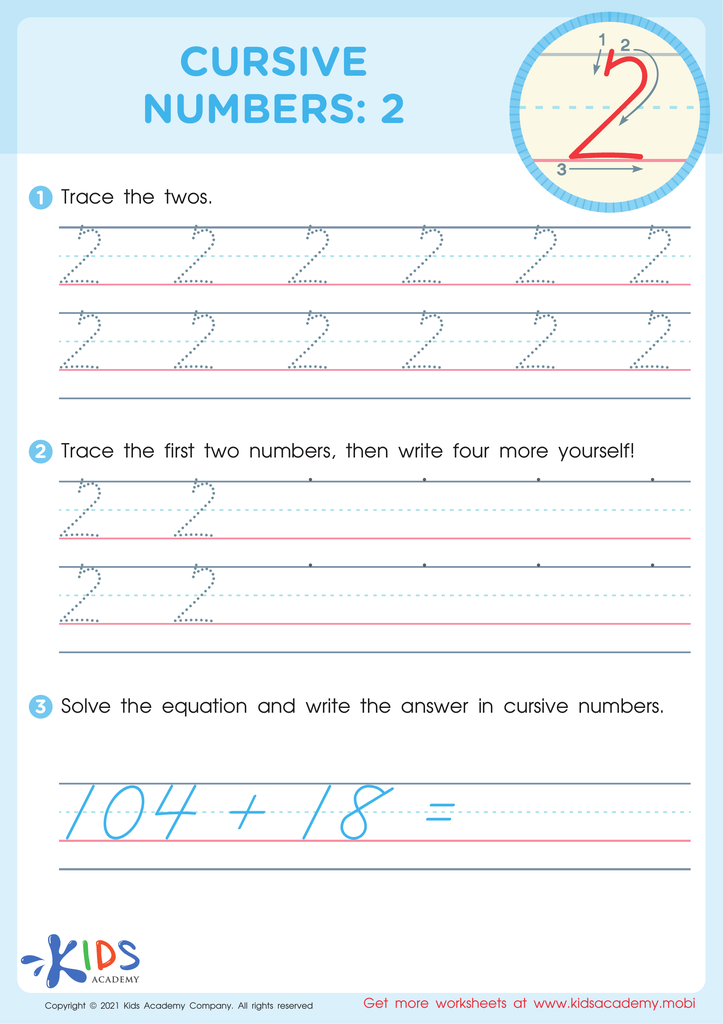
Cursive Numbers: 2 Worksheet

Cursive Numbers: 2 Worksheet

Mastering maths goes beyond basic counting and arithmetic. These tracing worksheets will help your kids practice their cursive numbers. The dotted lines are easy to follow and your kids can trace the number 2 over and over. Soon they'll be able to write it on their own. At the end of the sheet, there's a simple math equation - have your child write the answer in cursive.
Cursive Numbers: 2 Worksheet
Worksheet
Cursive Numbers: 6 Worksheet
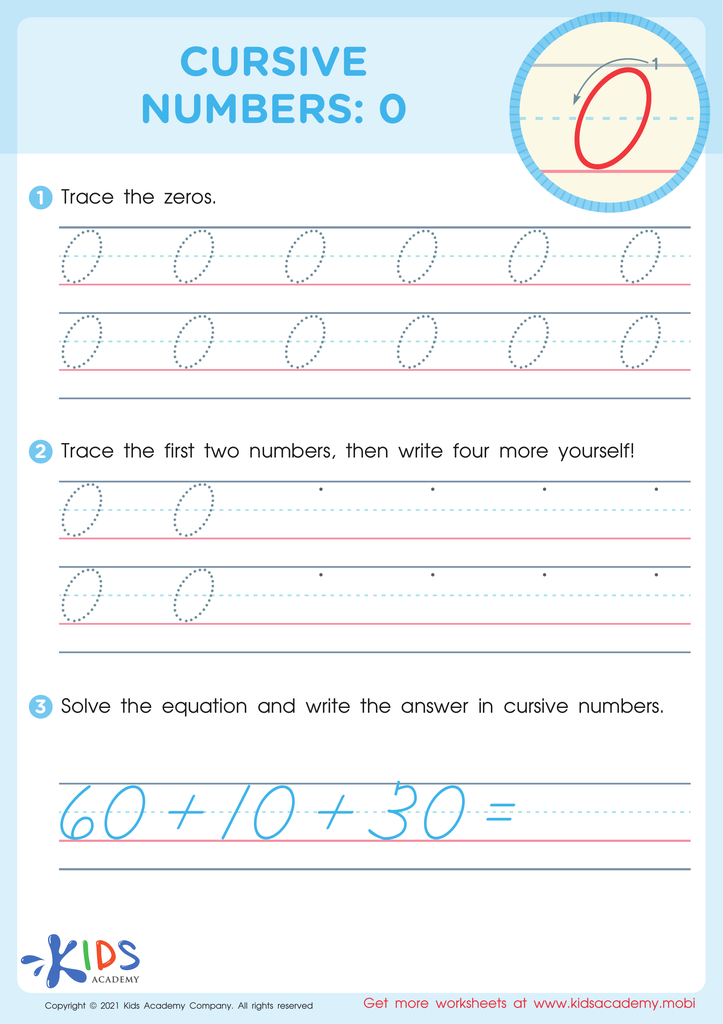

Cursive Numbers: 6 Worksheet

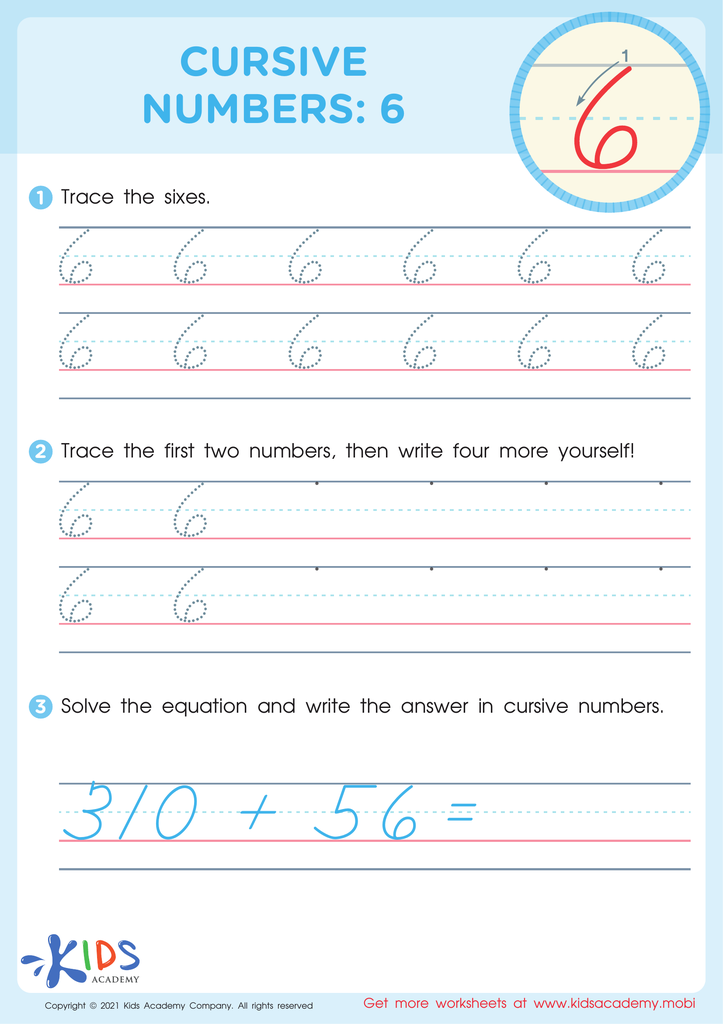
Help your children practice counting and writing numbers with cursive number worksheets. They'll learn to write the number six with dotted lines to guide them and space to practice writing it on their own. They can also solve a simple equation and write the answer in cursive. Let them practice as much as they need - it'll help them succeed.
Cursive Numbers: 6 Worksheet
Worksheet
Cursive Numbers: 0 Worksheet
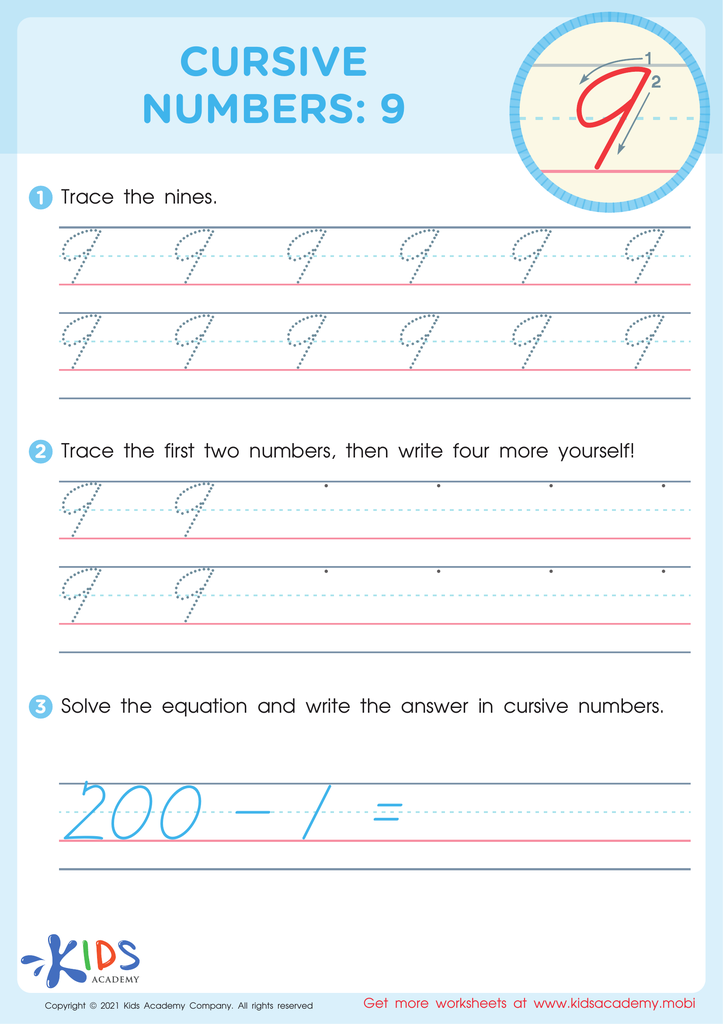

Cursive Numbers: 0 Worksheet

Practice makes perfect when teaching your kid handwriting. Spend time teaching them the alphabet and cursive numbers. These math worksheets have traceable numbers for them to practice with, then they can write 0 on their own. There's also a bonus math problem to solve and write the answer in cursive.
Cursive Numbers: 0 Worksheet
Worksheet
Cursive Numbers: 9 Worksheet
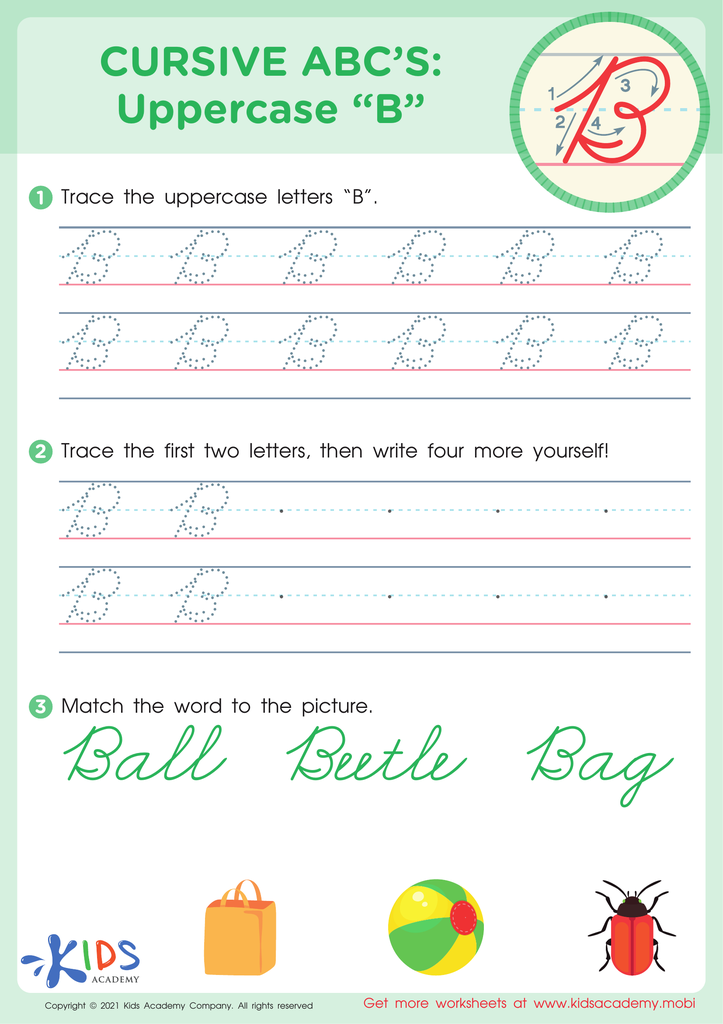

Cursive Numbers: 9 Worksheet

Identifying and writing numbers is key to math success. These worksheets help kids learn to trace the number 9 and build confidence. As they practice, they'll soon be able to write it on their own. Plus, they get to apply their learning and solve a simple equation at the bottom of the page. Writing the answer in cursive is a great way to help them remember!
Cursive Numbers: 9 Worksheet
Worksheet
Cursive ABCs: Uppercase B

Cursive ABCs: Uppercase B

Help your kids learn the alphabet: have them identify, give examples and sound out letters, then use tracing worksheets to perfect cursive uppercase writing. Show them how to trace the letter ‘B’, then watch them write it on their own. This will give them the skills needed for further writing!
Cursive ABCs: Uppercase B
Worksheet
Cursive Numbers: 5 Worksheet

Cursive Numbers: 5 Worksheet

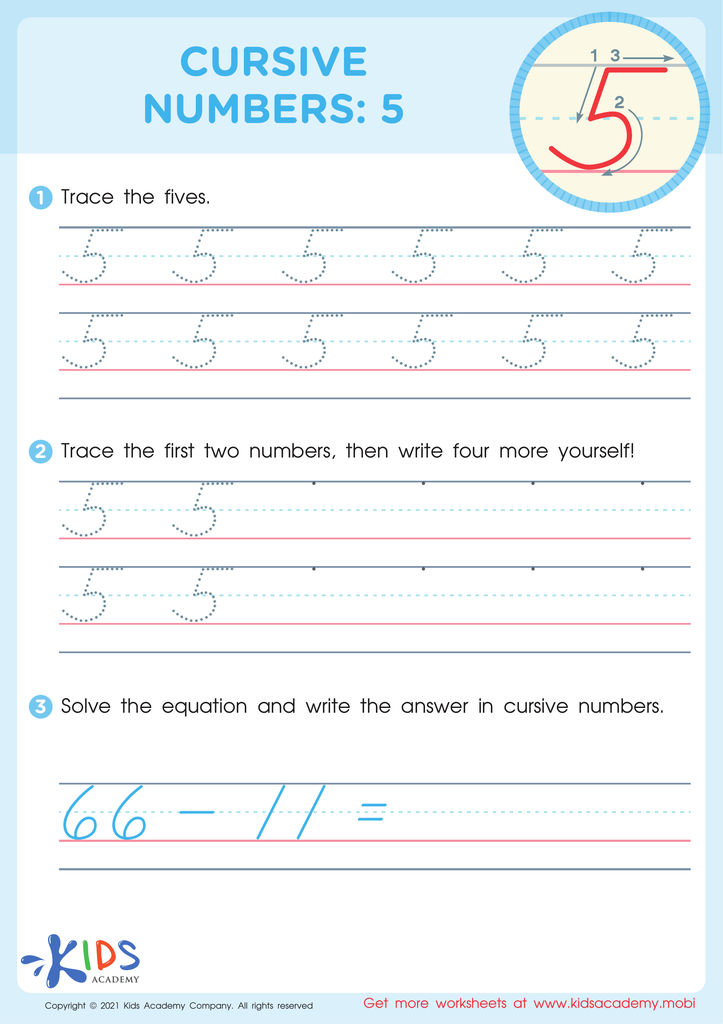
Ask your child to count to 10 to refresh their number knowledge. This worksheet is great for mastering the cursive number 5. Exercises are simple and keep them engaged, with the help of the dotted lines to trace. Constant practice will have your child writing the 5 like a pro!
Cursive Numbers: 5 Worksheet
Worksheet
Cursive Numbers: 8 Worksheet
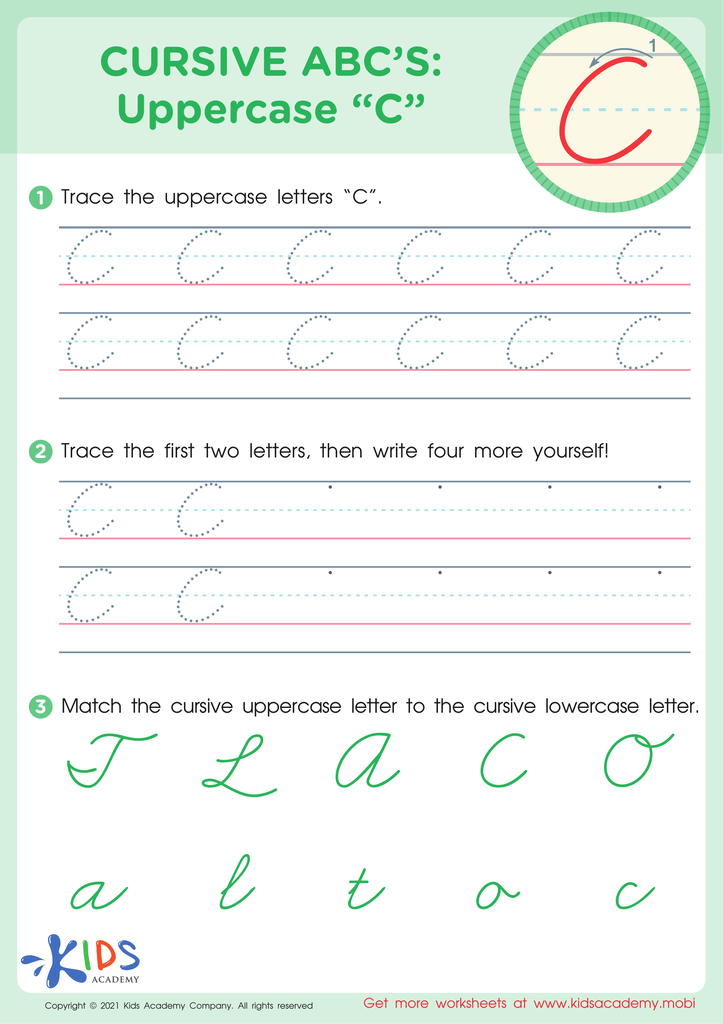

Cursive Numbers: 8 Worksheet

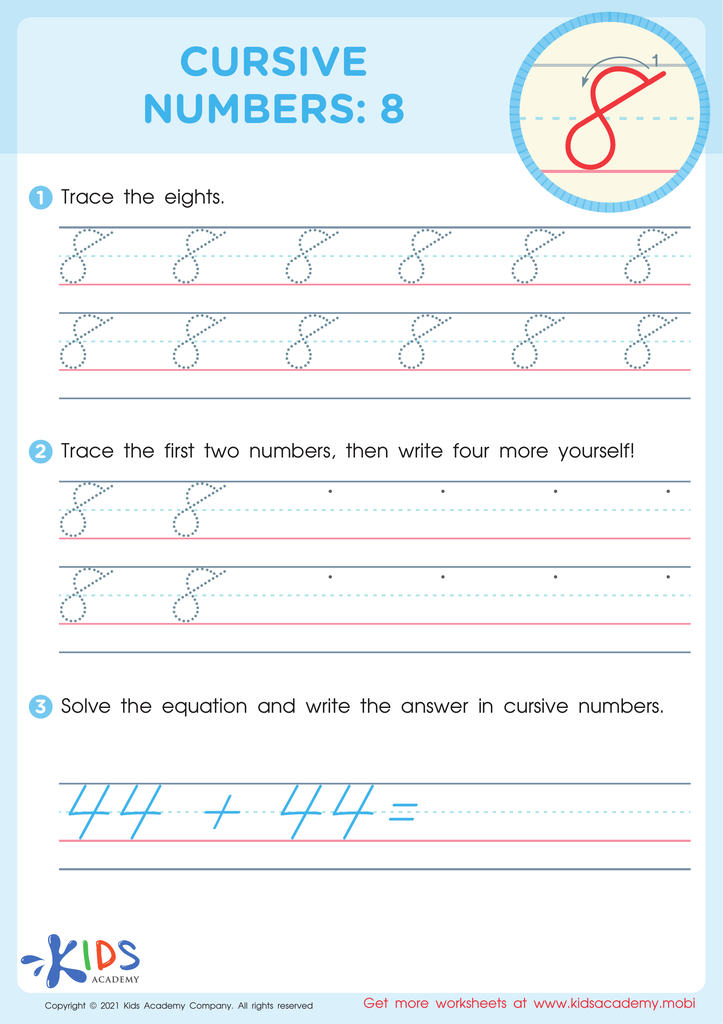
This tracing sheet helps your kids learn to write the cursive number 8. It's perfect for those struggling with handwriting. They'll trace the number 8, write it on their own, then solve a simple math equation and answer in cursive. Counting and writing numbers correctly is essential, so help your kids master it with this worksheet!
Cursive Numbers: 8 Worksheet
Worksheet
Cursive ABCs: Uppercase C

Cursive ABCs: Uppercase C

These worksheets are perfect for those wanting to improve their handwriting or learn letter recognition. The tracing exercises help younger students sharpen their writing skills and teach how to write the 'C' in cursive. First, they trace the given examples and then practice writing it solo. A letter recognition test is at the bottom of the page to check progress.
Cursive ABCs: Uppercase C
Worksheet
Cursive Numbers: 3 Worksheet

Cursive Numbers: 3 Worksheet

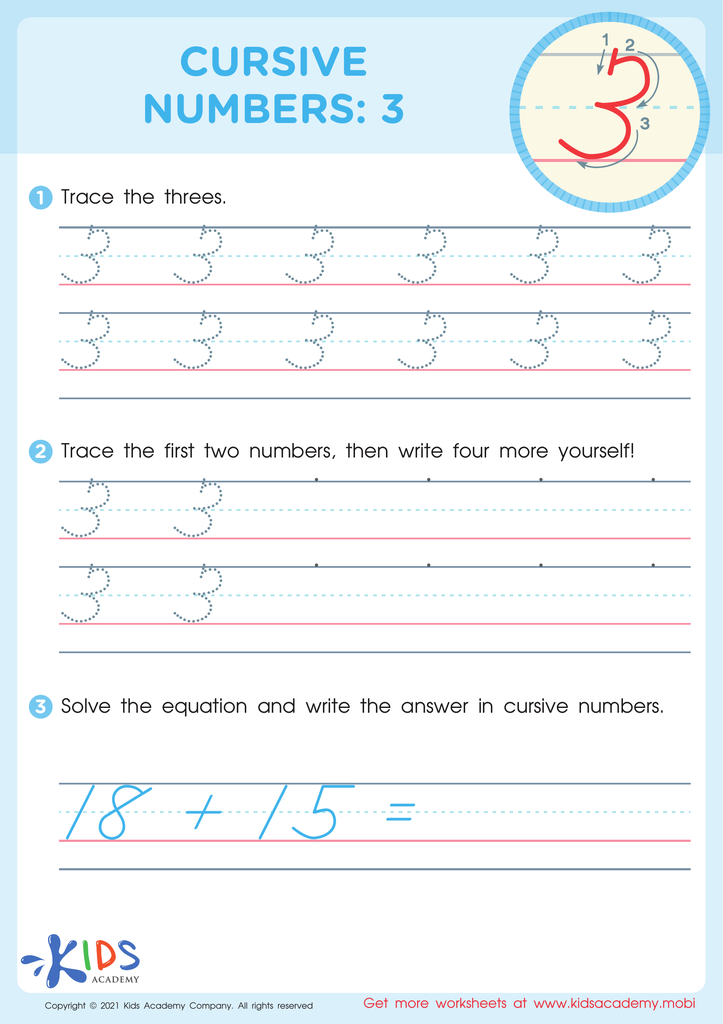
Help your child learn to write with this exercise. They'll practice tracing lines to write the cursive 3 until they gain the skill and confidence to do it on their own. Then have them write the 3 and solve the math equation on the worksheet. You can watch and encourage them as they progress. Writing is a key lesson, so offer your help to ensure they succeed.
Cursive Numbers: 3 Worksheet
Worksheet


Parents and teachers should prioritize fine motor skills and cursive writing for children aged 6-9 because these skills are foundational for a child's overall development. Fine motor skills involve the small muscles of the hands and fingers, coordinating with the eyes, crucial for tasks like writing, buttoning clothes, and tying shoelaces. Developing these skills through activities like cursive writing not only enhances handwriting but also promotes hand-eye coordination and precision.

Cursive writing, in particular, can significantly benefit children's cognitive and academic growth. Learning cursive script requires concentration, which improves attention span and focus. The fluid, continuous motion of cursive writing can enhance muscle memory and neural connections, fostering brain development. Furthermore, mastering cursive can lead to improved reading and note-taking skills, aiding information retention and comprehension.

Emotionally, children often gain a sense of achievement and boosted self-esteem as they see improvements in their handwriting and complete more complex tasks successfully. Socially, neat handwriting can foster clearer communication, reducing misunderstandings in written work.

Therefore, emphasizing fine motor skills and cursive writing at an early age prepares children for future academic and everyday tasks, leading to improved independence and confidence. Investing time in these areas ensures a more holistic, well-rounded development for young learners.