Vowel Recognition Grammar Worksheets for Ages 6-9
4 filtered results
-
From - To
Enhance your child's reading and writing skills with our Vowel Recognition Grammar Worksheets designed for ages 6-9. These interactive worksheets focus on identifying, differentiating, and utilizing vowels in various contexts. Through engaging activities and age-appropriate exercises, children will improve their vowel recognition, which is essential for mastering phonics and building strong literacy foundations. Our expertly crafted resources aim to make learning fun and effective, supporting students as they enhance their grammar skills. Perfect for classroom use or at-home practice, these worksheets help young learners develop confidence in their reading and writing abilities.
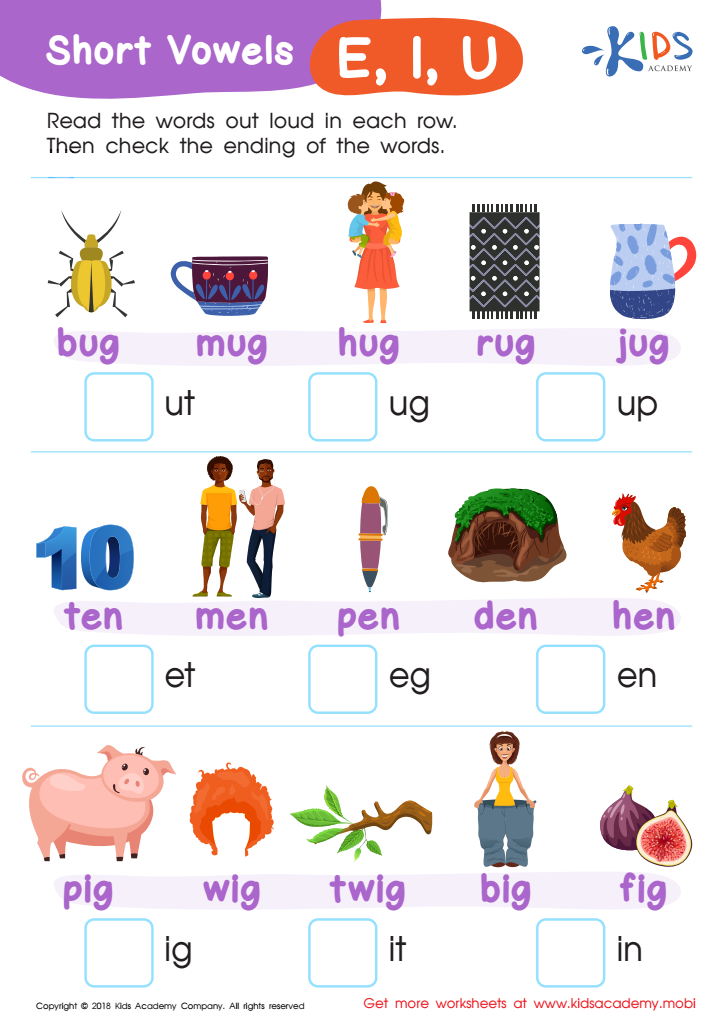
Short Vowels /e/, /i/, and /u/ Worksheet
 Assign to My Students
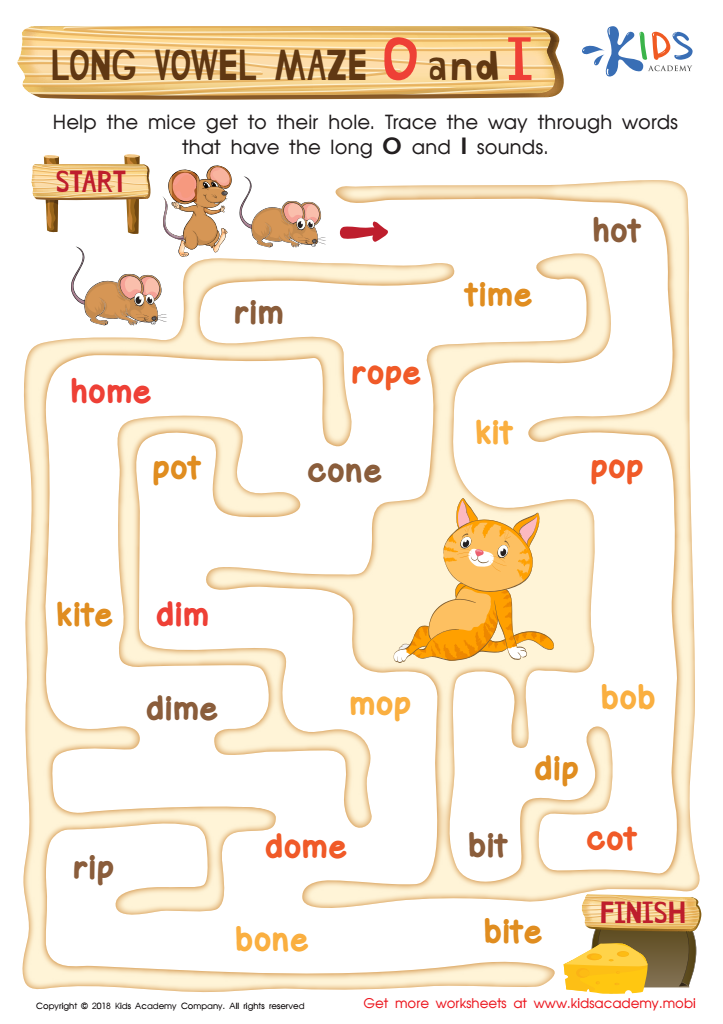
Long Vowel Maze /o/ and /i/ Worksheet
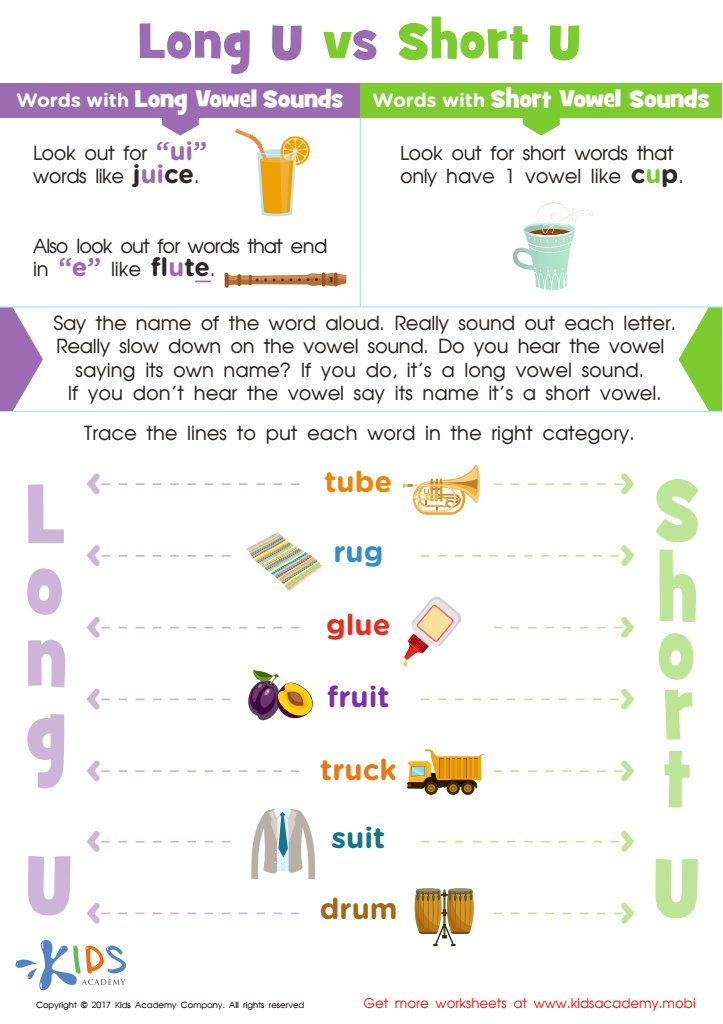
Long and Short Vowel U Spelling Worksheet
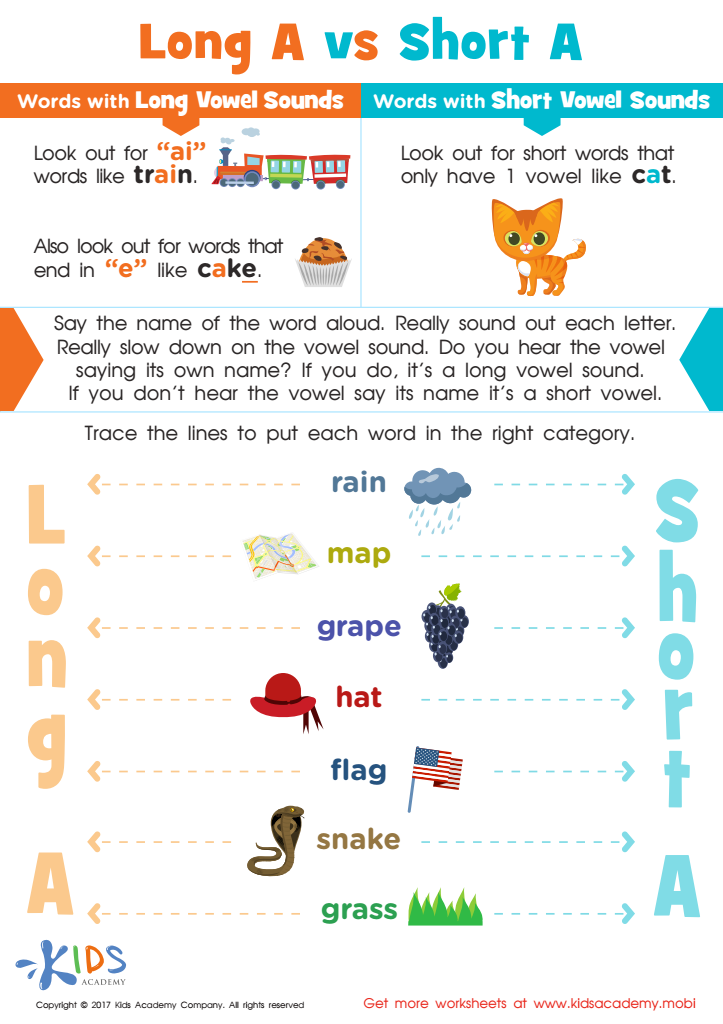
Long and Short Vowel A Spelling Worksheet






Vowel recognition is pivotal in early childhood education, especially for ages 6-9, a critical period for cognitive and linguistic development. During this time, children transition from recognizing letters to reading words and sentences fluently. Mastering vowel sounds—a cornerstone of phonemic awareness—lays the groundwork for proficient reading and writing skills.
Vowels are the building blocks of word formation and their sounds vary greatly depending on their position within words and surrounding consonants. Accurate vowel recognition helps children decode unfamiliar words, enhancing their reading accuracy and fluency. Without this foundational skill, children may struggle with reading comprehension, leading to difficulties in other academic areas as literacy is central to all learning.
Moreover, strong vowel recognition impacts spelling and writing. Understanding vowels' rules and patterns aids in spelling unfamiliar or multisyllabic words correctly, enabling more confident and expressive writing. It also enhances listening skills, as children learn to distinguish subtle sound differences.
Parents and teachers play a crucial role in cultivating these skills through targeted practice and engaging activities. A focus on vowel recognition not only accelerates literacy development but also instills a lifelong love for reading, setting children up for broad academic success and effective communication skills throughout their lives.








