Punctuation understanding Writing Worksheets for Ages 6-9
5 filtered results
-
From - To
Enhance your child's writing skills with our engaging Punctuation Understanding Writing Worksheets designed for ages 6 to 9! These worksheets focus on introducing essential punctuation marks such as periods, commas, exclamation marks, and question marks, helping young learners grasp their importance in building clear and coherent sentences. Through interactive activities tailored for early readers and writers, kids will enjoy practicing punctuation in a fun, supportive environment. Perfect for homeschooling or classroom use, our resources foster both creativity and comprehension, laying a strong foundation for effective communication. Discover the joy of writing with our easy-to-use worksheets today!
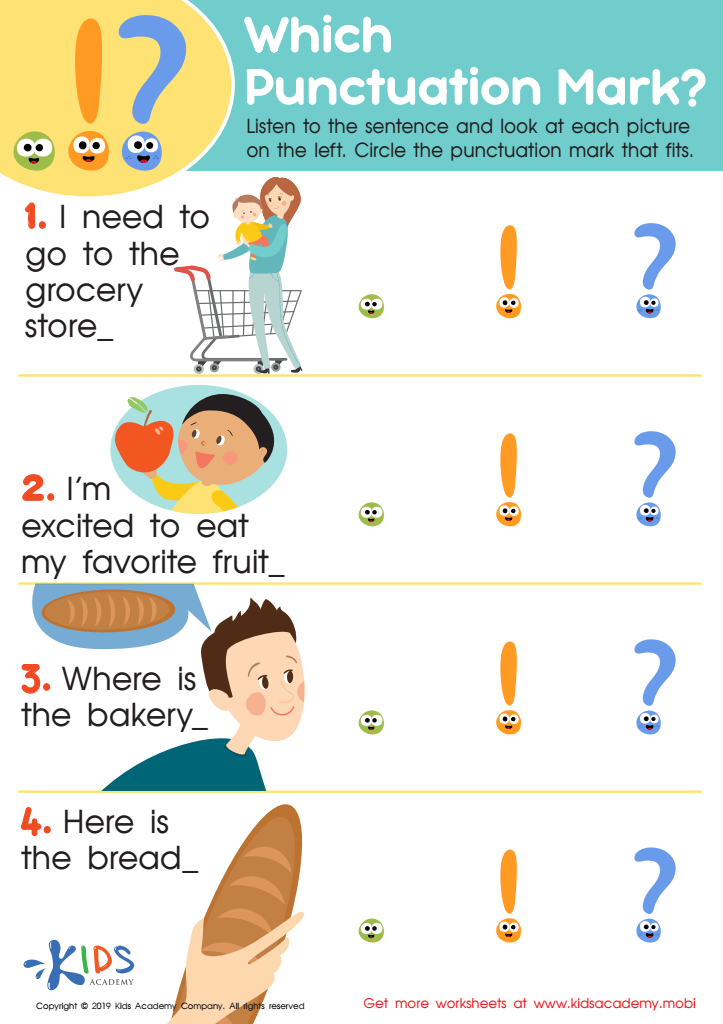
Which Punctuation Mark Worksheet
 Assign to My Students
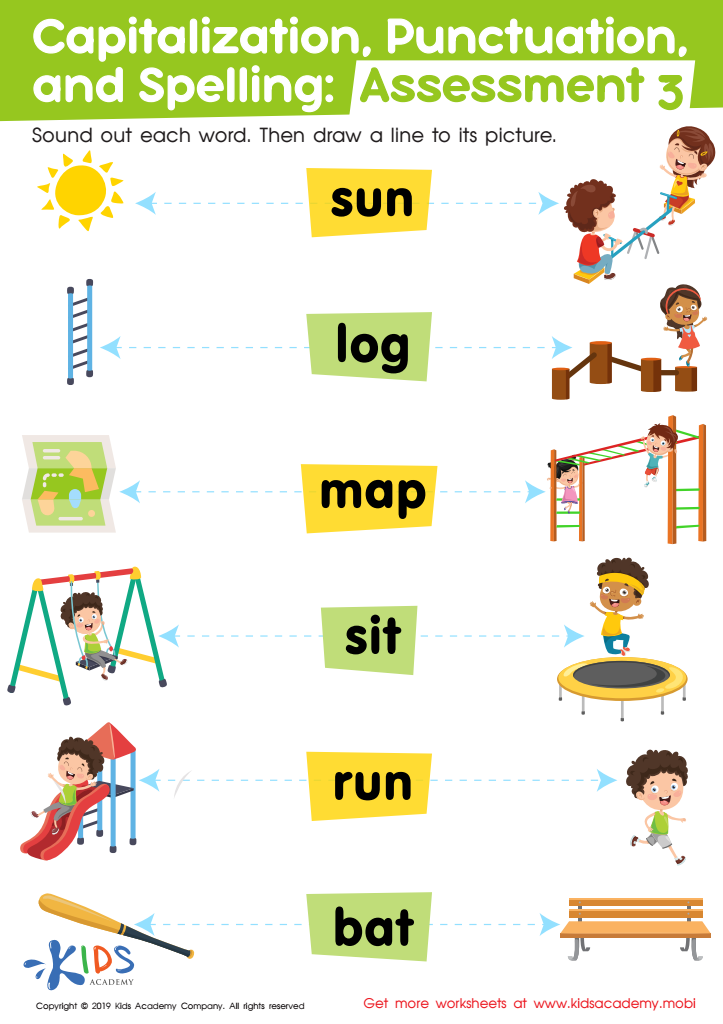
Capitalization. Punctuation. Spelling. Assessment 3 Worksheet
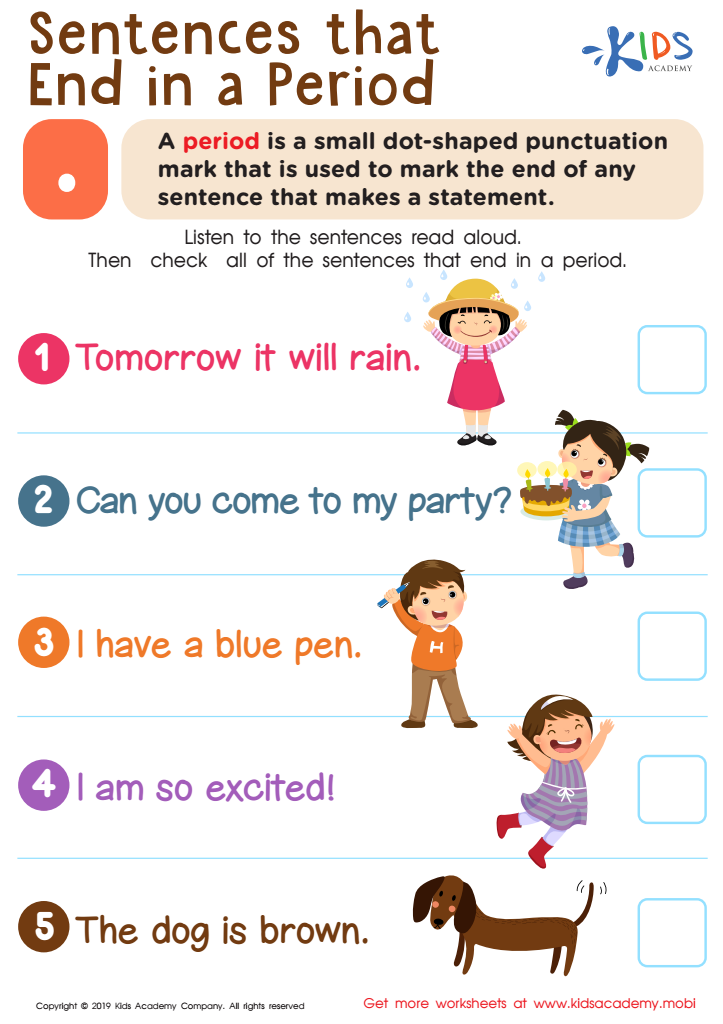
Sentences That End in a Period Worksheet
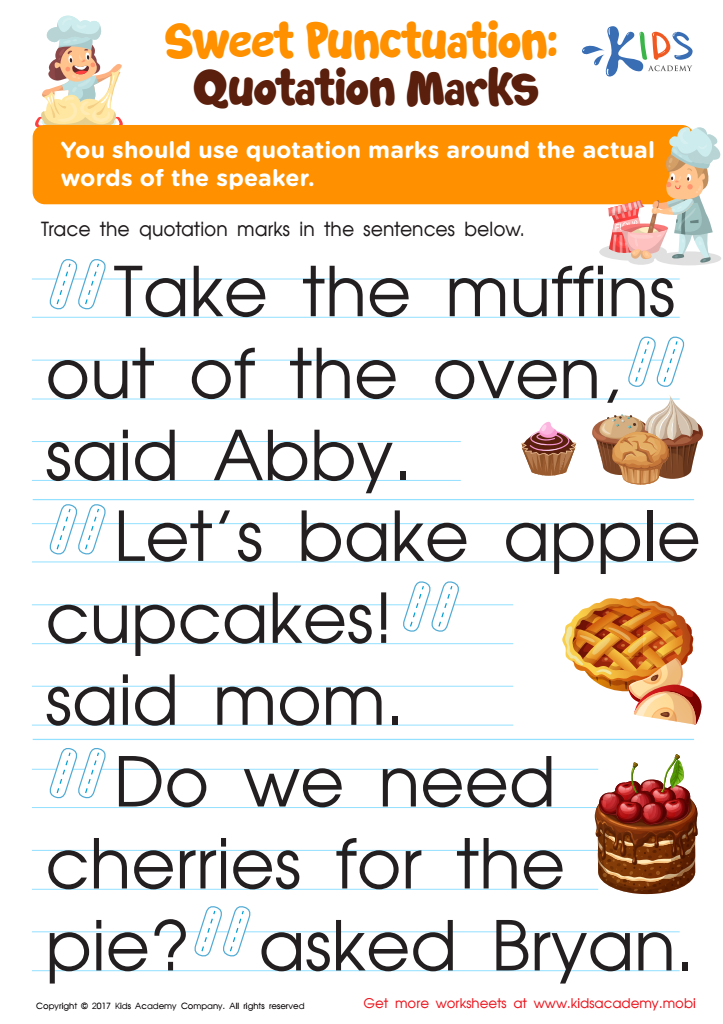
Commas and Quotation Marks Worksheet
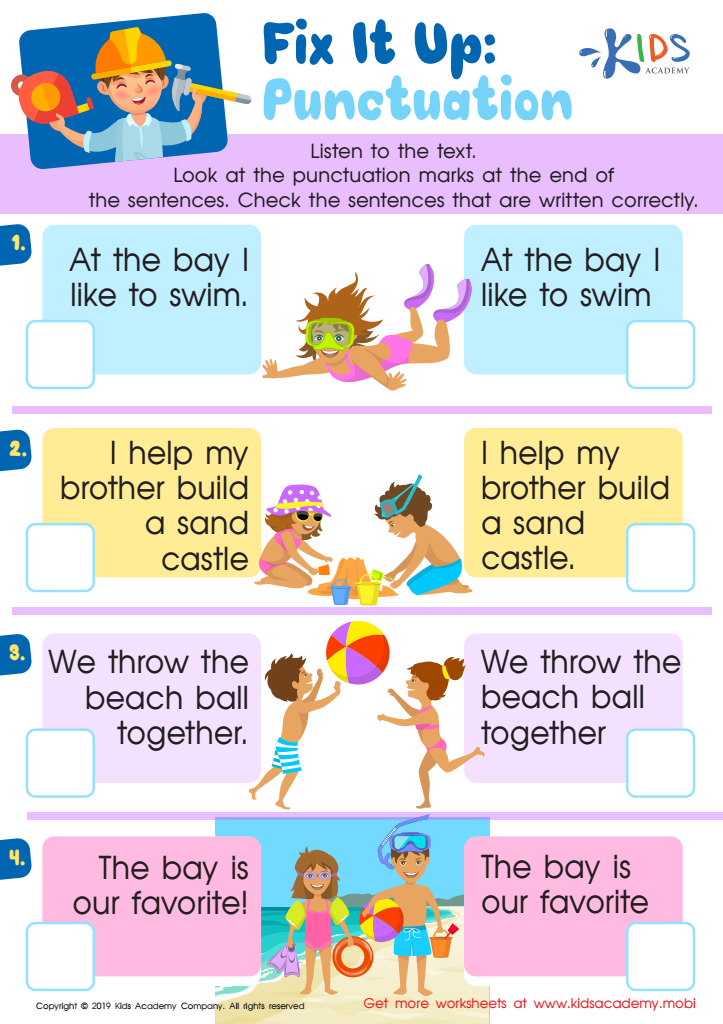
Fix Punctuation Worksheet








Punctuation is a crucial element of writing that significantly impacts communication, particularly for children aged 6-9. Understanding punctuation helps young writers convey their thoughts clearly and effectively. As children learn to structure sentences, punctuation marks like periods, commas, question marks, and exclamation points guide their readers in interpreting tone and meaning.
Moreover, the ability to punctuate correctly aids in reading comprehension. Kids who recognize punctuation cues can pause, emphasize, and differentiate between statements and questions, enhancing their overall understanding of texts. For parents and teachers, instilling a solid foundation in punctuation fosters better writing skills, encouraging children to express themselves creatively and confidently.
Early mastery of punctuation can lead to improved academic performance, as written assignments often play a crucial role in evaluations. As children grow, proficient punctuation skills support higher-level writing tasks and allow them to engage with different genres of literature.
Furthermore, learning about punctuation can make writing more enjoyable for children. It allows them to experiment with different sentence structures, enriching their language and storytelling capabilities. Ultimately, supporting punctuation development in early education lays the groundwork for effective communication and lifelong learning both in and out of the classroom.