Sentence formation Writing Worksheets for Ages 6-9
3 filtered results
-
From - To
Discover our engaging Sentence Formation Writing Worksheets designed specifically for children ages 6-9! These worksheets focus on enhancing young learners' writing skills through fun and interactive activities. Children will practice constructing sentences using various prompts, improving their grammar, vocabulary, and creativity. This resourceful tool allows parents and educators to support effective learning at home or in the classroom. Perfect for reinforcing key concepts, these worksheets help kids express their thoughts clearly and confidently. Equip your child with the essentials of sentence writing and watch their skills flourish as they explore language in a playful, supportive environment. Start their writing journey today!
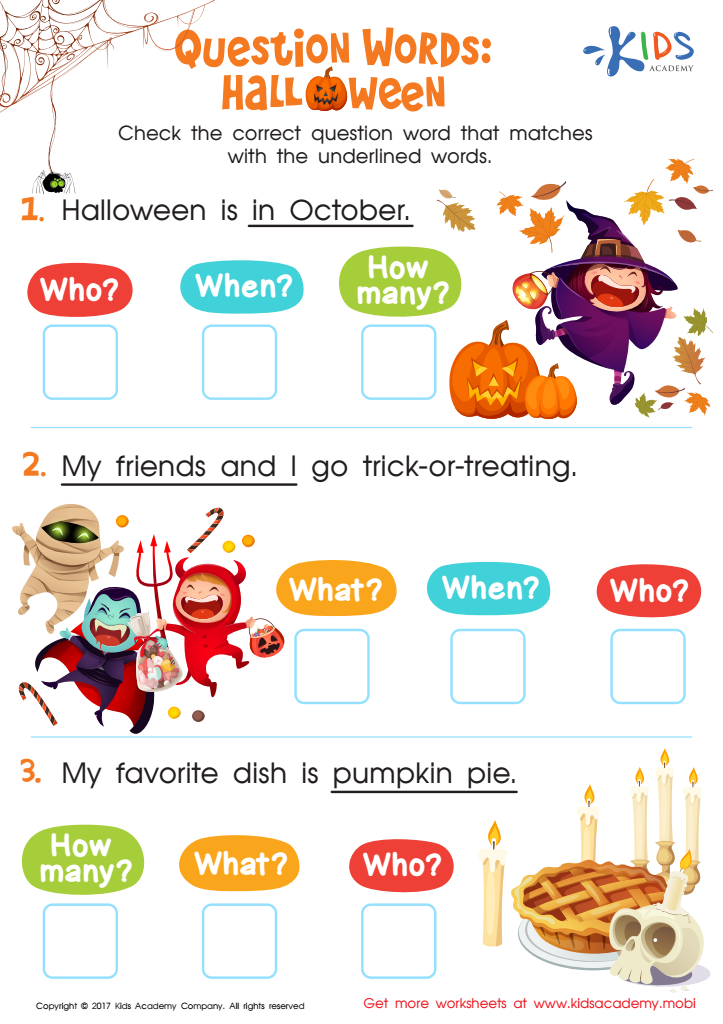
Question Words: Halloween Worksheet
 Assign to My Students
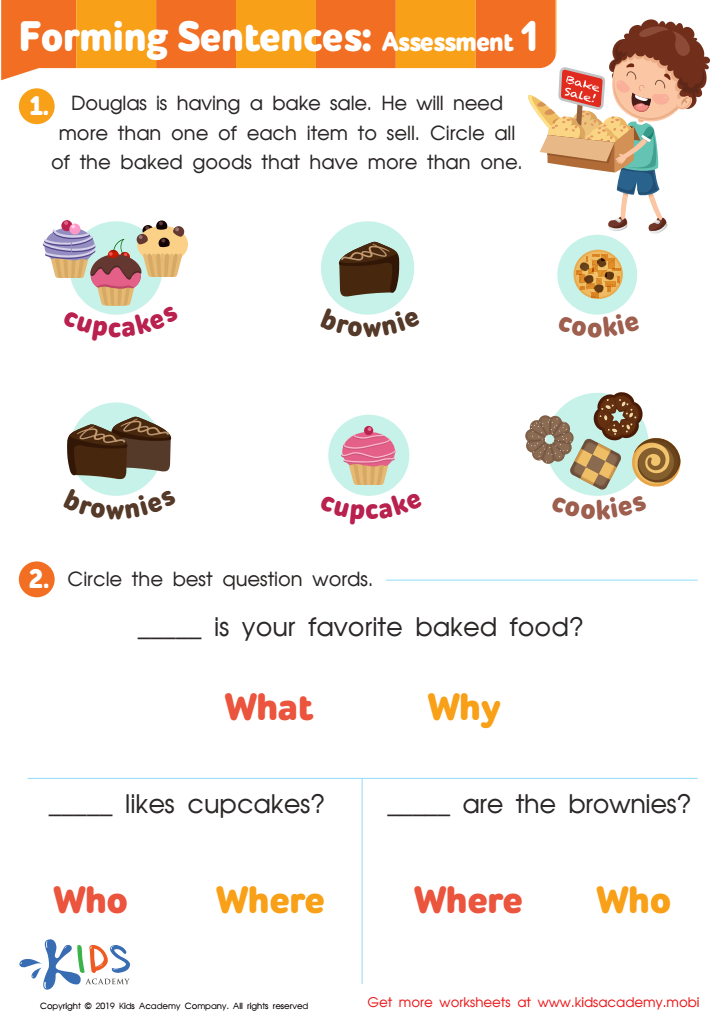
Forming Sentences: Assessment 1 Worksheet
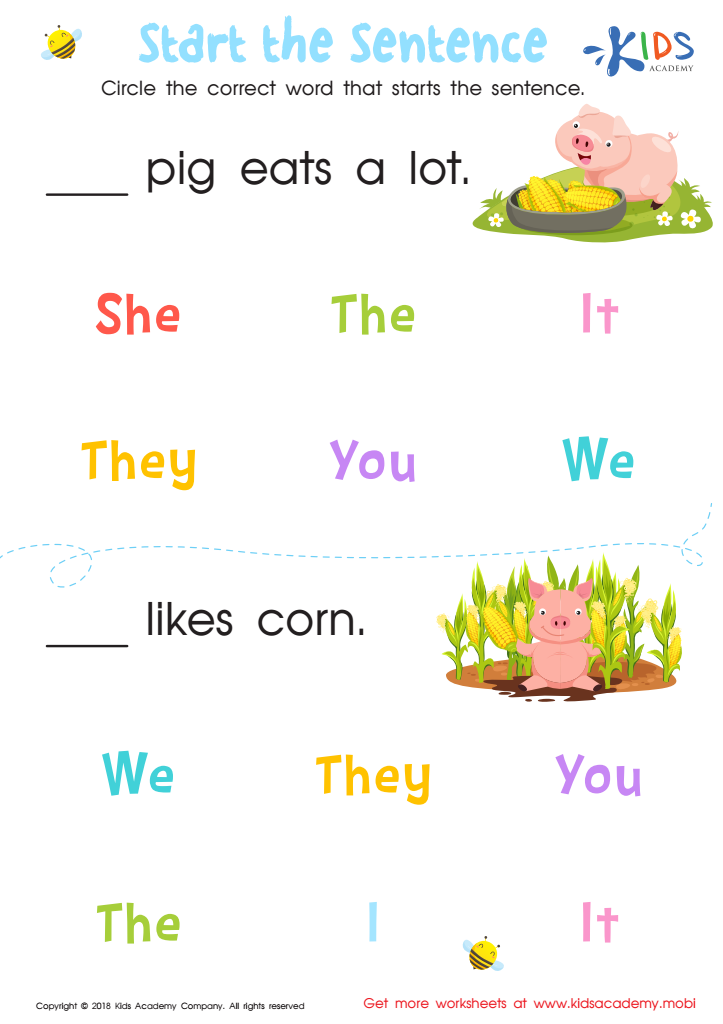
Start the Sentence Worksheet







Sentence formation is a crucial skill for children aged 6-9, as it lays the foundation for effective communication, reading comprehension, and overall academic success. Understanding how to structure sentences helps children express their thoughts and ideas clearly and coherently. This age is a pivotal time for language development, and teaching sentence formation equips children with the tools to convey their feelings, ask questions, and share stories.
Parents and teachers should care about this skill because it fosters creativity and critical thinking. When children learn to form sentences, they also engage in organizing their thoughts, which enhances their cognitive abilities. Additionally, strong sentence formation skills can lead to improved writing abilities later in life, nurturing a love for literature and writing.
Moreover, proficient sentence construction aids in reading comprehension. As children learn to connect words into meaningful units, they become better able to understand and analyze text. This has lasting benefits on their academic journey, as clear communication is essential across all subjects.
Ultimately, fostering the ability of children to form sentences not only enriches their learning experience but also builds their confidence and prepares them for future challenges in communication and academia.








