Handwriting improvement Tracing Words Worksheets for Ages 6-9
4 filtered results
-
From - To
Enhance your child's handwriting skills with our "Handwriting Improvement Tracing Words Worksheets" designed specifically for ages 6-9. These engaging worksheets offer fun tracing activities that help children develop proper letter formation, spacing, and overall writing fluency. Each worksheet is tailored to boost confidence and improve fine motor skills while reinforcing vocabulary through practice. Perfect for at-home learning or classroom use, our resources make handwriting practice enjoyable. Watch your child gain mastery over their writing techniques with structured guidance, clear instructions, and delightful illustrations that make learning fun. Start their journey toward beautiful handwriting today!
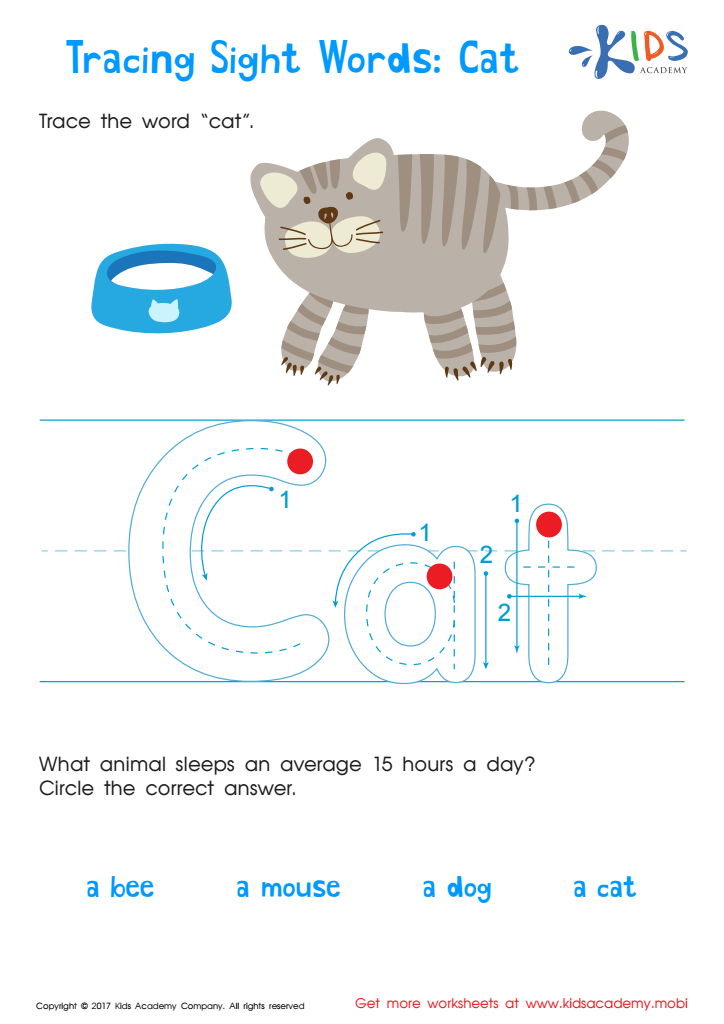
Cat Printable Sight Words Worksheet
 Assign to My Students
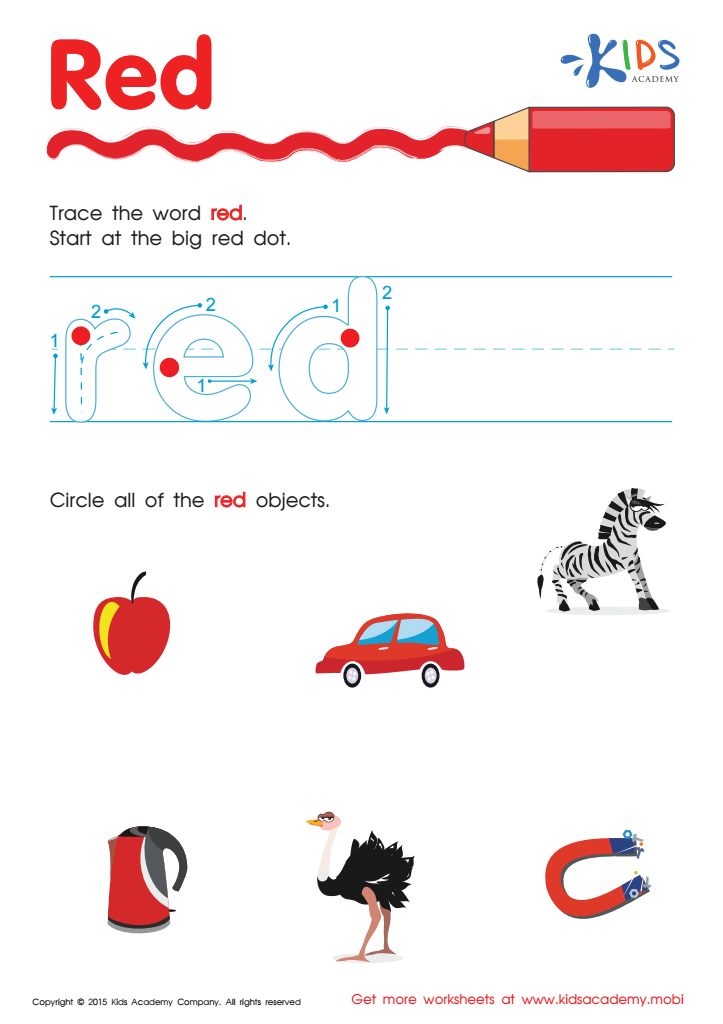
Red Tracing Color Words Printable
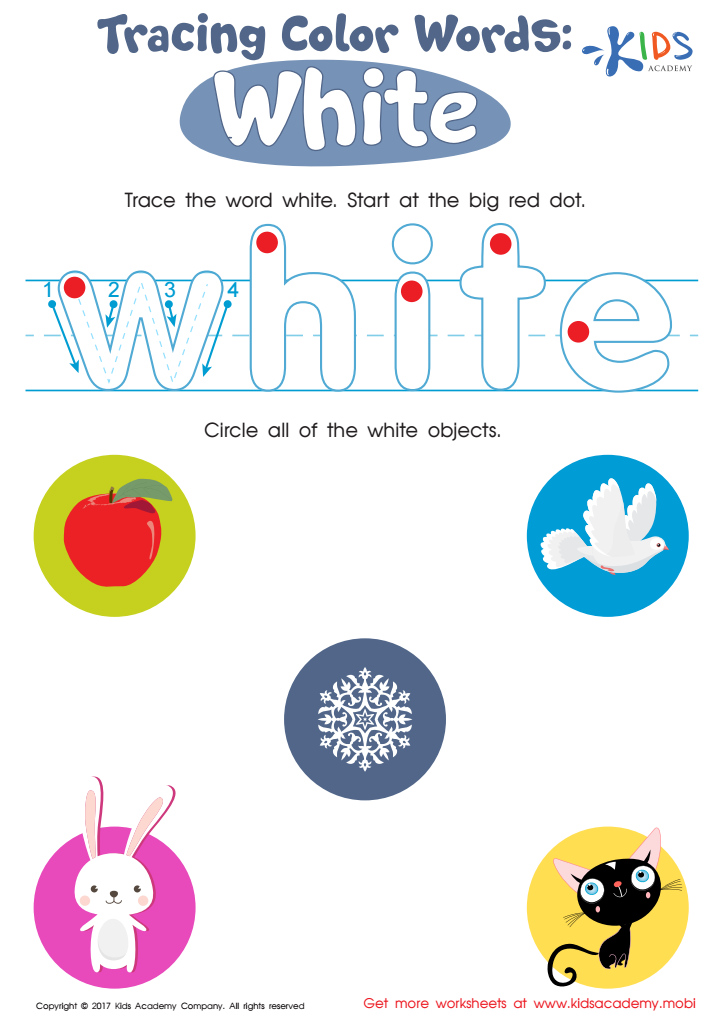
White Tracing Color Words Worksheet
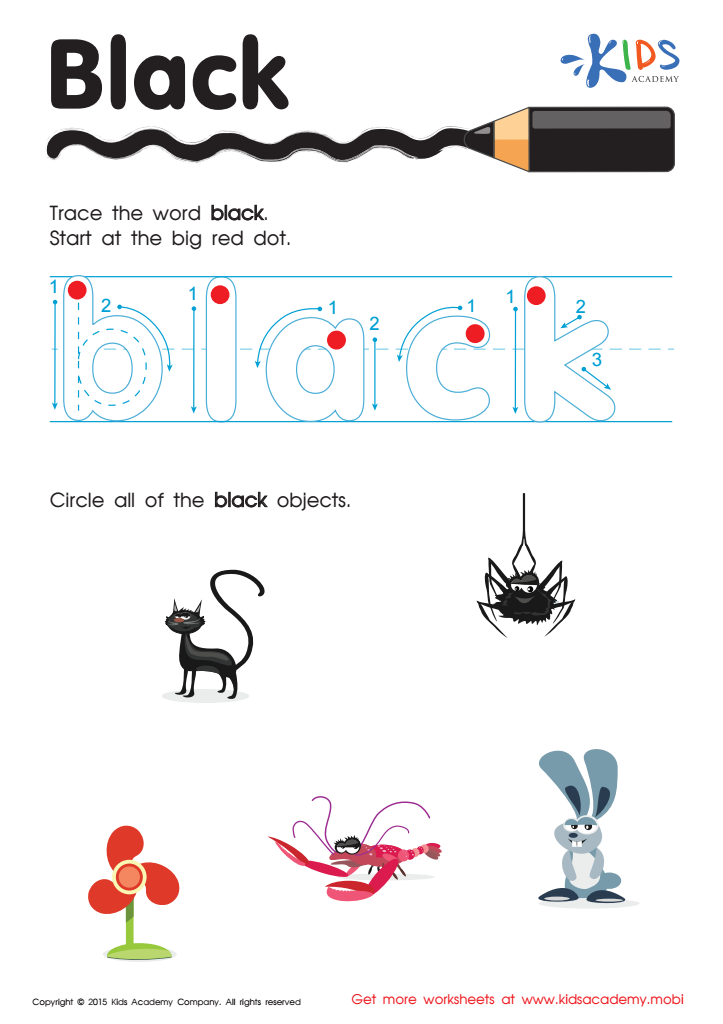
Black Tracing Color Words Printable








Handwriting improvement, particularly through tracing words for children aged 6-9, plays a crucial role in their overall development and academic success. During these formative years, fine motor skills and hand-eye coordination are being developed, which are essential for writing. Engaging in tracing activities enhances these skills, enabling children to write with greater fluidity and confidence.
Moreover, good handwriting directly influences a child's ability to communicate their thoughts effectively. As students progress academically, the emphasis on clear and legible writing increases. When children can form letters properly, they can focus on the content of their writing rather than struggling with the mechanics.
Additionally, tracing words can reinforce literacy by helping children recognize letter shapes and sounds, contributing to their phonemic awareness. This practice can also encourage an appreciation for the written word, fostering a positive association with writing.
Furthermore, handwriting improvement can impact a child’s self-esteem. When they see their progress in legible letter formation, it can lead to increased motivation and a sense of accomplishment. Therefore, parents and teachers should prioritize handwriting improvement through engaging tracing activities to support not only literacy but also motor skills and self-confidence in young children’s educational journeys.








