Letter recognition ABC Letters Worksheets for 6-Year-Olds - Page 2
27 filtered results
-
From - To

Letter N Coloring Sheet
 Assign to My Students






Letter D Tracing Page
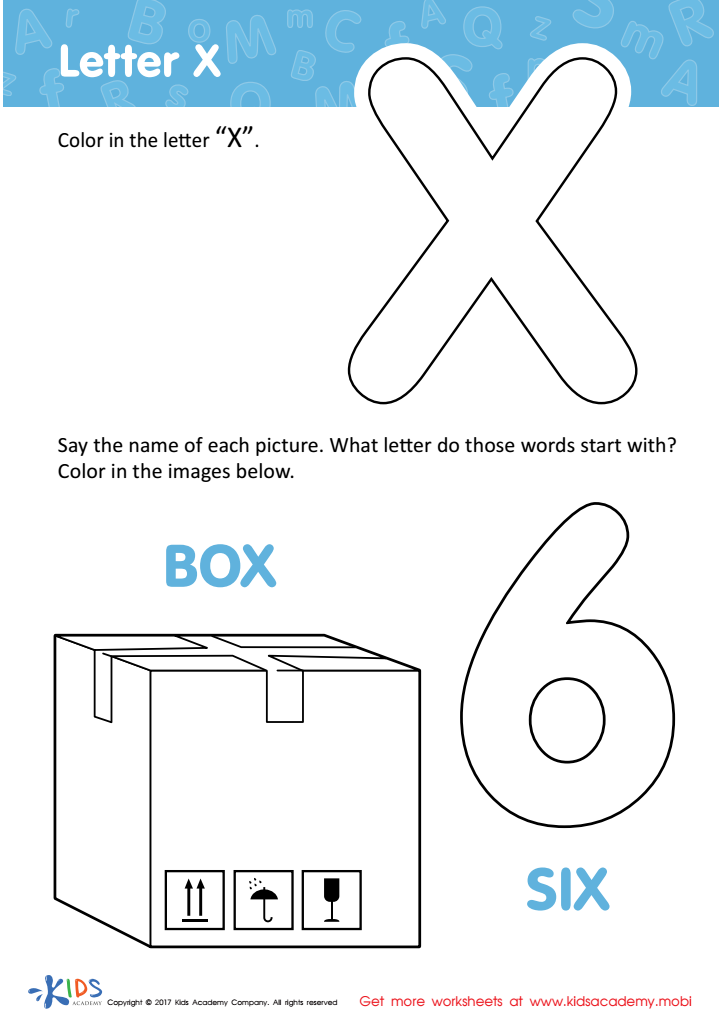
Letter X Coloring Sheet
Assign to My Students







Letter recognition is a fundamental skill that forms the foundation for reading and writing, making it essential for parents and teachers to prioritize for 6-year-olds. Recognizing letters is the first step in helping children understand the relationship between sounds and written language, enabling them to decode words and develop literacy skills. Early mastery of the alphabet enhances vocabulary acquisition and sets the stage for fluent reading.
Moreover, letter recognition supports cognitive development. As children learn to identify letters, they also begin to understand the concept of symbols representing sounds and ideas, a vital cognitive leap. This encourages critical thinking, pattern recognition, and memory skills, which are transferable to various subjects beyond literacy.
In addition, nurturing letter recognition through engaging activities allows for a positive educational experience. It fosters a love of learning and builds confidence as children succeed in identifying letters and forming words. When parents and teachers collaboratively support this crucial skill through fun and interactive methods, they contribute to a supportive learning environment. Overall, emphasizing letter recognition leads to significant long-term benefits in a child's academic journey, affirming the importance of this foundational literacy skill within early education.







