
Phonics practice ABC Letters Worksheets for 6-Year-Olds
3 filtered results
Difficulty Level
Grade
Age
-
From - To
Subject
Activity
Standards
Enhance your child's reading skills with our engaging Phonics Practice ABC Letters Worksheets designed specifically for 6-year-olds! These worksheets are perfect for reinforcing letter recognition, sound associations, and early phonics skills. With fun activities ranging from tracing letters to matching sounds with corresponding images, your child will build a strong foundation in phonics while enjoying the learning process. Our colorful, interactive worksheets cater to various learning styles, making phonics practice both effective and entertaining. Help your little one develop confidence in reading as they explore letters, sounds, and words with our specially crafted materials! Start their phonics journey today!
Favorites
With answer key
Interactive
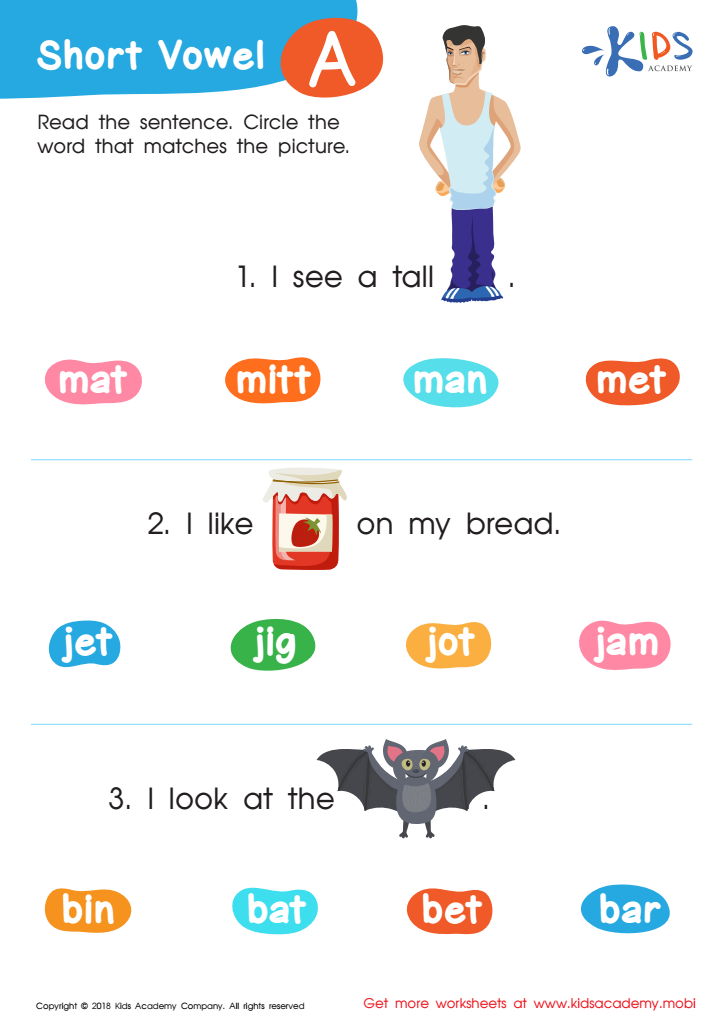
Short Vowel /a/ Worksheet
This free PDF helps new readers use sight words and pictures to read basic sentences. Then, they use accompanying word choices to find the correct word with the short a vowel sound. A key early reading skill, discriminating between short vowel sounds can be tricky in monosyllabic words, so use this PDF to help your reader reinforce it.
Short Vowel /a/ Worksheet
Worksheet

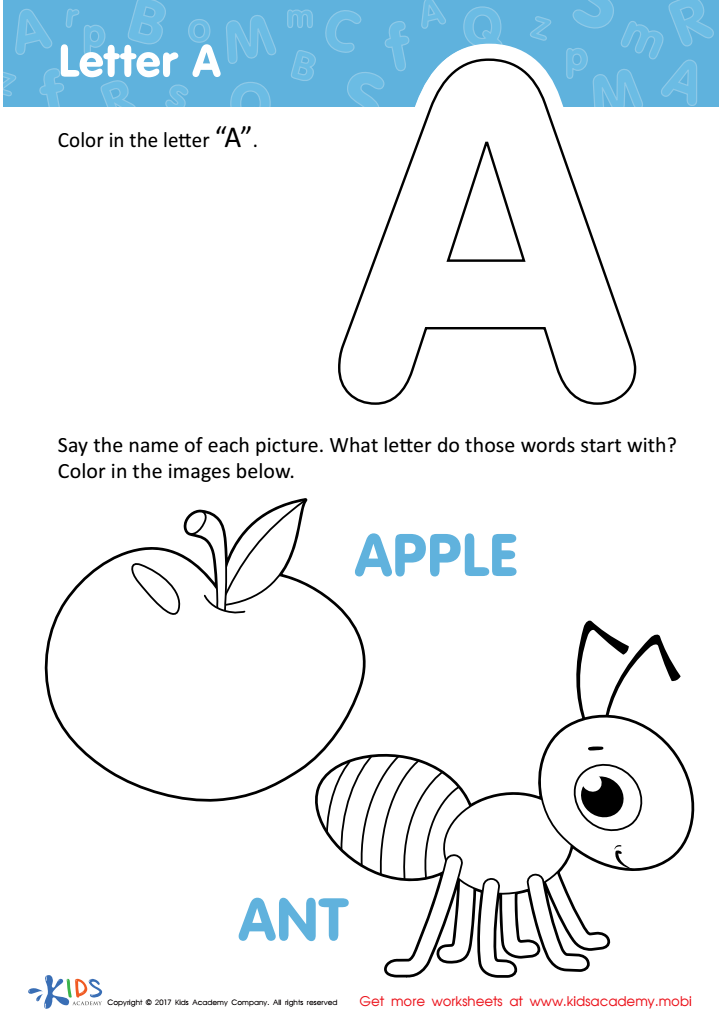
Letter A Coloring Sheet
This letter "A" coloring page is great for introducing kids to the alphabet! Let them exercise their creativity while they learn to recognize letters and sounds - it's a fun and easy way to help them get started.
Download (PDF)
 Assign to My Students
Assign to My Students
Letter A Coloring Sheet
Worksheet
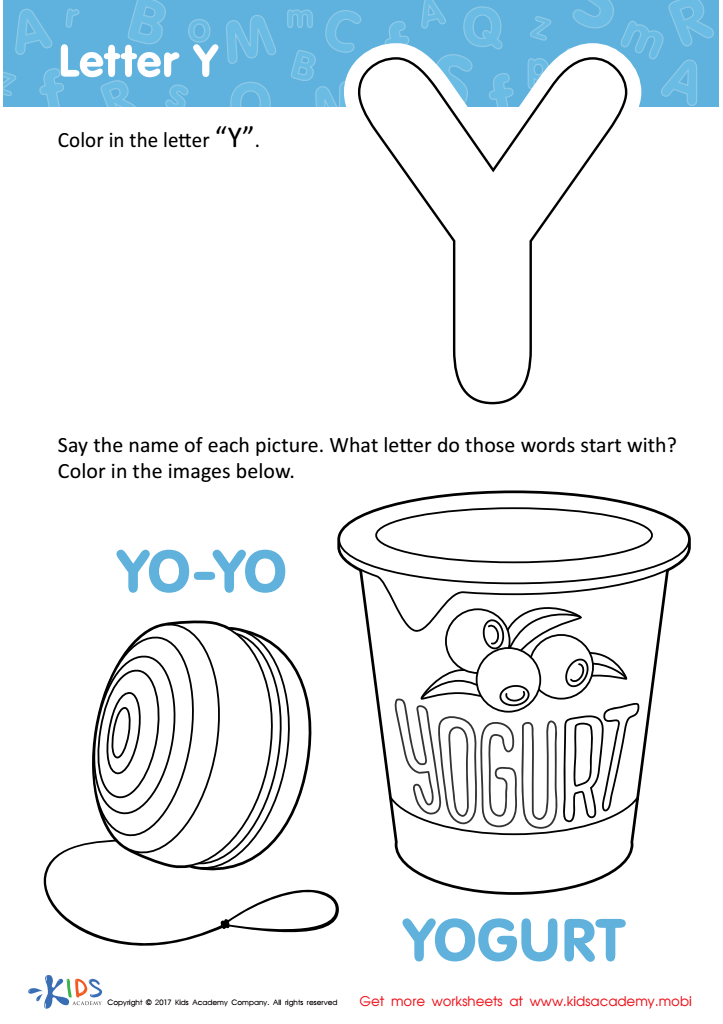
Letter Y Coloring Sheet
Let's celebrate letter "Y"! Here's a fun coloring page that'll help your child learn this end-of-the alphabet letter. It's packed with familiar objects that'll help build their art and literacy skills. So let's say "Yay"!
Download (PDF)
Assign to My Students
Assign to My Students
Letter Y Coloring Sheet
Worksheet
Join Kids Academy for Free
Who is primarily going to use this learning content?








Phonics practice is crucial for 6-year-olds as it lays the foundation for reading and writing skills. At this age, children are typically transitioning from pre-reading to early reading experiences. Understanding phonics helps them decode words, which is essential for reading fluency and comprehension. When children grasp the relationship between sounds and letters, they become more confident readers, allowing them to engage with a wider range of texts.
Parents and teachers should prioritize phonics practice because it directly influences academic success. Early literacy skills are closely linked to a child's overall educational performance; those lacking a strong phonics background may struggle with reading in later grades. Consistent phonics instruction promotes better spelling, vocabulary development, and writing abilities, which are vital across all subjects.
Moreover, engaging in phonics activities fosters a love for reading by making learning interactive and enjoyable. Using games, songs, and reading aloud sessions helps reinforce these concepts, encouraging a positive attitude towards literacy. Supporting phonics practice means not only enhancing a child's education but also nurturing their self-esteem and interest in books, setting them on the path toward lifelong learning. Therefore, parents and teachers play a critical role in prioritizing phonics practice for young learners.







