Phonics recognition Consonants Worksheets for 6-Year-Olds
4 filtered results
-
From - To
Enhance your child's reading skills with our engaging Phonics Recognition Consonants Worksheets, specially designed for 6-year-olds. These worksheets provide a fun and interactive way for young learners to identify and practice consonant sounds, facilitating their journey into literacy. With vibrant illustrations and age-appropriate activities, each worksheet helps children build confidence, improve phonemic awareness, and reinforce their understanding of consonants. Perfect for at-home learning or classroom use, our worksheets make phonics exciting and accessible. Equip your child with essential reading skills while enjoying a variety of exercises that cater to different learning styles. Start their phonics adventure today!
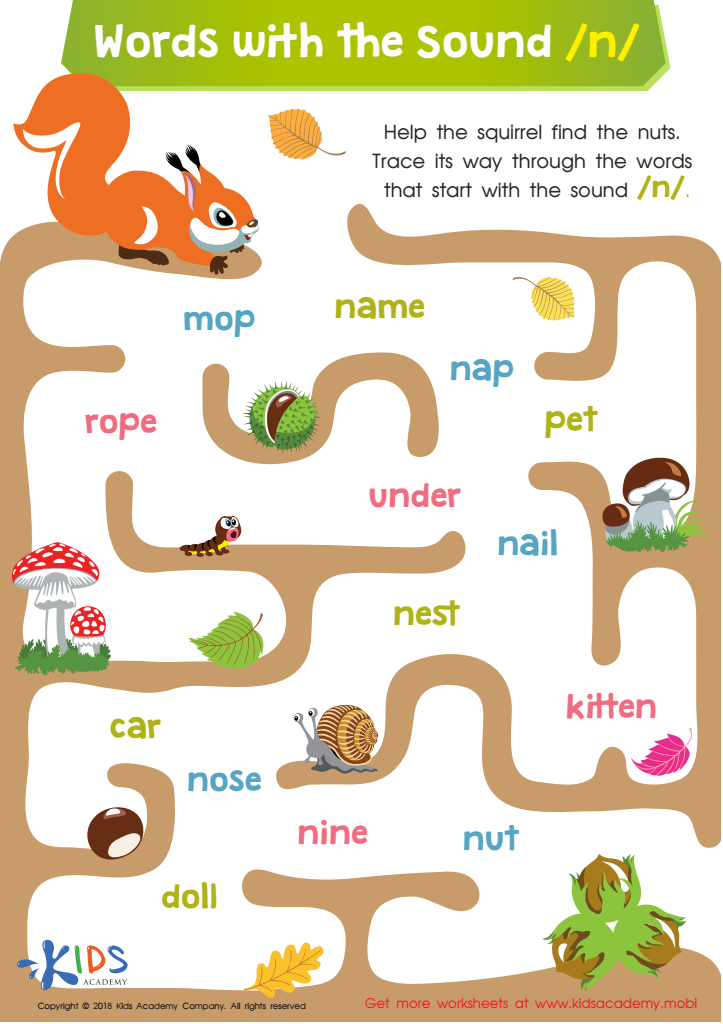
Words with Sound N Reading Worksheet
 Assign to My Students
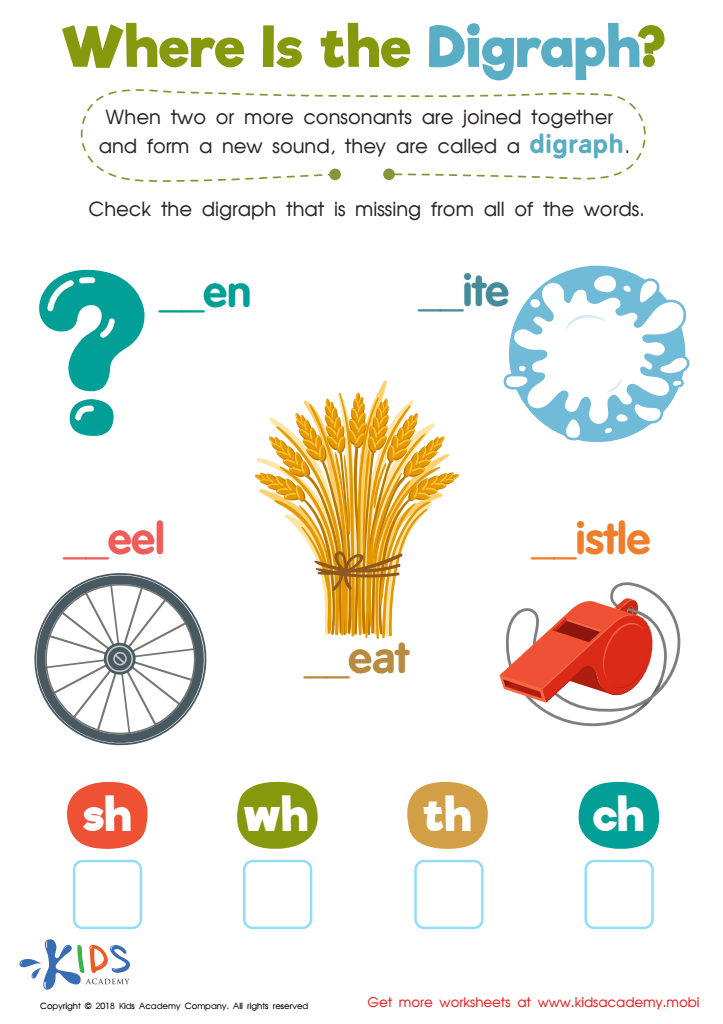
Where Is the Digraph? Worksheet
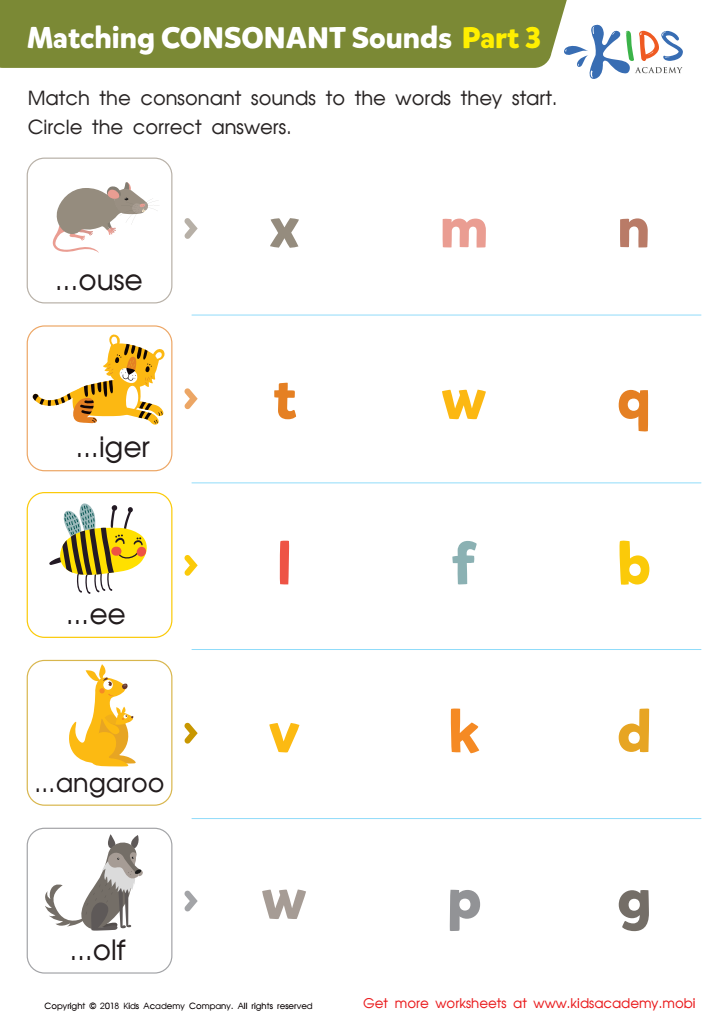
Matching Consonant Sounds: Part 3 Worksheet
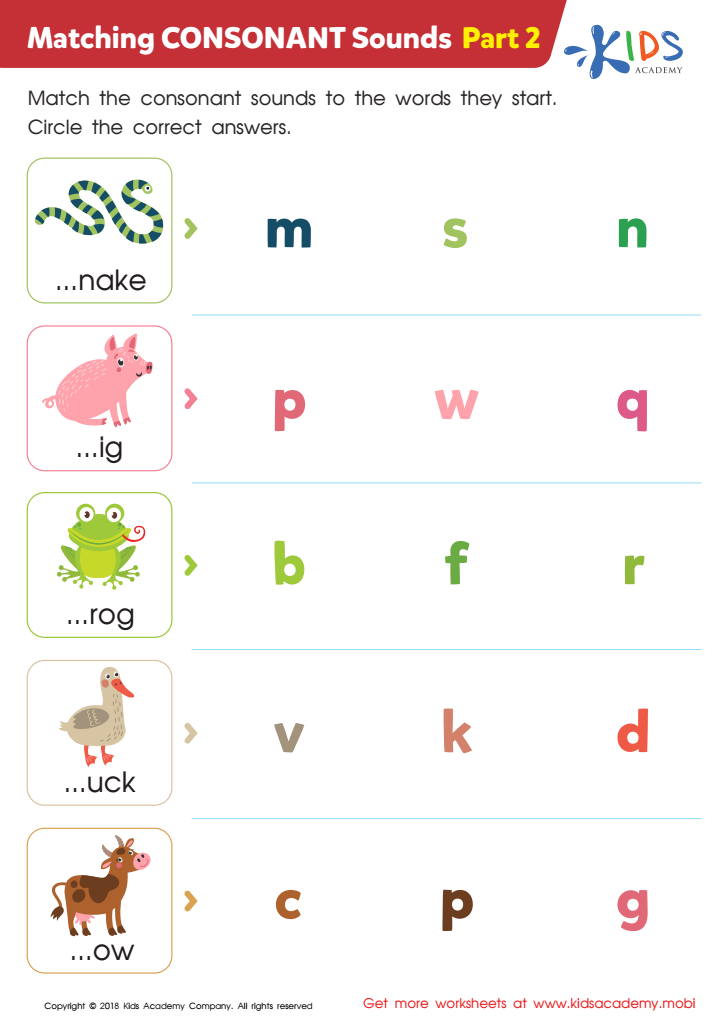
Matching Consonant Sounds: Part 2 Worksheet



Phonics recognition, particularly of consonants, is a vital skill for 6-year-olds as they embark on their reading journey. Understanding consonant sounds lays the foundation for literacy development. When children grasp phonics, they can decode words more effectively, enabling them to read independently and with confidence.
For parents and teachers, fostering phonics recognition in consonants can significantly enhance children's vocabulary and comprehension skills. This competency allows them to recognize familiar words in daily reading materials, promoting a love for reading. Early mastery of consonant sounds is linked to better spelling, as children learn the rules of how consonants interact with other letters.
Moreover, phonics recognition supports critical cognitive skills, such as auditory discrimination and phonemic awareness, essential for language development. It empowers children to engage with written language, thus enhancing their communication abilities.
Furthermore, developing consonant recognition effectively addresses individual learning needs and challenges, helping both educators and parents identify areas for targeted support. Engaging in phonics activities fosters a collaborative learning environment, strengthening the child-parent or teacher-child relationship.
In conclusion, caring about phonics recognition in consonants is crucial for children’s literacy success, laying a robust groundwork for their future learning endeavors.







