Phonics recognition Elementary Phonics Worksheets for 6-Year-Olds
3 filtered results
-
From - To
Unlock the power of reading for your 6-year-olds with our engaging Phonics Recognition Elementary Worksheets! Designed specifically for early learners, these worksheets support the development of vital phonemic awareness skills. Featuring interactive and colorful activities, children will explore letter sounds, blends, and word recognition in a fun way. Each worksheet is crafted to enhance a child’s ability to decode words and improve their reading fluency. Perfect for classroom settings or homeschooling, our resources provide parents and educators with effective tools to instill a love for reading in young learners. Start your child on their exciting reading journey today!
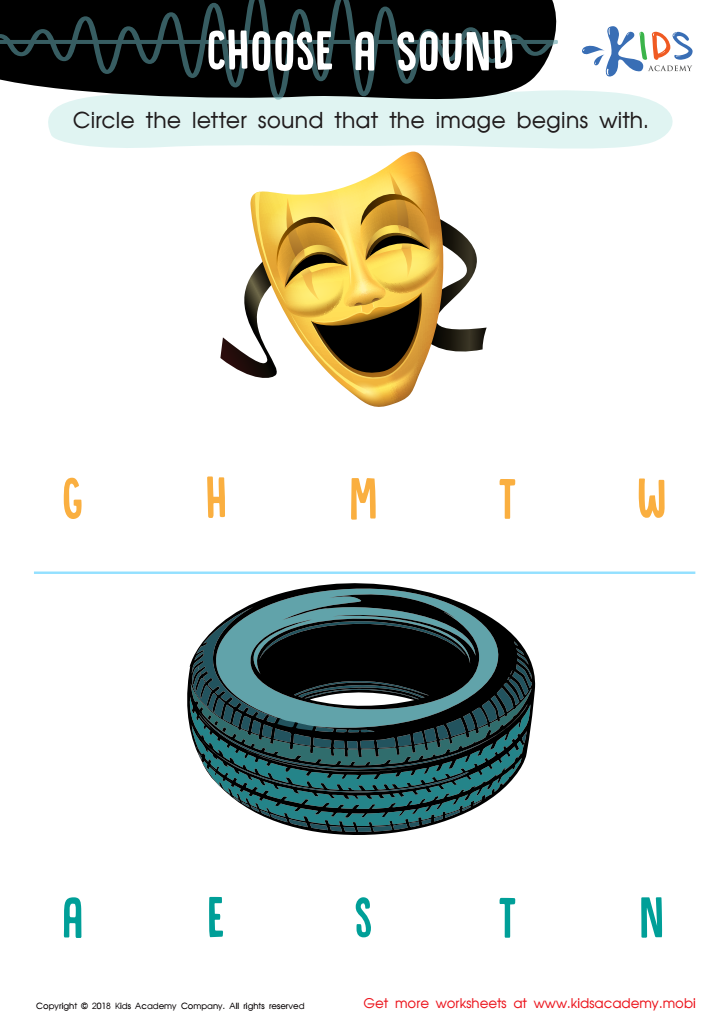
Choose a Sound Worksheet
 Assign to My Students
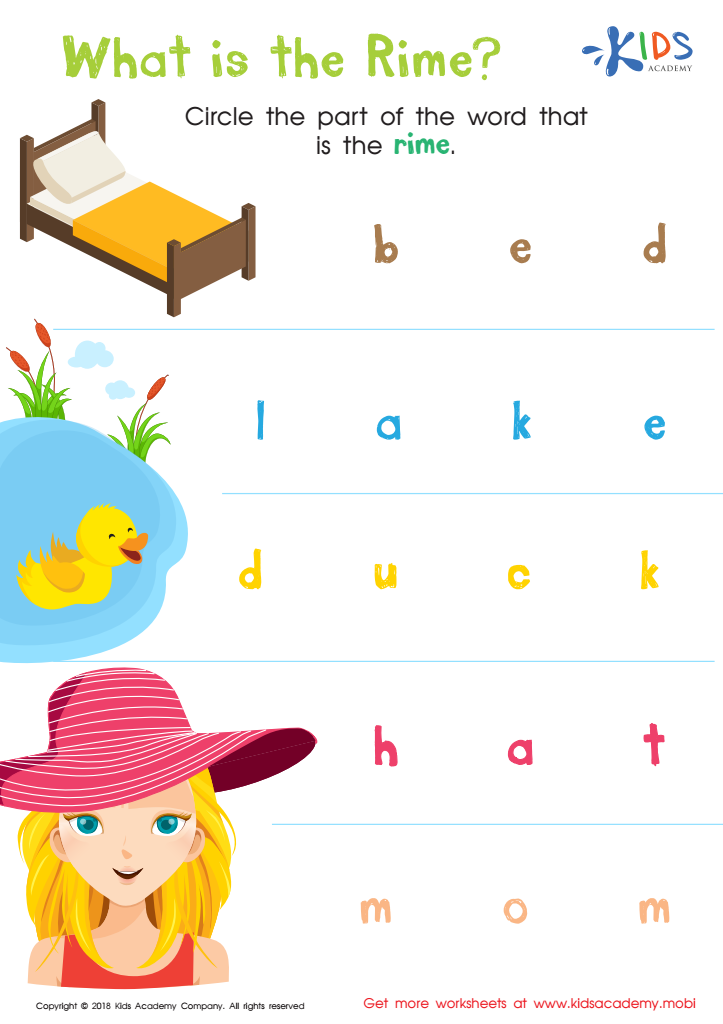
What Is the Rime? Worksheet
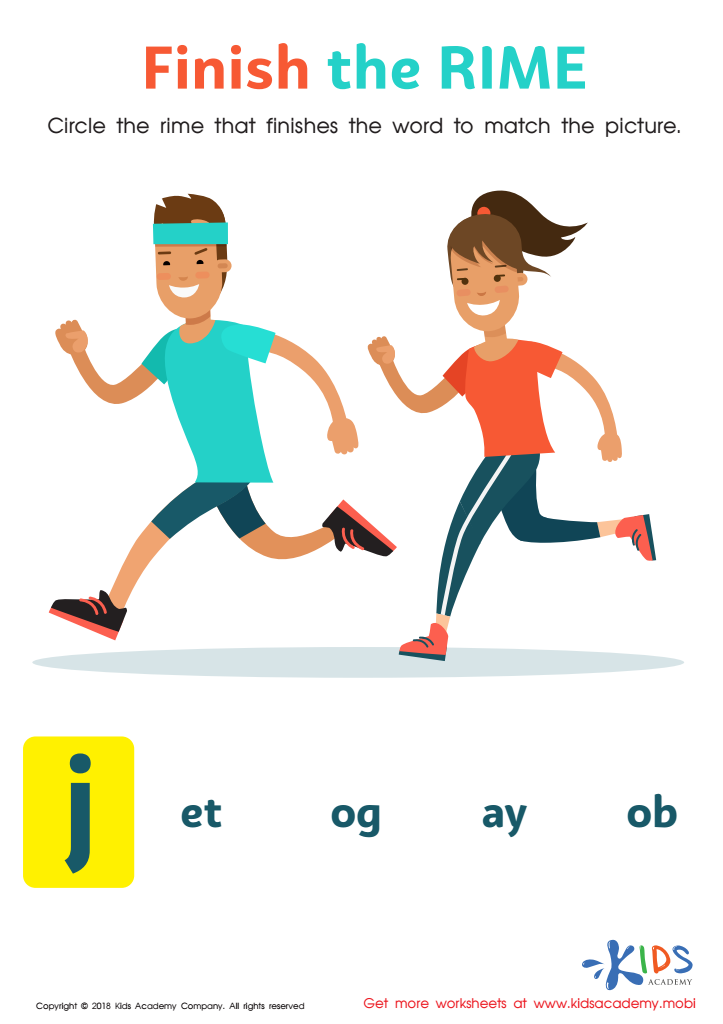
Finish the Rime Worksheet




Phonics recognition is crucial for 6-year-olds as it lays the foundational skills necessary for reading and literacy. Understanding the relationship between letters and their corresponding sounds enables young children to decode words, a skill essential for reading fluency. Early mastery of phonics leads to improved spelling, vocabulary development, and overall comprehension, setting the stage for lifelong reading proficiency.
Parents and teachers should care about phonics because it directly influences a child's academic success. A strong phonics program can help prevent reading difficulties, fostering confidence and a love for reading during critical developmental years. By ensuring students grasp these foundational skills, caregivers contribute to their future educational achievements and create opportunities for better performance in all subjects.
Moreover, when children can read independently by the end of first grade, they are more likely to engage with diverse texts, stimulating imagination and critical thinking. These skills are not just beneficial in school; they are vital for functioning in society. Supporting a phonics-rich curriculum empowers children, giving them the tools to explore their world, express themselves, and connect with others through literature. In essence, investing time and resources in phonics recognition is an investment in a child's future success.







