
Vocabulary enhancement Ending Sounds Worksheets for 6-Year-Olds
3 filtered results
Difficulty Level
Grade
Age
-
From - To
Subject
Activity
Standards
Boost your child's vocabulary with our engaging "Ending Sounds Worksheets" designed for 6-year-olds! These fun and interactive worksheets help young learners master the concept of ending sounds, a crucial skill for reading and language development. Each worksheet features vibrant illustrations and simple activities that encourage children to identify and practice ending sounds through letters and words. By enhancing their phonemic awareness, kids will improve their overall literacy skills with ease. Perfect for classroom use or at-home learning, these worksheets make vocabulary building enjoyable and effective. Give your child the advantage in language learning—explore our Ending Sounds Worksheets today!
Favorites
With answer key
Interactive
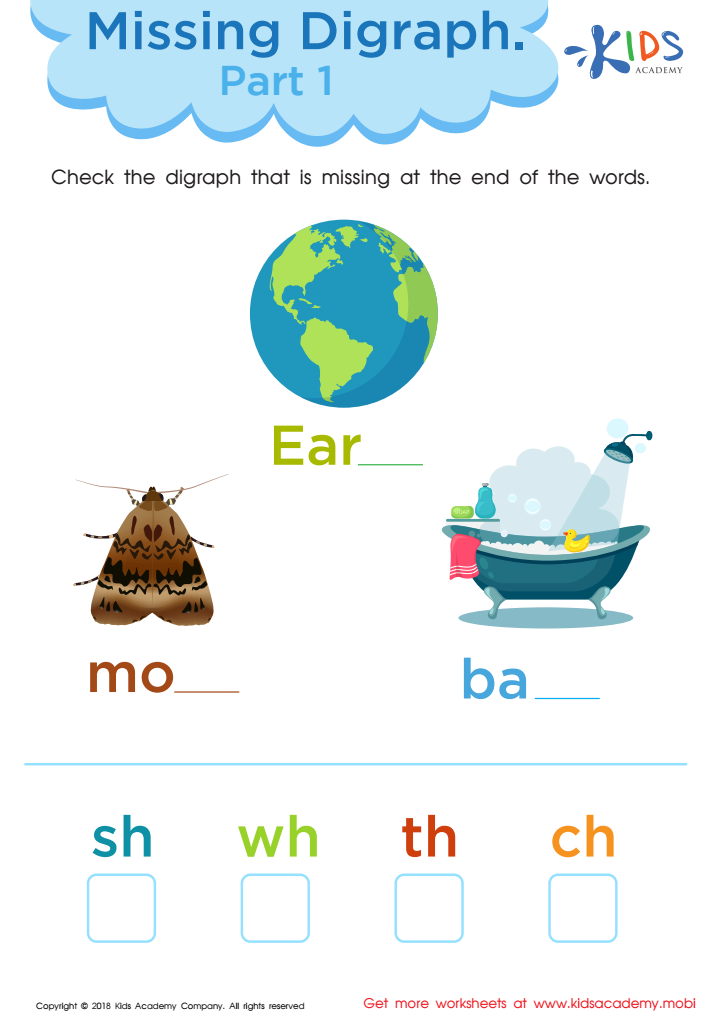
Missing Digraph: Part 1 Worksheet
Practice the 'th' digraph with this worksheet! Ask kids to say the words shown and sound out the letters below each image. Check the box with the correct digraph to complete. Examples include 'earth', 'bath' and 'moth', all ending with the same two letters. Phonics teaches that digraphs are two letters that make one sound.
 Assign to My Students
Missing Digraph: Part 1 Worksheet
Worksheet
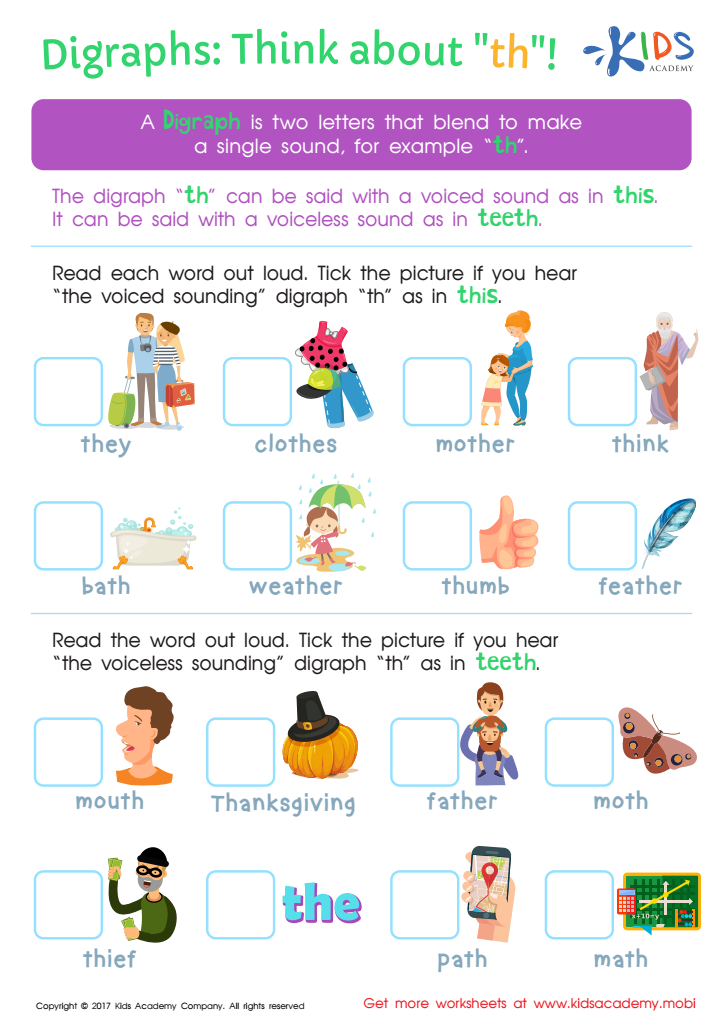
Digraphs: Think About "th" Worksheet
Help your child master phonics with this illustrated digraph Th printable worksheet. It will help recognize "Th" words, differentiate voiced and voiceless sounds and understand key concepts. Use similar words while they work to reap its full benefits!
Digraphs: Think About "th" Worksheet
Worksheet
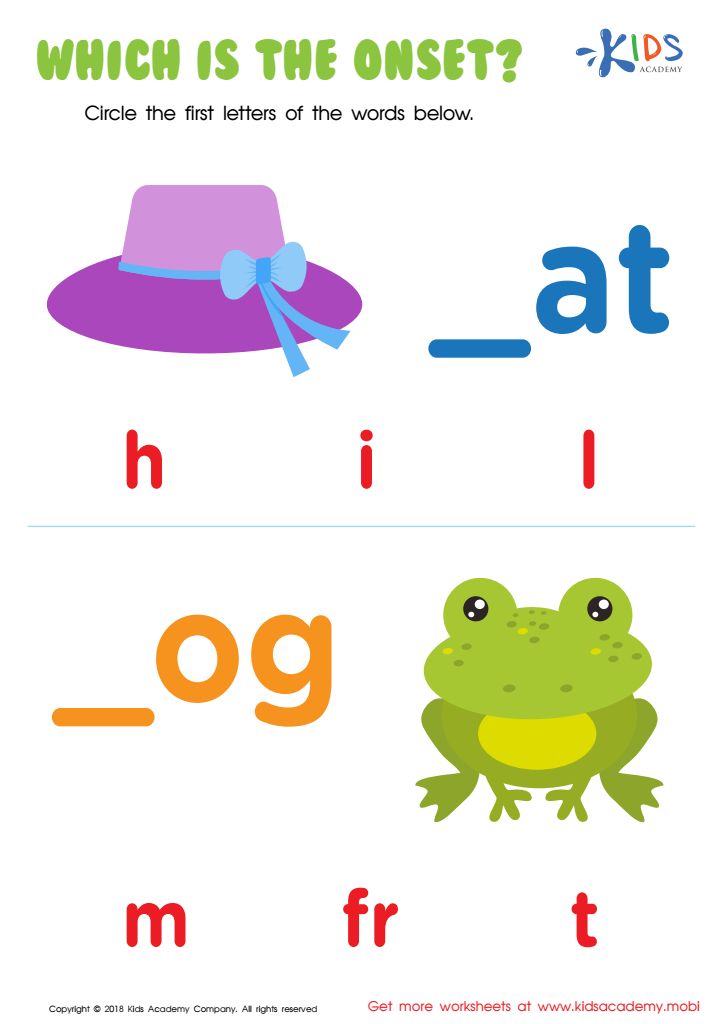
Which Is the Onset? Worksheet
Help your children learn to spell with this bright, fun worksheet. Struggling with spelling small words can make reading and writing sentences difficult. Encourage them to look at the pictures, say the names aloud and circle the correct first letter from the options. They will soon overcome any reluctance to spell.
Which Is the Onset? Worksheet
Worksheet
Join Kids Academy for Free
Who is primarily going to use this learning content?






Vocabulary enhancement, particularly focusing on ending sounds, is crucial for 6-year-olds as it lays a strong foundation for their overall literacy development. At this age, children begin to segment and blend sounds more effectively, which is vital for their reading and writing skills. Understanding ending sounds helps children decode words and fosters phonemic awareness, enabling them to recognize similar patterns in unfamiliar words.
Parents and teachers should prioritize this aspect of language learning because it promotes better comprehension and communication abilities. When children master ending sounds, they become more confident in their speaking and writing, making them more willing to participate in discussions and express their ideas. This engagement boosts their overall academic performance and social interactions.
Moreover, enhancing vocabulary through targeted exercises, such as rhymes, word games, and storytelling, can make learning fun and engaging. As they relate new vocabulary to their surrounding world, they develop critical thinking and creativity skills. This foundation sets them up for lifelong learning, making them better prepared for academic challenges ahead. Ultimately, by caring about vocabulary enhancement and ending sounds, parents and teachers can significantly impact a child's literacy journey and future success.








