
Alphabetical understanding Alphabet Worksheets for 6-Year-Olds
3 filtered results
Difficulty Level
Grade
Age
-
From - To
Subject
Activity
Standards
Discover our engaging "Alphabetical Understanding Alphabet Worksheets" designed specifically for 6-year-olds. These interactive worksheets help young learners master the alphabet through fun activities that build essential skills. Children will enhance their letter recognition, improve their alphabetical order, and practice writing through vibrant exercises tailored to their developmental level. Our thoughtfully crafted materials encourage creative learning while keeping kids excited about reading and writing. Perfect for at-home practice or classroom use, these worksheets are an excellent resource to support your little one's literacy journey. Equip your child with the foundational skills they need for future academic success while having fun!
Favorites
With answer key
Interactive
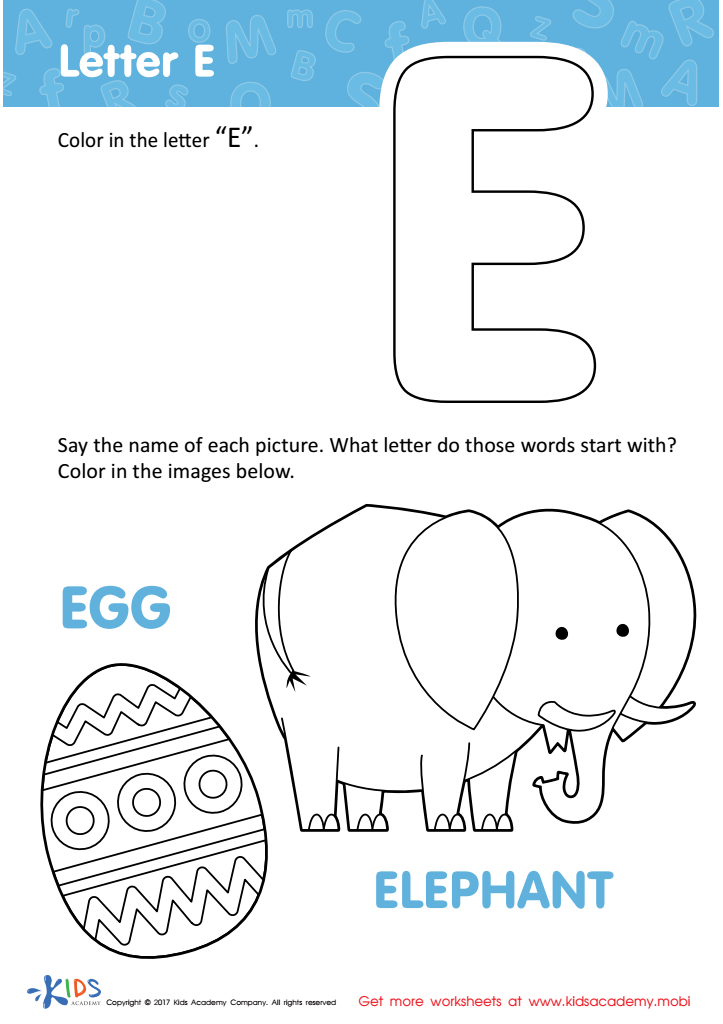
Letter E Coloring Sheet
Coloring pages are great for teaching kids the alphabet and words! This "E" page features a cute elephant and Easter egg. Kids will love it and learn the letter "E" at the same time. 80 words
Download (PDF)
 Assign to My Students
Assign to My Students
Letter E Coloring Sheet
Worksheet
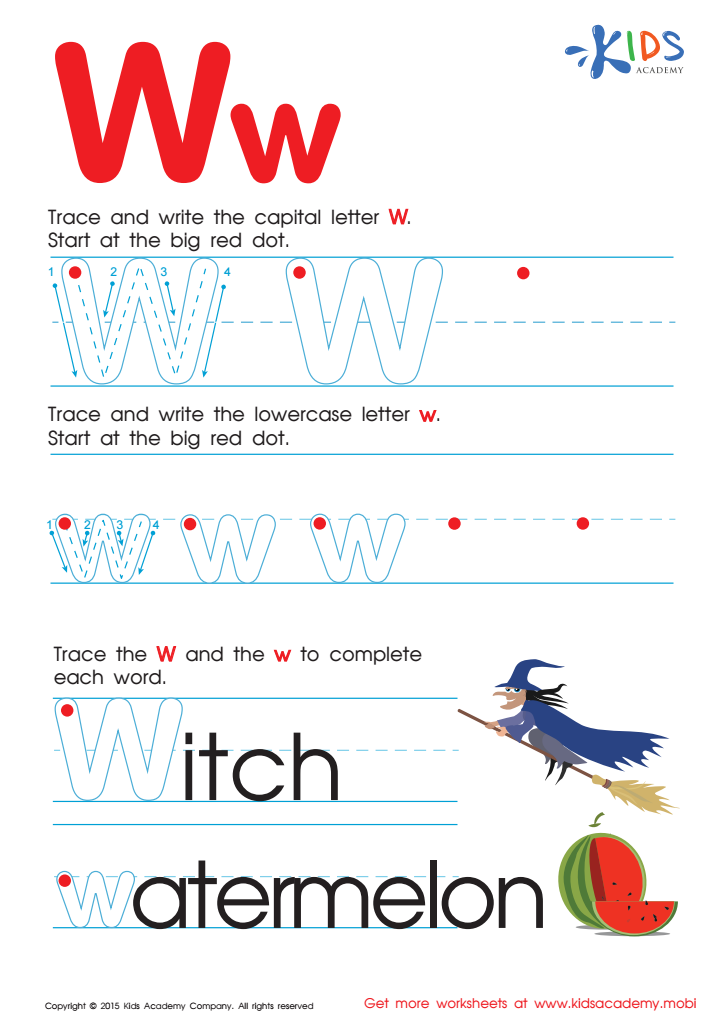
Letter W Tracing Page
Trace and write the capital and lowercase letter W with this free letter tracing worksheet by Kids Academy. Complete the words "Witch" (capital) and "watermelon" (lowercase). Check out our other kindergarten alphabet worksheets!
Letter W Tracing Page
Worksheet
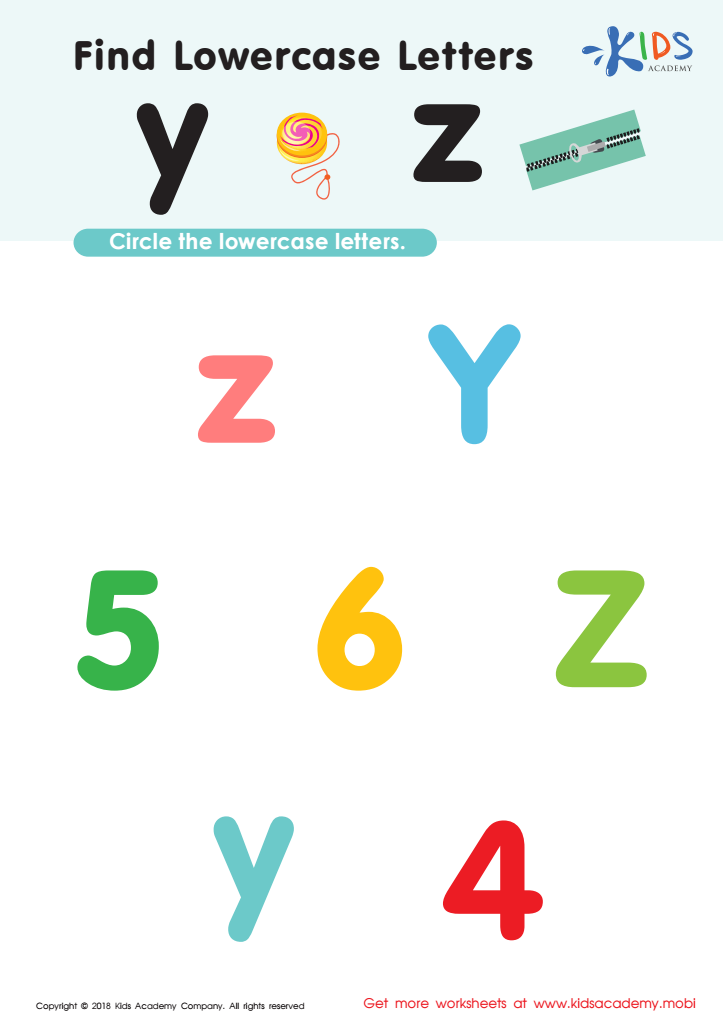
Find Lowercase Letters y z Worksheet
Help your kid learn the alphabet. Before they can move on to words and reading, they must first know the lower and uppercase letters. Show them how to find the letters y and z in this worksheet, which is filled with uppercase letters and numbers. Together, find and circle them.
Find Lowercase Letters y z Worksheet
Worksheet
Join Kids Academy for Free
Who is primarily going to use this learning content?




.jpg)


Understanding the alphabet is a foundational skill crucial for children’s literacy development. For 6-year-olds, this knowledge goes beyond mere recognition of letters; it lays the groundwork for reading and writing proficiency. Parents and teachers play a vital role in fostering this skill, as it directly impacts a child's confidence and overall academic success.
At this age, children begin to connect letters with sounds, a process known as phonemic awareness. Mastery of the alphabet enables them to decode words, which is essential for effective reading. When kids are proficient in recognizing letters, they can expand their vocabulary, enhance comprehension skills, and develop stronger writing capabilities.
Additionally, early engagement with the alphabet cultivates a love for language and literacy. Shared reading experiences that involve letters can spark curiosity and joy, making learning enjoyable. Moreover, being familiar with the alphabet helps children navigate their environment—recognizing signs, labels, and titles encourages independence and exploration.
Ultimately, parents and teachers should prioritize alphabet knowledge, as it builds a solid foundation for lifelong learning, strengthens critical thinking skills, and fosters a positive attitude toward education. Supporting children in this early stage will benefit their future collectively in academic and life skills.







