
Alphabetical understanding Letter Recognition Worksheets for 6-Year-Olds
3 filtered results
Difficulty Level
Grade
Age
-
From - To
Subject
Activity
Standards
Empower your 6-year-old's literacy journey with our engaging Alphabetical Understanding Letter Recognition Worksheets! Designed by experts at Kids Academy, these printable worksheets make learning the alphabet fun and interactive. Each sheet focuses on recognizing upper and lower case letters, enhancing phonetic awareness, and developing fine motor skills through various activities. Perfectly tailored for young learners, these resources alleviate the pressure and turn learning into an enjoyable adventure. Encourage your child's educational growth with tools that make mastering the alphabet an exciting experience. Visit Kids Academy for high-quality worksheets that support early literacy and fundamental reading skills.
Favorites
With answer key
Interactive
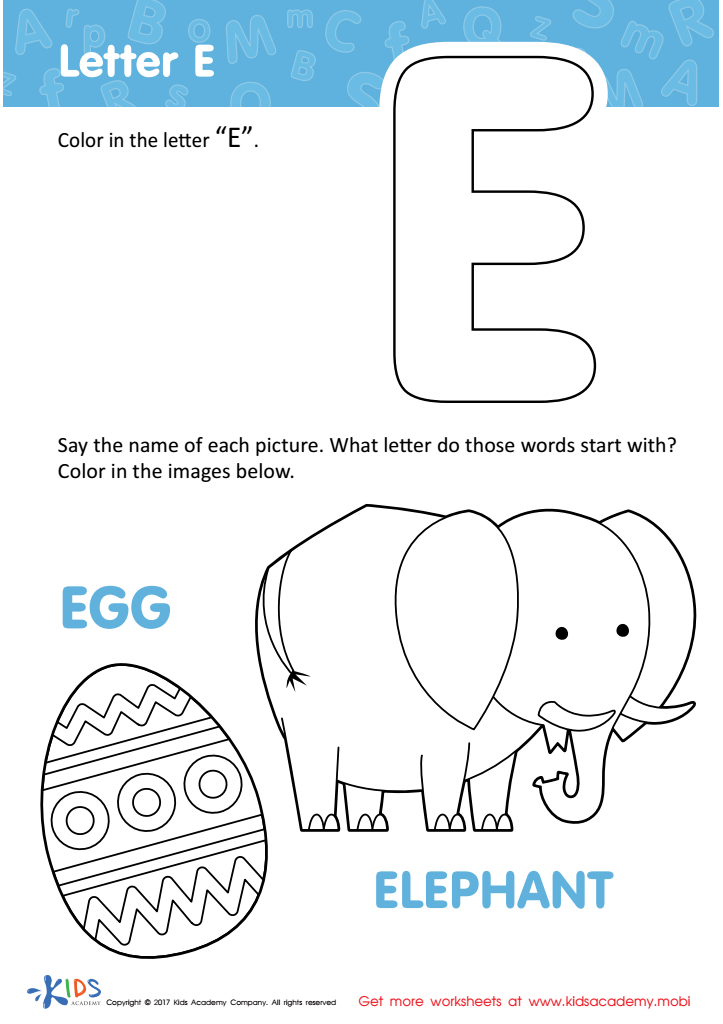
Letter E Coloring Sheet
Coloring pages are great for teaching kids the alphabet and words! This "E" page features a cute elephant and Easter egg. Kids will love it and learn the letter "E" at the same time. 80 words
Download (PDF)
 Assign to My Students
Assign to My Students
Letter E Coloring Sheet
Worksheet
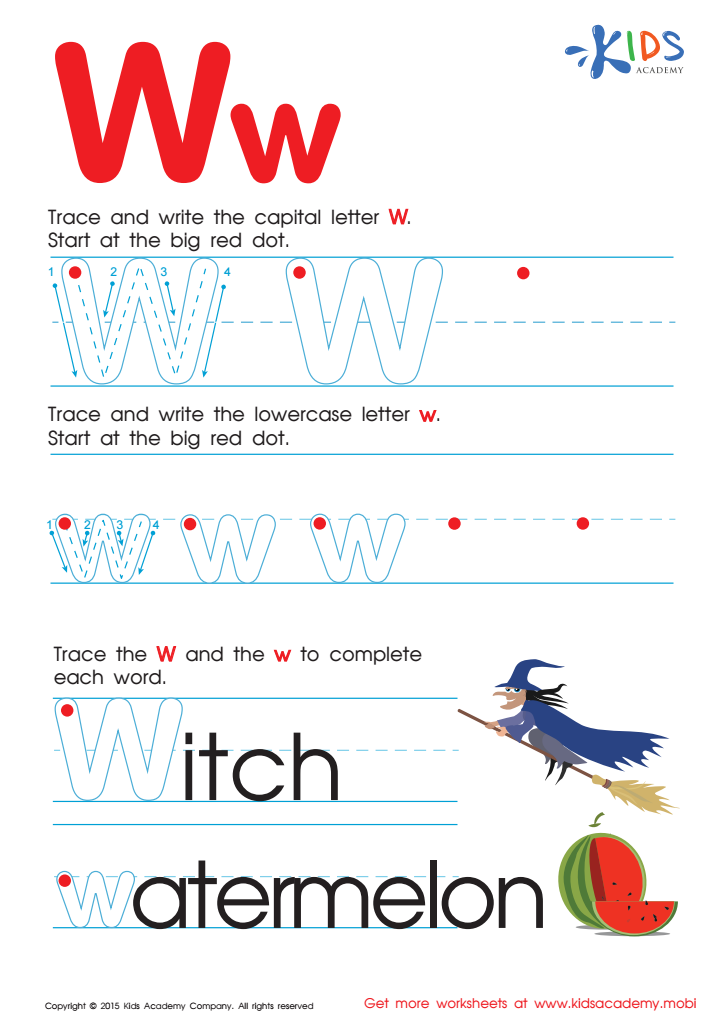
Letter W Tracing Page
Trace and write the capital and lowercase letter W with this free letter tracing worksheet by Kids Academy. Complete the words "Witch" (capital) and "watermelon" (lowercase). Check out our other kindergarten alphabet worksheets!
Letter W Tracing Page
Worksheet
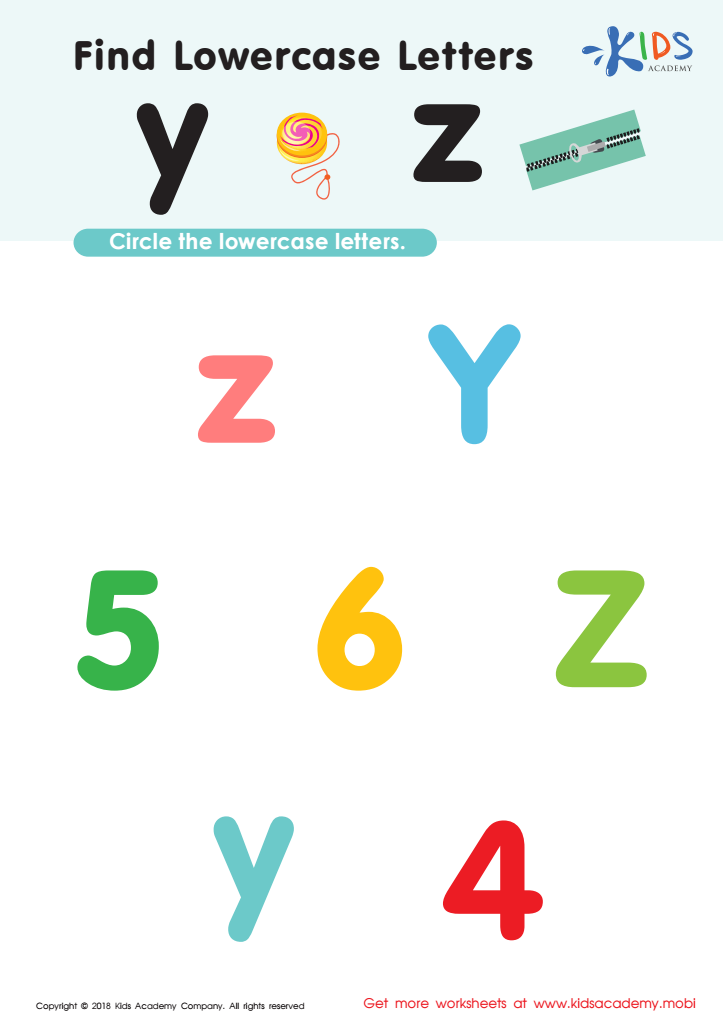
Find Lowercase Letters y z Worksheet
Help your kid learn the alphabet. Before they can move on to words and reading, they must first know the lower and uppercase letters. Show them how to find the letters y and z in this worksheet, which is filled with uppercase letters and numbers. Together, find and circle them.
Find Lowercase Letters y z Worksheet
Worksheet
Join Kids Academy for Free
Who is primarily going to use this learning content?








The foundational skill of alphabetical understanding and letter recognition is critical for 6-year-olds because it lays the groundwork for their entire literacy development. At this age, children are typically in early grade levels, where they begin to learn how to read and write. Recognizing and understanding letters are key steps in this process. When children know the alphabet, they can connect letters to sounds, which is essential for phonics—a method used to teach reading by correlating sounds with letters or groups of letters.
Moreover, early alphabetical proficiency boosts children's confidence and enthusiasm for learning. It enables them to decode words, understand text, and ultimately, to read fluently. Reading fluency, in turn, enhances comprehension, allowing children to gain knowledge from written material across various subjects.
Parents and teachers should therefore care deeply about this stage of development. Effective teaching methods, such as engaging activities (e.g., songs, games, and flashcards), can dramatically improve a child's familiarity and comfort with letters. Without these fundamental skills, children might struggle, leading to frustration and a potential lack of interest in learning. Early support in alphabetical understanding sets children on a positive academic trajectory, providing a strong foundation for future educational success.







