Fine motor skills development Letter Recognition Worksheets for 6-Year-Olds
4 filtered results
-
From - To
Enhance your child's fine motor skills and letter recognition with our engaging worksheets specifically designed for 6-year-olds. These interactive activities promote hand-eye coordination and dexterity while helping young learners familiarize themselves with the alphabet. Each worksheet is crafted to make learning fun and effective, incorporating colorful illustrations and exciting tasks that motivate kids to practice writing and identifying letters. As they trace, color, and connect letter patterns, children strengthen their fine motor abilities and boost their confidence in reading readiness. Explore our collection of fine motor skills development worksheets today and support your child’s learning journey in a playful way!
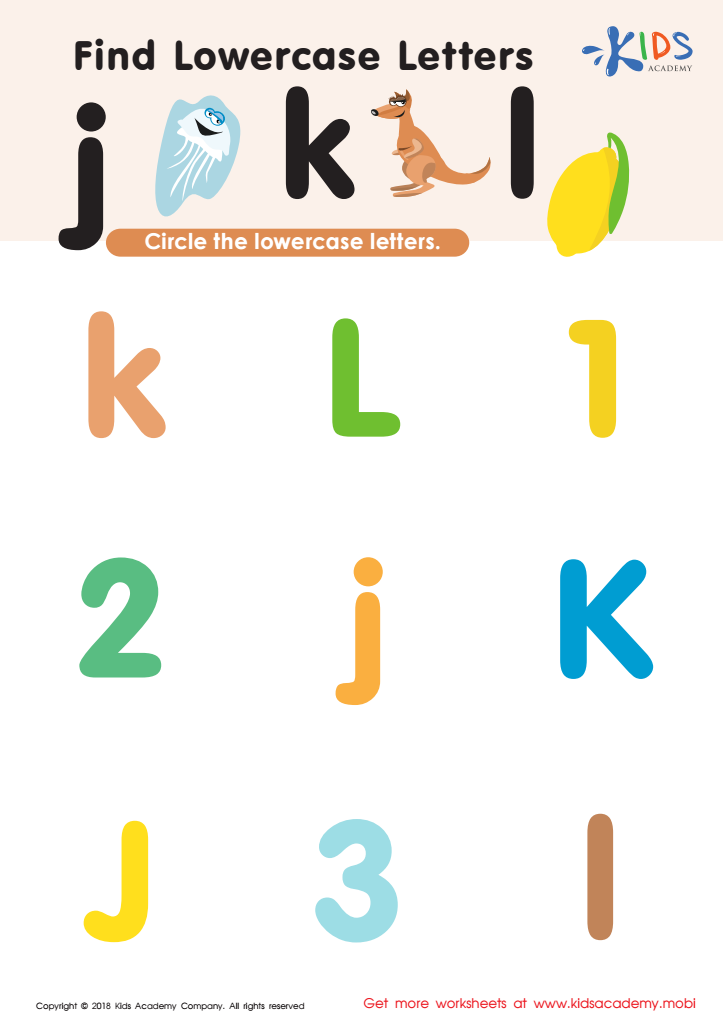
Find Lowercase Letters j k l Worksheet
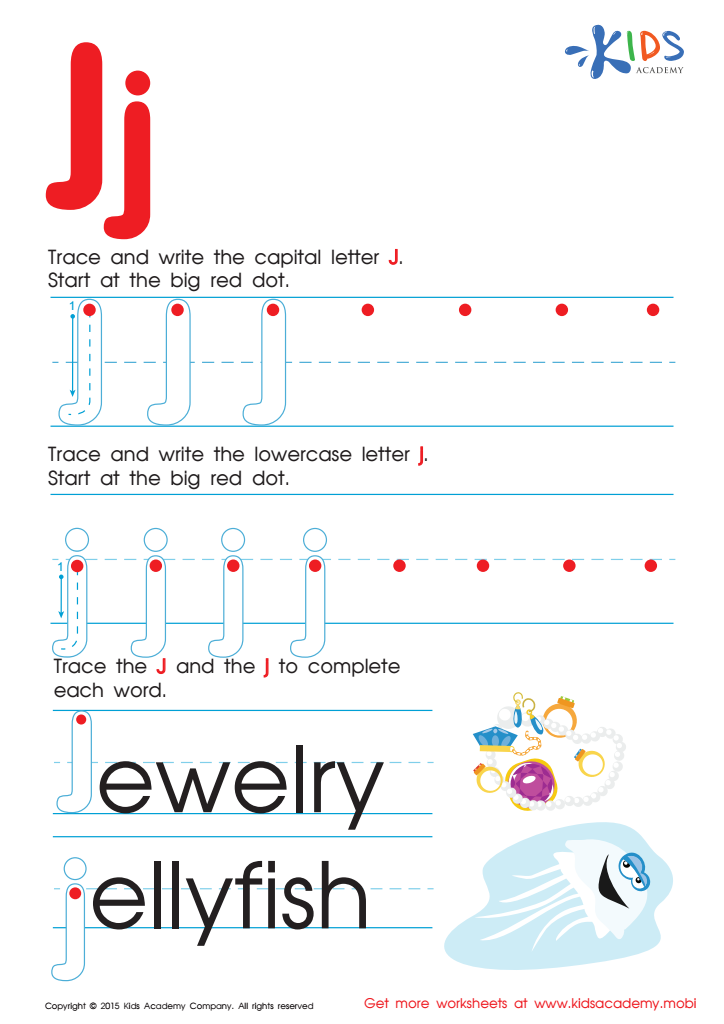
Letter J Tracing Page
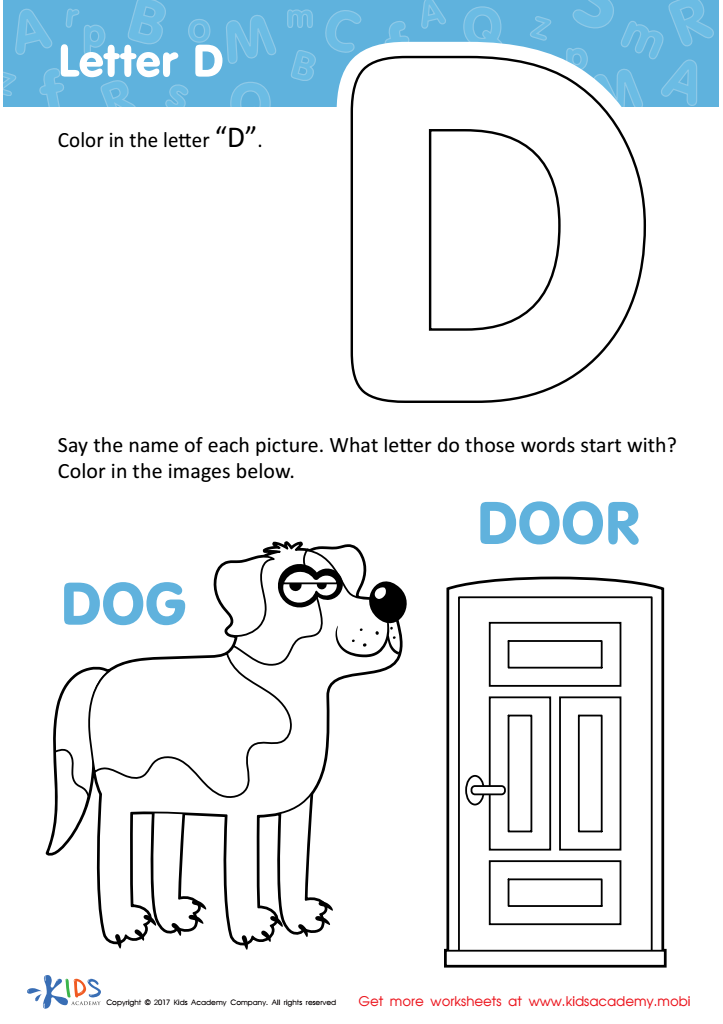
Letter D Coloring Sheet
 Assign to My Students
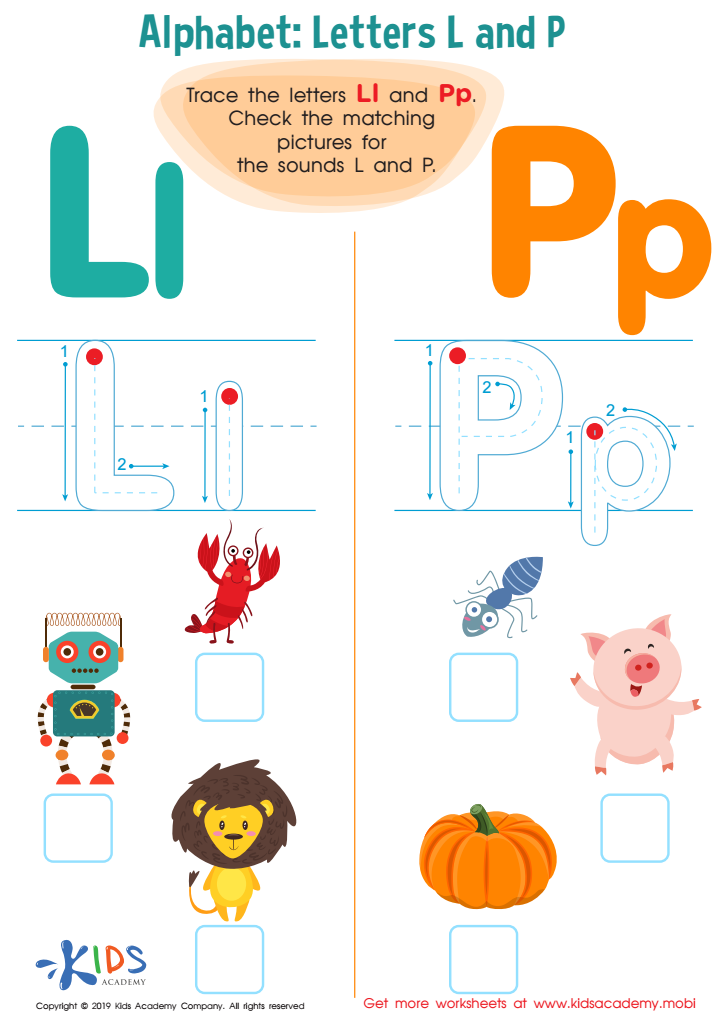
Letter L and P Tracing Worksheet








Fine motor skills development and letter recognition are crucial for 6-year-olds as they lay the foundation for lifelong learning and daily activities. Fine motor skills, which involve the coordinated movements of small muscles in the hands and fingers, are essential for tasks such as writing, drawing, and even self-care routines like buttoning shirts or tying shoelaces. Parents and teachers should prioritize these skills, as they enhance a child's ability to perform academically and socially.
Letter recognition is equally important at this age. It enables children to identify letters, leading to improved reading and writing abilities. Recognizing letters is an essential precursor to phonemic awareness, which directly impacts a child's literacy skills. The ability to read is foundational for future academic success, influencing everything from comprehension to critical thinking.
Moreover, developing these skills promotes cognitive and motor development, boosting a child's confidence and independence. When children can recognize letters effectively and manipulate small objects skillfully, they feel accomplished and engaged. Thus, supporting fine motor skill development and letter recognition creates a nurturing environment, fostering a child's academic journey and enriching their emotional well-being. In essence, these skills not only shape educational achievement but also empower children in their everyday lives.







