Lowercase letter writing Letter Recognition Worksheets for 6-Year-Olds
3 filtered results
-
From - To
Enhance your child's alphabet mastery with our engaging "Lowercase Letter Writing and Letter Recognition Worksheets for 6-Year-Olds." These expertly designed printables help young learners identify and write lowercase letters with confidence. Featuring fun and educational activities, our worksheets improve fine motor skills, promote letter-sound awareness, and support early reading success. Perfect for both classroom and at-home practice, these resources align with educational standards to ensure a solid foundation in literacy. Empower your 6-year-old with essential skills through enjoyable and interactive learning experiences. Download today to start the journey towards effortless reading and writing!
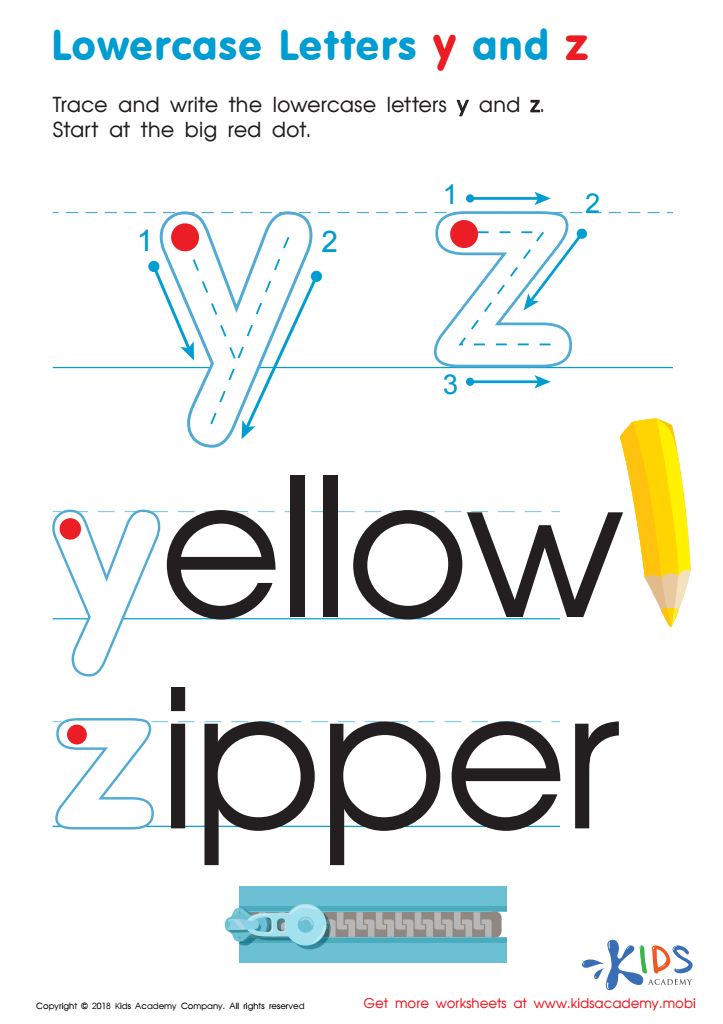
Lowercase Letters y z Worksheet
 Assign to My Students
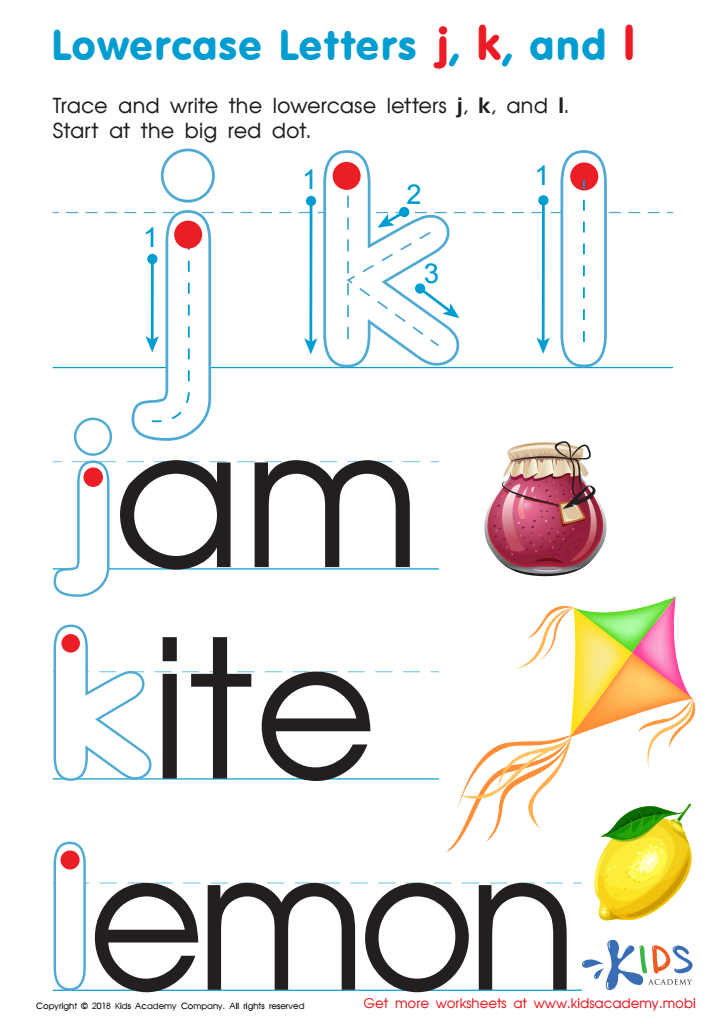
Lowercase Letters j k l Worksheet

Lowercase Letters m n o Worksheet








Parents and teachers play a crucial role in the early literacy development of 6-year-olds, and one fundamental aspect of this process is the recognition and writing of lowercase letters. Lowercase letters are more frequently used in text than uppercase letters, and proficiency in both recognizing and writing them is pivotal for young readers and writers.
For one, learning lowercase letters boosts a child's reading fluency. The ability to quickly recognize these letters helps children decode words more swiftly and accurately, which contributes to better comprehension and a more enjoyable reading experience. Additionally, when children write lowercase letters proficiently, they can express their thoughts more clearly and confidently, which is essential for developing writing skills.
Furthermore, mastering lowercase letters fosters fine motor skills and eye-hand coordination. The act of writing these letters involves intricate movements that help refine a child's fine motor control, which is essential not only for writing but also for other daily activities.
Early mastery of lowercase letters also builds a strong foundation for lifelong learning. It encourages a positive attitude towards literacy and schooling, enabling children to transition smoothly into more advanced reading and writing tasks. By prioritizing this aspect of education, parents and teachers provide children with the tools they need for academic success and effective communication throughout their lives.







